Lost Your Suitcase in a Coach Hold? Portuguese Law Holds the Operator Liable for Up to 1,500 Euros, and Here Is How to Claim
A bag that vanished from a Rede Expressos hold between Viseu and Coimbra raises a common question. Portuguese law makes the operator liable for lost or damaged hold luggage, up to 1,500 euros or 7.50 euros a kilo. What to do, and the deadlines.
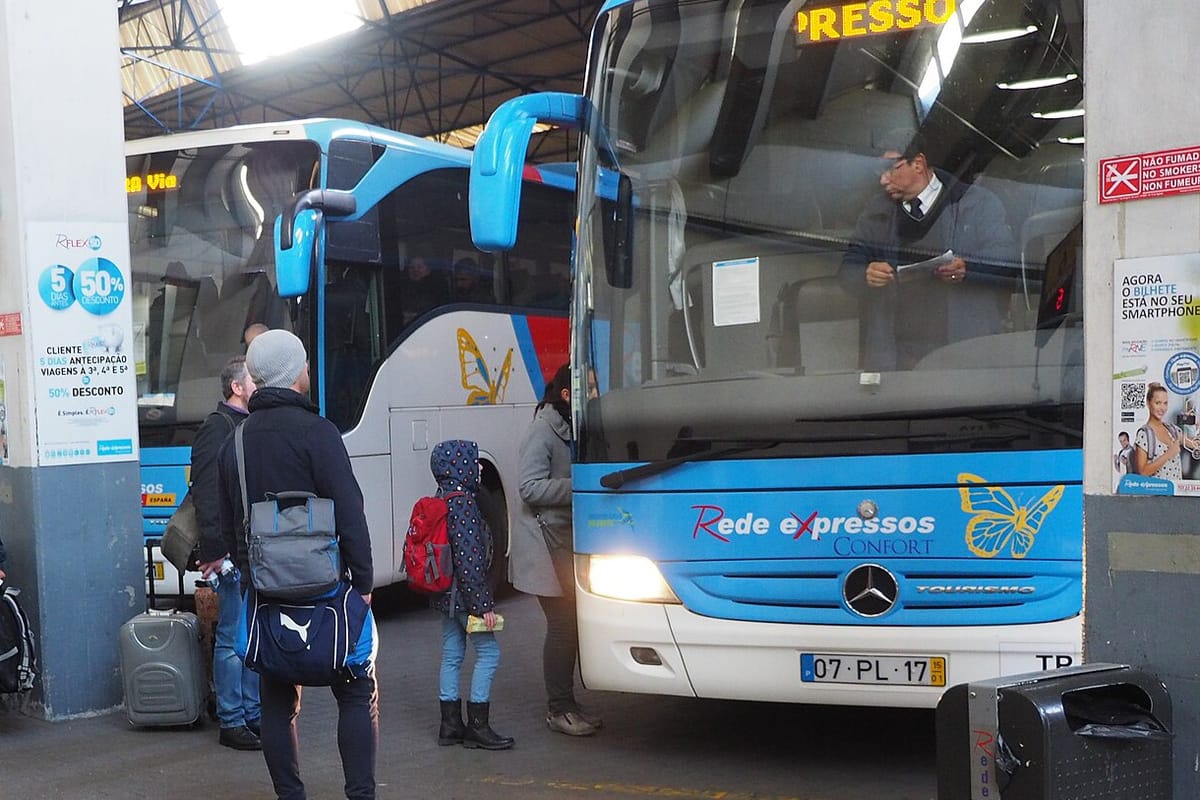
A suitcase that vanished from the hold of a Rede Expressos coach between Viseu and Coimbra has raised a question few coach passengers think to ask: who pays when a bag goes missing? SIC Notícias's fact-checking strand, SIC Verifica, reported on Sunday that a viewer arrived to find her large trolley gone from the hold. She told SIC she then had to buy clothes and essentials for the nine days she was away.
The answer: the company is liable, within limits set by law.
What the law says
Coach passengers' rights in Portugal are set out in Decreto-Lei n.º 9/2015, which covers domestic services and international services operating in Portugal:
- Free hold luggage: where a coach has a luggage compartment, bags up to 20 kg per passenger travel free (Article 12).
- Lost bags: if you can prove what the contents were worth, you can claim that amount, up to 1,500 euros. If you cannot, compensation is 7.50 euros per kilogram of missing gross weight. You can also reclaim the fare (Article 14). The law updates these amounts each year in line with inflation.
- When a bag counts as lost: when it has not been handed back by the eighth day after it should have been.
- Damaged bags: the operator pays the loss in value, up to what a total loss would have paid (Article 15).
- Hand luggage you keep with you on board remains your responsibility (Article 11).
The transport regulator, AMT (Autoridade da Mobilidade e dos Transportes), reviewed express coach operators' conditions of carriage after complaints reached it. Its findings say that, contrary to what some operators had written, they are responsible for lost and misplaced luggage, except hand luggage kept beside the passenger. Breaching the luggage rules can cost a company a fine of 1,500 to 7,500 euros under the decree.
Rede Expressos's own terms, as quoted by SIC, say documents, cash and valuables such as laptops, phones and jewellery should travel inside the coach with the passenger. A DECO PROteste spokesperson told SIC that such a warning does not by itself exempt the company.
The EU's coach passenger rights law, Regulation (EU) No 181/2011, adds a floor of at least 1,200 euros per item, but only for luggage lost or damaged in an accident on regular services of 250 km or more.
What to do if your bag goes missing
- Act before you leave the station. Tell the driver or staff and get a written record. Operators must provide the livro de reclamações (complaints book); there is also an electronic version at livroreclamacoes.pt.
- Keep evidence. DECO PROteste told SIC that invoices, receipts, photos and a detailed list of contents all help, though missing receipts do not stop a claim. Keep your ticket and luggage tag; AMT calls labelling bags with your name and address good practice.
- Claim extra costs. Reasonable purchases made because the bag vanished, such as clothes, can also be claimed if you can prove them, according to DECO PROteste.
- Watch the deadlines. The EU regulation gives passengers three months from the journey to complain to the carrier, which must say within one month whether the complaint is accepted, rejected or under review, and give a final answer within three months.
- Escalate. If the company refuses or stays silent, you can complain to AMT, go to a consumer arbitration centre or, as a last resort, to court.
The rules cover every regular coach operator, not just Rede Expressos, whose Lisbon hub at Sete Rios is the subject of a draft law on coach terminals. For another complaints route, see our piece on challenging an energy bill.