Fifteen Young Cape Verdeans Stay On to Work in Freixo de Espada à Cinta After Vocational Courses, Easing a Shrinking Town's Staff Shortage
Forty-one young Cape Verdeans have come to the Bragança district town for vocational courses in four years, and 15 now work there. How the council's scheme runs, why a shrinking town wants it, and AIMA's rules for a student residence permit.
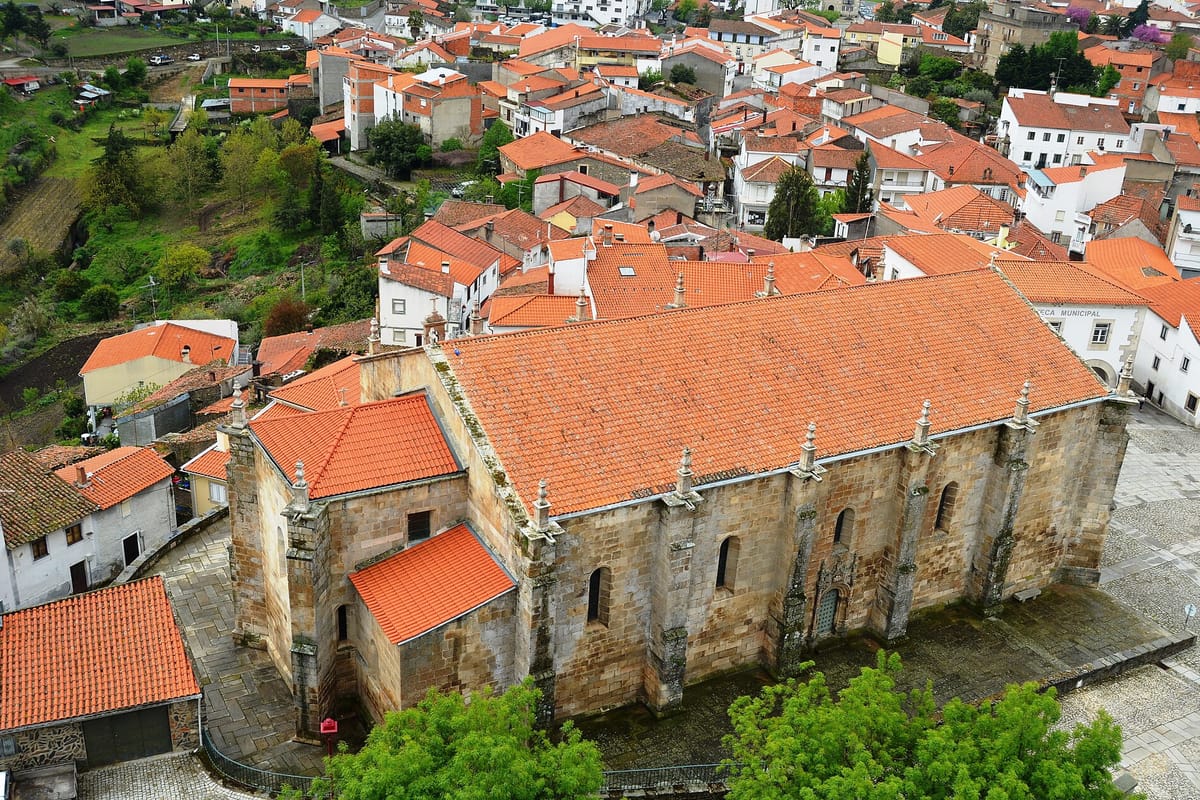
Fifteen young Cape Verdeans who came to Freixo de Espada à Cinta, a border town in the Bragança district, to take vocational secondary courses are now working there, in care homes, hotels, restaurants and local services, according to a Lusa report published on Sunday by Observador (also carried by Notícias ao Minuto). For a shrinking interior municipality, the scheme is a small but concrete answer to a shortage of trained workers.
How the scheme works
Lusa reports that the first 20 Cape Verdean students arrived four years ago and a further 21 have followed. They take cursos profissionais (vocational secondary courses that lead to both a school-leaving certificate and a trade qualification) in cooking and pastry, tourism, wine growing and, more recently, geriatric care and restaurant and bar service. Portuguese students sit in the same classes.
The courses come from a three-way protocol between the council, the public employment and training institute IEFP and the Direção-Geral dos Estabelecimentos Escolares (the education ministry's directorate for state schools). The mayor, Nuno Ferreira, told Lusa that the council has agreements with Cape Verdean municipalities on the islands of Fogo, Santiago and São Nicolau to make 10 places available at a time each school year. Work placements are arranged in Freixo and neighbouring councils.
At the Santa Casa da Misericórdia, the town's main social care charity, technical director Susana Santos told Lusa that the 12 Cape Verdean students finishing the geriatric care course are on placement across four of its buildings, and that most want to stay. Aleida Lopes, 21, who arrived at 17, said the first months were hard but that her work is now in Freixo: she plans to go back to Cape Verde only on holiday.
Why it matters for the interior
Freixo had 3,216 residents at the 2021 Census, according to INE census data. INE's annual estimates put it at 3,039 in 2023, down from 3,819 in 2011: about a fifth of the population gone in twelve years. Ferreira told Lusa that keeping these young people in the town adds to the resident population and supports the local economy, and that the courses target sectors where the labour market had gaps. A restaurant owner, José Araújo, told Lusa that skilled staff are hard to find.
The same pressures show up elsewhere in the district: this autumn Bragança's polytechnic was left with more than half its places empty after the national university access contest.
What it means for you
For families outside the EU, the legal route for a teenager to study at secondary or vocational level in Portugal is the residence permit for students under Article 92 of the foreigners law (Lei n.º 23/2007). AIMA, the migration agency, sets out the requirements:
- enrolment at a recognised school, or at a training body certified by DGERT (the labour ministry's directorate for employment and labour relations);
- a valid passport and, normally, a student residence visa issued by a Portuguese consulate, although secondary students can apply without one if they prove they entered and are staying legally;
- cover under the national health service (SNS) or private health insurance, proof of means of subsistence, proof of address and a criminal record certificate for anyone aged 16 or over.
The permit lasts up to one year and is renewable for as long as the conditions are still met. Applications are made by appointment at any AIMA office.