Draft Law Would Bar Bus Operators From Running Coach Terminals, and Sete Rios Would Get Up to Four Years to Change
A government draft reported by Jornal de Negócios bans conflicts of interest between terminal managers and bus operators, caps concessions at ten years and limits refusals of access to three grounds. Nothing changes yet for coach passengers.
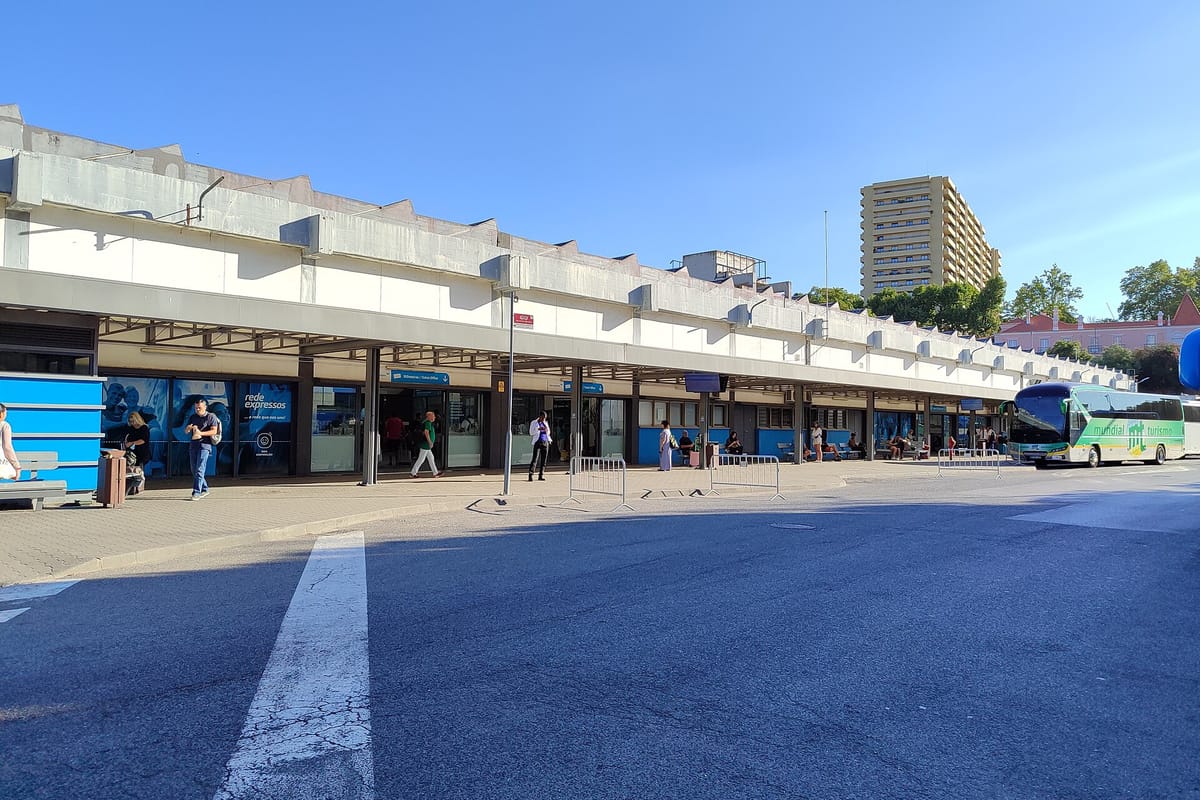
The government is preparing new rules for Portugal's road passenger terminals that would stop the companies running them from being in a conflict of interest with the bus operators that use them, according to a draft decree-law reported by Jornal de Negócios on 13 and 14 October. It is a draft, not an approved law, and its wording could still change.
The change goes to the heart of the dispute at Sete Rios, Lisbon's main coach station, where Rede Expressos both manages the terminal and runs its own services, and where FlixBus began boarding passengers on 29 September after a long fight for access.
What the draft says
Terminal managers could not be in a conflict of interest with public passenger transport operators, a bar that extends to those operators' partners, shareholders and managers. Managers would owe every operator neutrality, impartiality and non-discriminatory treatment. They would be chosen through pre-contractual procedures with objective, non-discriminatory criteria, and concessions would be capped at ten years.
An operator's request for access could be refused on only three grounds: no available capacity, objective failure to meet the access and use requirements in the terminal's management regulation, or imperative safety and operational reasons. The current law, Decreto-Lei n.º 140/2019, names lack of capacity as the only ground for refusal and requires the manager to point to a viable alternative.
Owners of private terminals could reserve them for one or more operators. The Institute for Mobility and Transport (IMT) and the Mobility and Transport Authority (AMT) would review the regime every two years.
What changes at Sete Rios, and when
Existing management contracts would run to term but would have two to four years to adapt to the new regime; Jornal de Negócios reports that Sete Rios would get up to four. Rede Expressos has run the terminal since 2003 under a protocol with Lisbon City Council, under which it would step aside only once a "definitive solution" for the site exists.
For coach travellers, nothing changes yet. The draft still has to be approved and published, and the transition would then run for years. In the meantime FlixBus and Rede Expressos both sell tickets from Sete Rios, so passengers on routes both serve can already compare times and fares.
Why the government is acting
The AMT's study of road passenger terminals, published in March 2026, found that 47 of the 53 terminals it analysed are owned by public bodies, but that more than half of those are run by private companies, most of them public transport operators themselves. It called for a legal separation between road operator and terminal manager, clear rules for concessions and tougher sanctions.
Both regulators made the same case to parliament in January. Ana Paula Vitorino, the AMT's president, told MPs that "managing the terminal is one thing and using it is another", while accepting that separation would need a transition of some years. Nuno Cunha Rodrigues, president of the Competition Authority (AdC), recommended ending the possibility of a vertically integrated company holding a terminal concession.
Parliament is also working on the issue. On 10 April it approved in principle a Liberal Initiative (IL) bill that would ban group links between terminal managers and transport operators, cut the deadline for answering an access request from 30 days to 15 and give the AdC sanctioning powers. The bill went to the infrastructure committee for detailed scrutiny. It has not been reported how the bill and the government's draft will fit together.