Lisbon's National Museum of Ancient Art Reopens After an 8.5 Million Euro Refit, With Free Entry Until 1 December
The MNAA in Lisbon reopened on Saturday after a year of PRR-funded works, with a new decorative arts route and a restored Baroque chapel. Entry is free until 1 December inclusive, then 15 euros. European painting stays partly closed until late 2027.
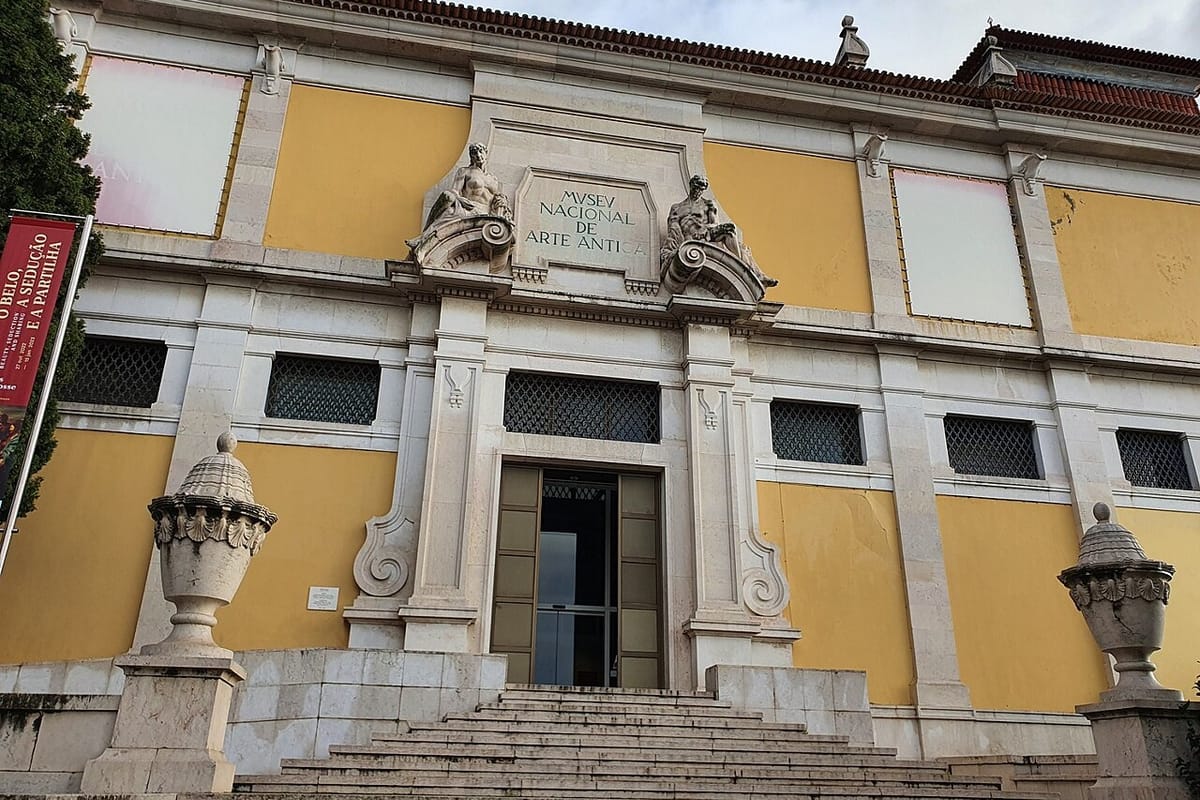
The Museu Nacional de Arte Antiga (MNAA, the National Museum of Ancient Art) in Lisbon reopened on Saturday 21 November after a year of works, and for its first ten days entry is free. Museus e Monumentos de Portugal, the public company that runs the national museums, says on its page for the museum that admission is free from 21 November to 1 December inclusive. After that a standard ticket costs 15 euros.
For anyone thinking of going this week, the practical details from that page:
- Opening hours: Tuesday to Sunday, 10:00 to 18:00. The museum is closed on Mondays, so Monday 30 November is not an option. It is open on Tuesday 1 December, the Restoration of Independence public holiday, which is the last free day.
- Address: Rua das Janelas Verdes, 1249-017 Lisboa.
- Contact: +351 213 912 800.
The museum is planning guided visits, workshops and concerts until 1 December, the Lusa news agency reports.
What changed
The works, which ran for about a year, cost 8.5 million euros and were paid for by the Plano de Recuperação e Resiliência (PRR, the EU-funded Recovery and Resilience Plan), the museum's director, Maria de Jesus Monge, told Lusa. Most of the effort went into the decorative arts floor, which now has a new route built around the encounters between Portuguese travellers and other cultures over the centuries. Monge said a rethink of how the collection is presented had been needed since 1994.
Several pieces come out of the stores, some of them restored: a 16th-century ivory Christ by Francesco Terilli, a carved wooden "Birth of Saint John the Baptist" by Juan de Montejo and a glazed terracotta "Virgin and Child with Saint John" by Bartolomé Ordóñez. The route also takes in a rare Namban bed the museum bought recently, and comes with a scent, "Namban-Jin", made for the museum by the perfumer Lourenço Lucena. New display cases improve climate control and security, and thousands of objects have been digitised in two and three dimensions.
The museum's Capela das Albertas (Albertas Chapel) has been fully restored to its Baroque look. The north façade, the roofs of the wing in the former Palácio Alvor (Alvor Palace), the windows and the auditorium were also repaired. A temporary show of six Chinese wallpapers depicting the making of porcelain, restored over about 18 months with support from Millennium BCP, opens with the reopening.
What is still closed
Not every room is back. The rehang of the European painting galleries is due to be finished in the second half of 2027, and the large temporary exhibition space is expected to open at the end of that year. The highlights of the collection are on show from Saturday, though, including Hieronymus Bosch's "The Temptations of Saint Anthony" and paintings by Dürer, Cranach and Raphael.
The Panels of Saint Vincent, by Nuno Gonçalves and among the museum's best-known works, are still being restored behind a glass structure, so visitors can watch the conservators at work. Monge expects the job to be done in spring 2027, "around April, possibly", so that the panels can be seen as they were first painted.
Founded in 1884, the MNAA holds about 40,000 pieces, including the largest number of works classed as national treasures. It is aiming for 100,000 visitors in its first year after the reopening.