Lisbon's Blue Metro Line Trims August Weekend Hours to Trial a New Signalling System
Through August, Lisbon Metro's Blue Line will close at midnight on Fridays and reopen at 07:30 on weekends so engineers can test a new CBTC signalling system that should eventually allow more frequent trains. Carris is laying on replacement buses.
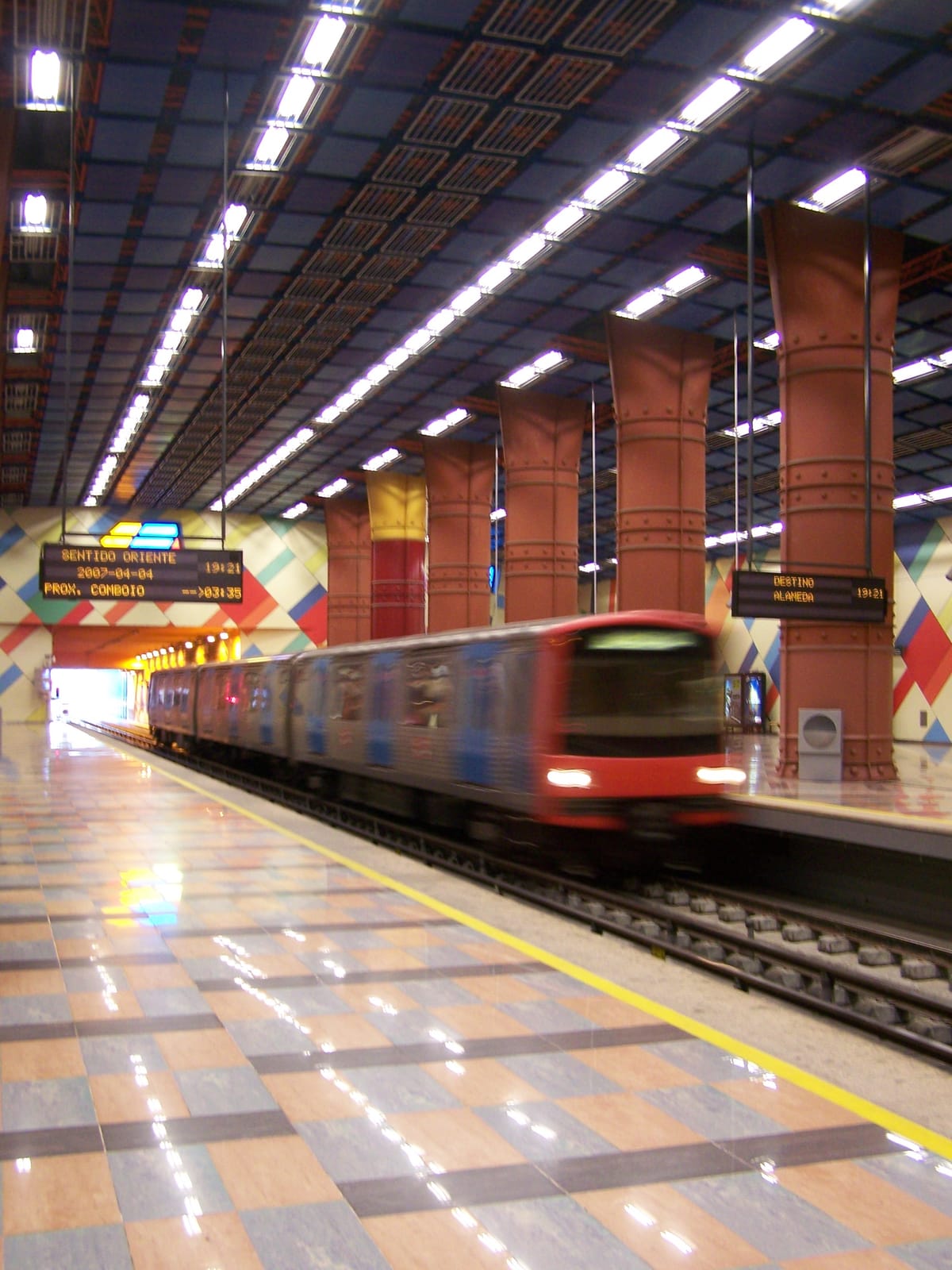
Passengers on the Blue Line of the Lisbon Metro will find shorter service on weekends this August, as the operator uses the quieter holiday month to test a new signalling system that should eventually let trains run closer together. Through August, the Linha Azul (Blue Line), which runs across the city between Reboleira in the west and Santa Apolónia by the river, will close at midnight on Fridays and reopen only at 07:30 on Saturdays and Sundays, rather than keeping to its usual hours.
The Metropolitano de Lisboa (Lisbon Metro) says the reduced timetable is needed to carry out technical trials of a CBTC system — Communications-Based Train Control, the modern standard in which trains and the track talk to each other continuously by radio rather than relying on older fixed trackside signals. CBTC allows a control centre to know exactly where every train is at all times, which in turn lets services be spaced more tightly and, in its most advanced form, run under automatic control. For a line that carries tens of thousands of commuters a day, the payoff is the prospect of more frequent trains without laying a metre of new track.
Doing that work means having long, uninterrupted stretches of empty track, which is far easier to arrange in the small hours of an August weekend than during the working week. By pushing the Friday closure forward to midnight and delaying the weekend start until half past seven, engineers gain a wider overnight window to run test trains, calibrate equipment and check that the new system behaves before it is switched on for real.
To soften the disruption, the bus operator Carris is laying on road alternatives during the hours the Blue Line is shut. Passengers can fall back on several surface routes that shadow the metro corridor — services 711, 726, 746, 758 and 767, along with the 207 night route — allowing travellers to complete journeys across the city even when the trains are not running. The metro is advising anyone travelling late on a Friday or early on a weekend morning in August to plan ahead and check the revised times before setting out.
The trials are part of a longer, unglamorous programme to modernise a network whose backbone dates back decades. Signalling is the least visible but most consequential part of any metro: it sets the ceiling on how many trains a line can safely carry per hour, and upgrading it is usually the cheapest way to squeeze more capacity out of infrastructure that already exists. Cities across Europe have spent the past decade retrofitting CBTC onto ageing lines for exactly that reason.
For Lisbon commuters and the many residents and visitors who lean on the metro through the summer, August's clipped weekend hours are a short-term inconvenience in service of a longer-term gain: a Blue Line that, once the new signalling is live, should be able to move more people, more often, across the heart of the capital.