Lisbon's New Airport Lost Its Second Terminal in ANA's Latest Plan, and the Government Has Told ANA to Explain Why
A letter from the Finance and Infrastructure ministries asks ANA to explain the single-terminal design, test several demand scenarios, prove the runways suit the A380 and look for ways to open the Luís de Camões airport earlier than 2037.
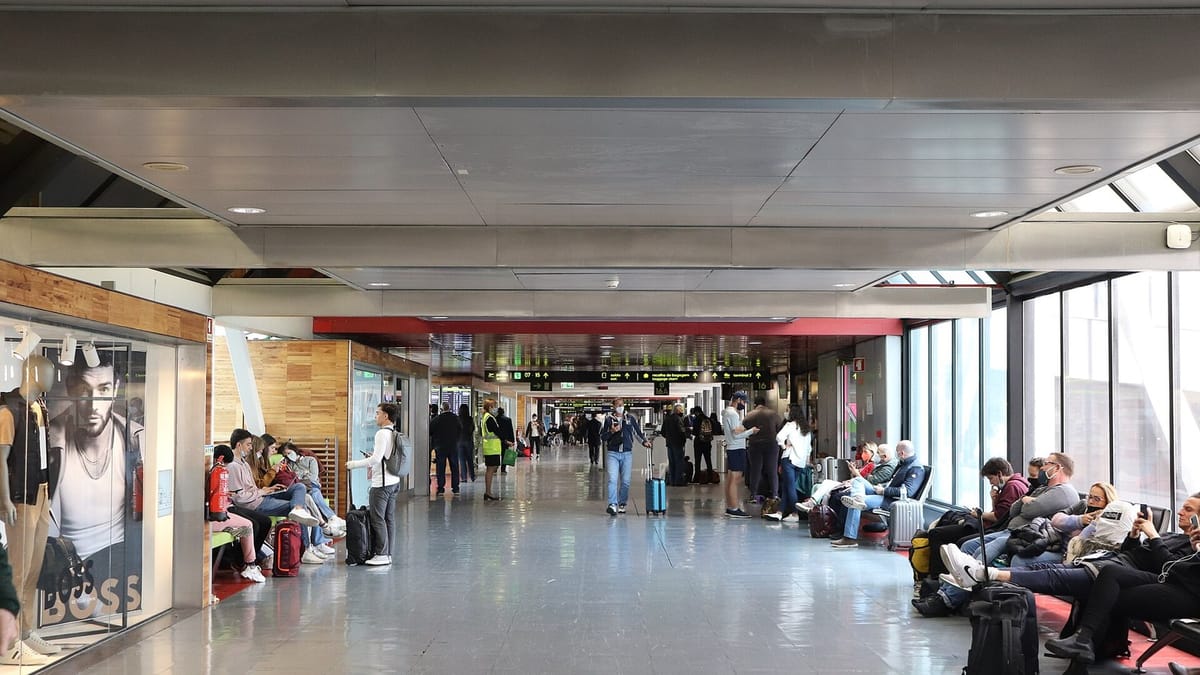
The government has told ANA, the Vinci-owned airport operator, that it wants an explanation for one of the biggest changes in its plans for Lisbon's new airport: the second terminal has gone. In a letter answering the technical report ANA delivered in July, the Finance and Infrastructure ministries ask the concession holder to justify a single-terminal design and to show how the Aeroporto Luís de Camões, at the Campo de Tiro de Alcochete (the Alcochete firing range), could grow over the decades of the concession.
The Ministério das Infraestruturas e Habitação (Ministry of Infrastructure and Housing) set out the letter's contents in a statement on Saturday 26 September, reported by the Lusa news agency and by ECO.
One terminal instead of two
ANA's initial report on the airport provided for a Terminal 2 or a satellite terminal to absorb future growth. The July technical report keeps only one passenger terminal.
"The government considers it necessary for the concession holder to justify this decision and present a clear strategy for the airport's scalability, including the infrastructure and pre-installations needed to allow future expansions, as well as the criteria that will determine the transition between the different phases of development," the ministry said.
Traffic, runways and the largest aircraft
The letter welcomes ANA's revision of its traffic forecasts. The government had contested the operator's first estimates, which pointed to about 45 million passengers a year in 2045. It now wants "different scenarios for the evolution of demand" to test whether the airport is sized correctly and to anticipate how it will need to adapt over the concession.
On the airside, it asks for more detail on the configuration of the runways and taxiway network and on their "full compatibility" with Code F aircraft, the category with a wingspan of 65 metres to just under 80 metres that includes the Airbus A380 and the Boeing 747-8. It also asks ANA to involve the airlines, so that their needs are reflected in the design.
The ministry noted that the concession contract does not require the state to give a formal opinion on these interim reports. The government chose to send its observations anyway, while praising the "merit" of ANA's technical work.
The date the government wants to beat
According to Lusa and ECO, ANA's technical report has construction starting in mid-2030, finishing at the end of 2036 and the airport opening in mid-2037. ANA has warned that the timetable depends on road and rail links and other works that are the responsibility of third parties. The government's own summary of the report in July spoke of an opening "from 2035", and ECO reads Saturday's letter as a push to bring ANA's date forward by about two years.
The ministry said the government "intends to continue working with ANA to identify opportunities to reduce the planned deadlines, with the aim of bringing forward, as far as possible, the entry into operation" of the new airport.
At the July presentation, the government put the investment at 7.9 to 8.9 billion euros at 2024 prices, for an airport handling 56 million passengers a year at opening and up to 85 million later. Our report from that presentation has the first renderings.
What comes next
ANA's financial report is due by 16 January 2027. It is the last of four interim reports in the airport application, and the complete application, with final versions of all four, must reach the government by 16 January 2028.
Meanwhile the current airport, Humberto Delgado, is close to full. The Tourism Confederation's president said as much this week, in an interview arguing for fewer, higher-spending visitors.