Light-Switched Brain Cells Take the 2026 Nobel in Medicine, the First Prize Prepared With a Portuguese Scientist on the Committee
Karl Deisseroth, Peter Hegemann and Georg Nagel share the prize for optogenetics. Karolinska neuroscientist Gonçalo Castelo-Branco, the first Portuguese member of the Nobel Committee, explains how about 700 nominations become one decision.
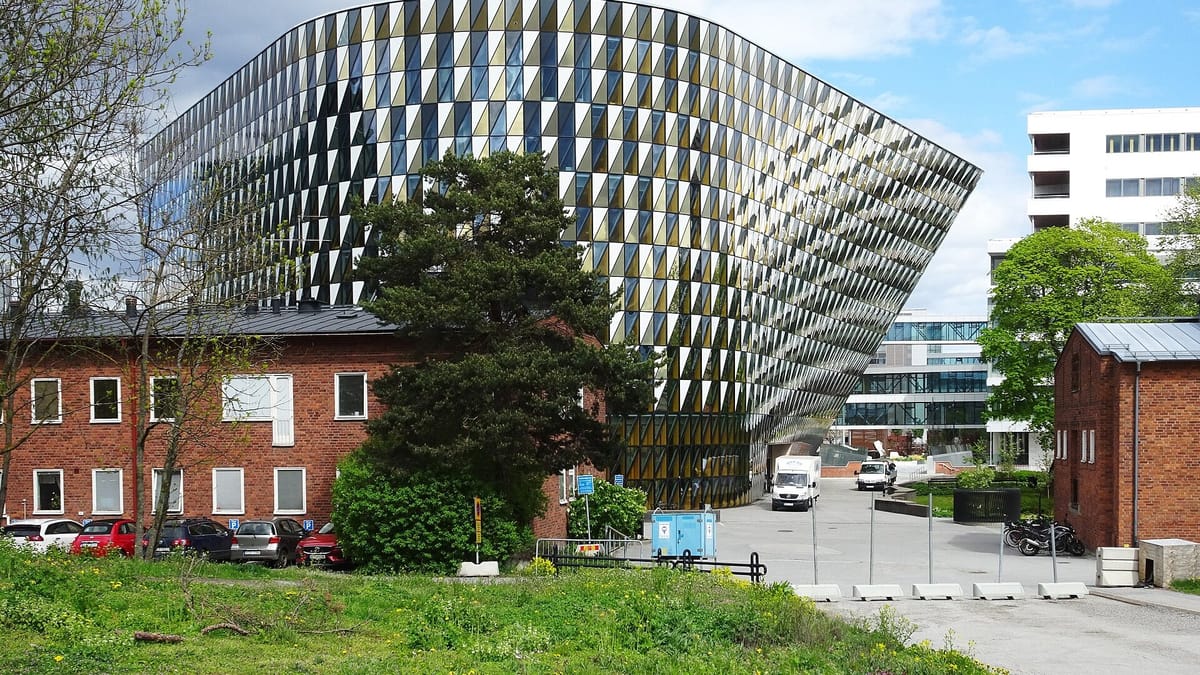
The 2026 Nobel Prize in Physiology or Medicine goes to three scientists who found a way to switch nerve cells on and off with light. The Nobel Assembly at Karolinska Institutet in Stockholm announced on Monday that Karl Deisseroth, Peter Hegemann and Georg Nagel share the prize "for their discoveries concerning light-gated ion channels and optogenetics".
It is also the first time a Portuguese scientist has sat on the committee that prepares the decision. Gonçalo Castelo-Branco, a Portuguese-Swedish neuroscientist at Karolinska, is listed among the members of the Nobel Committee for Physiology or Medicine this year.
A switch borrowed from algae
The story starts with a single-celled green alga, Chlamydomonas, which swims towards light. In the early 2000s Hegemann and Nagel found the protein that lets it do so, channelrhodopsin, sitting on the surface of the cell. When blue light hits it, a channel opens, charged ions flow in and the cell produces an electrical impulse. Whatever cell they put the protein into became sensitive to light.
Deisseroth took the next step. He put the gene for channelrhodopsin into rat nerve cells and fired them with blue light, publishing the result in 2005. Two years later he had the method working in the brains of living mice.
The technique, now called optogenetics, lets researchers turn chosen groups of neurons on or off and watch what happens. The Nobel Committee says it has been used to trace the circuits behind specific memories, feelings and behaviours linked to neurological and psychiatric disorders, and that clinicians are using it in attempts to restore sight to people with visual impairment.
"Optogenetics provides opportunities for mapping the brain in a way that we could once only dream of," said Per Svenningsson, who chairs the committee.
Deisseroth, born in 1971, is at the Howard Hughes Medical Institute and Stanford University. Hegemann, born in 1954, is at Humboldt University of Berlin, and Nagel, born in 1953, at the University of Würzburg. The prize money of 12 million Swedish kronor is shared equally.
The Portuguese member in the room
Castelo-Branco has worked at Karolinska since 1999, when he went there for his doctorate. He joined the Nobel Assembly, the 50 professors who vote on the prize, in 2023, and moved onto the committee at the end of last year as one of its ten adjunct members, a role held for at least a year. We reported his appointment in March.
In an interview with Observador published on Sunday, before the vote, he described how the work runs. The nomination deadline is 31 January. The committee receives about 700 nominations a year and starts investigating them in early February, consulting specialists on who really made each discovery and whether it has benefited humanity. On the first Monday of October the committee presents its shortlist and the assembly votes at 9:00 in Stockholm (8:00 in Lisbon).
He would not say how many names reach the final list, and the rules keep nominations secret for 50 years; the archive is currently open up to 1975. He did offer one principle: "The Nobel Prize is not a career prize, it is a prize for the discovery."
The committee is also limited by Alfred Nobel's will. The prize in medicine must reward a discovery rather than an invention, it cannot go to anyone who has died, and it cannot be split more than three ways, a rule Castelo-Branco called "quite limiting" because it can leave out people who contributed.
For years, he said, he queued to watch the announcement or followed it on YouTube. "Now I am on the other side, it is completely different."
What comes next
The three laureates will receive the prize at the ceremony in Stockholm in December. Castelo-Branco said that, as in his earlier years in the assembly, he will attend the award, the dinner and some of the receptions for the winners, and that he is "still learning" how the process works from the inside.