Lego Picks Estarreja for Its Eighth Factory Worldwide, an Investment of About 1 Billion Euros That Should Employ More Than 1,000 People From 2030
The Danish toymaker will mould, process and pack bricks on a 60 hectare site in the Aveiro district, with construction from 2027. The mayor says the council holds 45 of the 116 hectares needed and does not rule out expropriation.
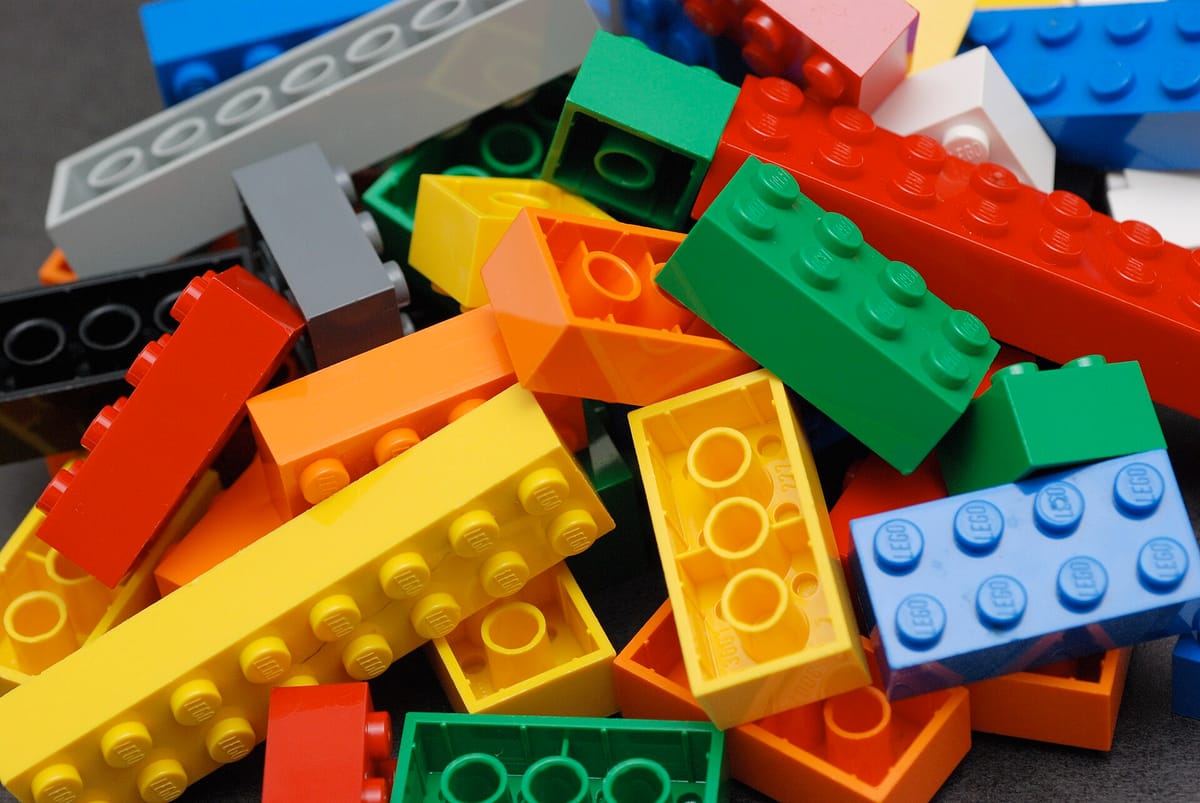
The LEGO Group will build its next factory in Estarreja, in the district of Aveiro. The Danish toymaker announced the plant on Monday at Estarreja's town hall, in the presence of Prime Minister Luís Montenegro. In its own release, Lego puts the investment at "approximately €1 billion over several years" and says the site will employ "more than 1,000 people once fully operational".
The plant will be Lego's eighth factory in the world and its fourth in Europe. It will trade as LEGO Manufacturing Portugal.
What Lego plans to build
The company's release sets out the main figures:
- a 115,000 square metre factory on a 60 hectare site, which Lego compares to about 120 football pitches;
- the full production chain on site: moulding, processing and packing, plus a high-bay warehouse;
- construction from the first half of 2027 and production from 2030;
- output for Europe, the Middle East and Africa, as Lego adds capacity close to the markets it serves.
Carsten Rasmussen, Lego's chief operations officer, came to Estarreja for the announcement. In the release he says that "Portugal stood out to us given its proximity to markets, access to transport links, commitment to sustainability and skilled local workforce", and that the plant "will be our most automated and advanced site". Speaking to the Lusa news agency, he said the investment "could reach" 1 billion euros by 2035, and that the factory would employ a thousand skilled workers, "or perhaps a few more", once at full capacity.
Lego says it wants the site to run entirely on renewable energy, with about 80 percent produced on site from solar panels and battery storage. It is also aiming for LEED Platinum, a top green-building certification.
The land is not all in place yet
The factory will sit in Estarreja's Eco Parque Empresarial (Business Eco-Park). The Câmara Municipal de Estarreja (Estarreja Town Council) says the deal took about nine months of meetings, site visits and assessments, and it thanks AICEP, the State's investment and trade agency, for its support.
The mayor, Isabel Simões Pinto, told Lusa, as reported by ECO, that the council currently holds 45 of the 116 hectares the project will need. Land for the first phase is ready to sell, she said, but the rest must still be surveyed and bought, and expropriation "is a scenario we have on the table". Lego's own release gives 60 hectares for the site; neither source explains the difference.
Montenegro pledged the government's "full commitment" to making the land available. He also warned the public services still involved in the process: "don't let me down."
Jornal Económico reports that AICEP and Lego signed a memorandum of understanding at the ceremony. Under it, the agency will steer the project through licensing, infrastructure, energy, training and the hiring of Portuguese suppliers. Economy Minister Manuel Castro Almeida and AICEP's president, Ana Casaca, also attended. No source mentions any State incentive or tax benefit for the project, and the government had not published a statement by Monday afternoon.
A Danish arrival and a Danish exit
The announcement comes three weeks after another Danish manufacturer in the same district went the other way: the shoemaker ECCO said it would shut its Santa Maria da Feira factory and lay off 632 workers. Portugal drew 186 foreign investment projects in 2025, slightly fewer than the year before.
Lego has been adding capacity worldwide. It opened a factory in Vietnam in April 2025, is due to open a factory and a distribution centre in the United States in 2027, and is expanding in Mexico, Hungary and China.
Sources: the LEGO Group's announcement (23 November 2026); Câmara Municipal de Estarreja (23 November 2026); the Prime Minister's agenda (portugal.gov.pt); Lusa via RTP and ECO; Jornal Económico.