Leave Your Engine Running at an Airport Drop-Off and ANA Can Now Charge You up to 300 Euros, While Skipping the Parking Fee Can Bring a One-Year Ban
ANA's new car park and drop-off rules for ten Portuguese airports take effect on 25 September: 60 to 300 euros for light breaches, bans of up to a year for serious ones, and a 24-hour charge for a lost ticket.
From Friday, a driver who waits in a drop-off lane at a Portuguese airport with the engine running, or stops outside the marked bays, can be charged between 60 and 300 euros by the airport operator itself. A driver who leaves a car park without paying, or who touts for rides outside the designated ranks, can be barred from every car park and drop-off zone at that airport for up to a year.
The rules are in Regulamento n.º 1189/2026 (Regulation 1189/2026) of ANA, Aeroportos de Portugal, the concession holder that runs the country's main airports. It was published in the Diário da República (the official gazette) on Thursday 24 September and enters into force the day after publication. It revokes the previous regulation, Regulamento n.º 386/2019 of 30 April 2019.
Where it applies
The regulation covers every car park and every drop-off and pick-up zone, present or future, at ten airports:
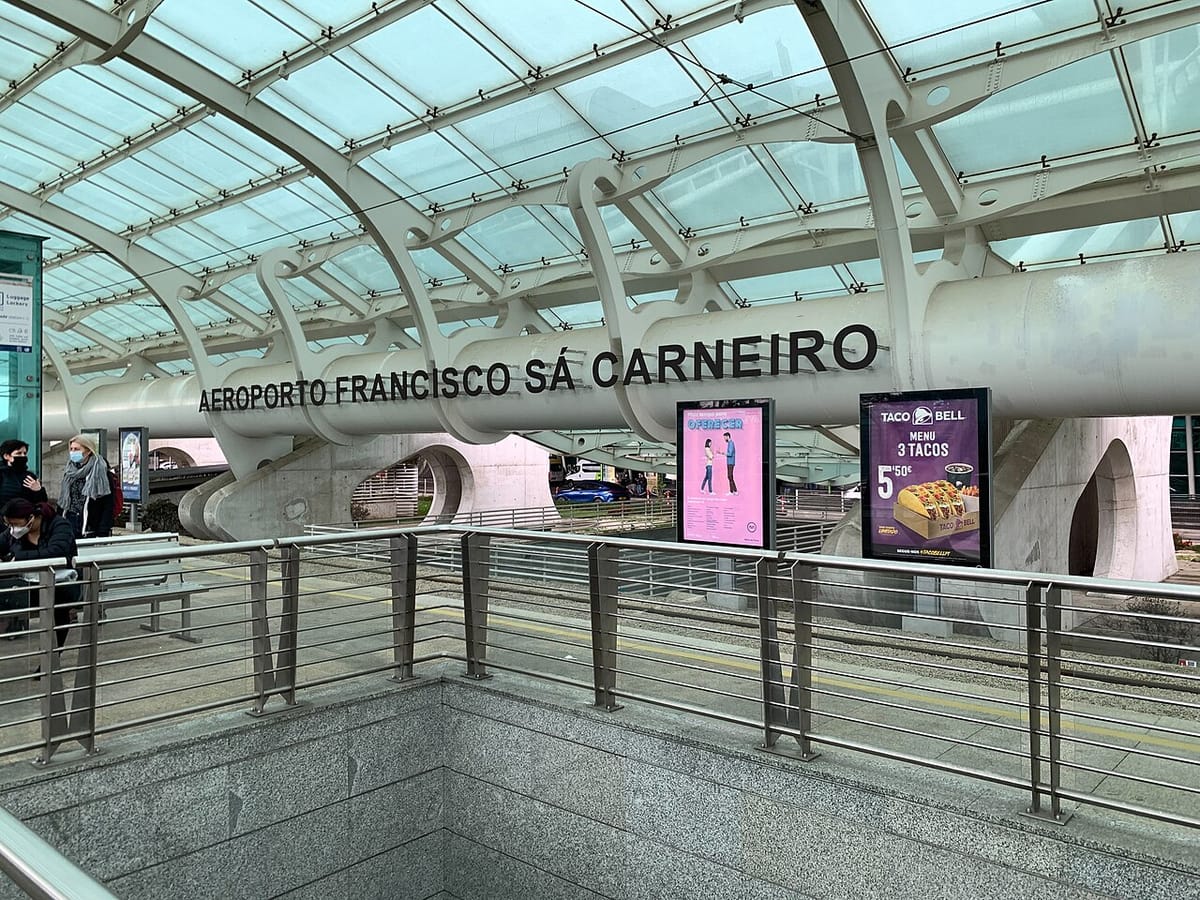
- Lisbon (Humberto Delgado), Porto (Francisco Sá Carneiro) and Faro (Gago Coutinho);
- Funchal and Porto Santo in Madeira;
- Ponta Delgada, Horta, Santa Maria and Flores in the Azores;
- the civil terminal at Beja.
It applies to passengers and to anyone else who drives in to park, and to people who work at the airport.
What now counts as a light infringement
The regulation splits breaches into two classes. The light ones, each punishable by a pecuniary sanction of 60 to 300 euros, are:
- keeping the engine running for anything other than driving or manoeuvring;
- stopping or parking anywhere other than a marked bay, which includes traffic lanes, access ramps and signed no-stopping areas;
- parking across the white lines of a bay;
- putting a cover over a parked car;
- ignoring instructions from ANA or its contractors;
- breaking the Código da Estrada (Highway Code) inside the car parks and drop-off zones;
- failing to move a car after ANA has served notice to do so;
- bringing in a motorcycle, moped, tricycle or quadricycle where the site's rules do not allow it.
The drop-off and pick-up zones are, in the regulation's words, for stopping "for the time strictly necessary". ANA may restrict access to them and cap how long a car stays, so that more drivers can use them.
What earns a ban of up to a year
Serious infringements do not carry a money penalty. They carry a temporary ban on entering the airport's car parks and drop-off zones for up to one year. They are:
- not paying the parking charge, or taking a car out of a car park before paying;
- offering any commercial service, including car hire without a driver, or taxi and TVDE (ride-hailing) pick-ups outside the places set aside for them, "regardless of its lawfulness, authorisation or legal framework";
- washing, servicing or repairing a car, beyond what is strictly needed to get it in or out;
- lighting a fire or carrying flammable, explosive or toxic material, such as fuel cans;
- bringing in a vehicle over the site's size limit, or an LPG or natural gas vehicle that does not meet the legal requirements for enclosed car parks.
In deciding which class a breach falls into and how hard to come down, ANA is told to weigh the nature of the obligation broken, the driver's degree of fault, the consequences for safety and operations, and any repeat offending. The regulation states that these sanctions are not a contraordenação (administrative offence) regime and do not replace the penalties in other laws: they are powers ANA claims as concessionaire. Enforcement can be by staff, video surveillance or number plate reading.
Charges, lost tickets and abandoned cars
The regulation does not set any prices. ANA fixes the parking charge, which it may vary by car park, type of car park, length of stay, day of the week and type of vehicle, and must publish the amounts on its website and at each site. A charge is also due in the drop-off and pick-up zones. Payment can be made, where available, in cash at a manual or automatic pay station, by mobile app, with a prepaid Credipark card, by season ticket, by online booking, or through Via Verde or an equivalent system.
Once you have paid, you have a set time to leave, shown in each site's technical sheet. Overstay it and you pay again for the extra time.
If you lose your ticket, or it is too damaged to read, ANA will first try to establish how long you were there. If it cannot, it charges 24 hours. The same applies if you had already paid but cannot show a receipt.
A car left for more than 30 consecutive days without paying, or one with no readable number plate, or one that is visibly derelict, counts as abusively parked and can be clamped or removed under the Highway Code. ANA will notify the owner where it can and give 45 days to settle the debt and remove the car. After that, the car is treated as occupying State public land, and the Highway Code's rules on abandoned vehicles apply.
The regulation also states that parking at an airport is not a contract of safekeeping. ANA accepts no duty to guard the car or its contents, and no liability for theft, robbery or damage caused by third parties.
What this means for residents of Portugal
- Dropping someone off: stop only in a marked bay in the drop-off zone, switch the engine off if you are waiting, and do not linger. Check the signs at the airport for any time limit and charge, because the regulation leaves both to ANA.
- Keep your ticket or receipt: without either, you may pay for a full day.
- Long stays: if you leave a car in an airport car park for weeks, make sure the charge is paid or booked in advance. Thirty unpaid days start the abandonment process.
- Drivers who work at the airport: taxi and TVDE drivers should pick up only in the dedicated areas; a ban from the car parks and drop-off zones can last up to a year.
- Valuables: ANA disclaims responsibility for theft or damage, so check your own car or home insurance before a long trip.
The regulation is dated 27 July 2026 and signed by Thierry Ligonnière, chair of ANA's executive committee. Lisbon's airport taxis face separate changes of their own: fixed prices from the rank start on 15 October.
Source: Regulamento n.º 1189/2026, ANA, Aeroportos de Portugal, S.A., Diário da República, 2.ª série, n.º 186 of 24 September 2026.