Judges and Prosecutors Will Get Their Own Economists, Psychologists and Engineers From Late November, Under a New Decree
Decree-Law 196/2026 sets up regional offices of specialist advisers for Portugal's courts and public prosecutors, on three-year terms paid from 2,790 to 3,250 euros a month. It takes effect 60 days after Tuesday's publication.
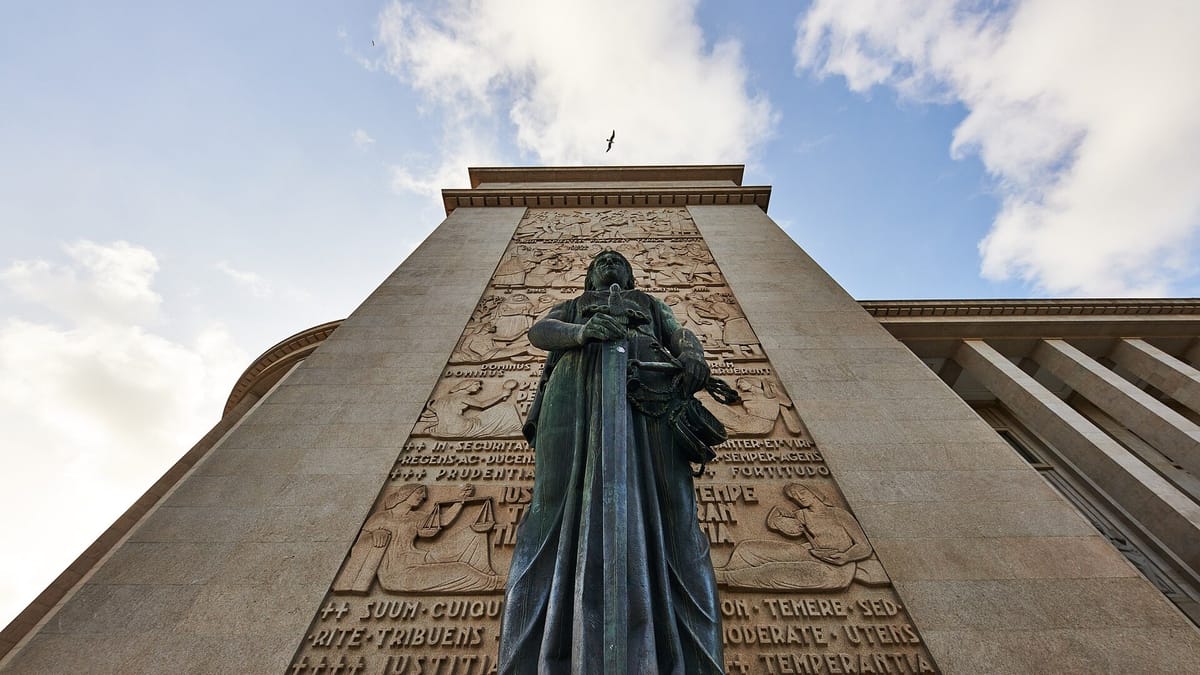
Portuguese judges and public prosecutors will be able to call on their own economists, accountants, psychologists, engineers and forensic specialists under a decree published in the Diário da República (Portugal's official gazette) on Tuesday. Decreto-Lei n.º 196/2026 (Decree-Law 196/2026) replaces a patchwork of rules on court advisers with a single regime, and takes effect 60 days after publication, at the end of November.
The government says the old rules, scattered across several laws, produced "enormous disparities" between courts. The new decree is part of Portugal's Recovery and Resilience Plan, and its stated aim is to free magistrates for judging and to cut the backlog of pending cases.
Who the advisers are
The advisers (assessores) are not magistrates. They may work in law, economics, management, data analysis, accounting and finance, psychology, engineering, architecture, criminology, forensic science or medicine, and the judicial councils can add other fields. Think of a company's books in an insolvency, or a building defect in a construction dispute.
Psychologists get a specific role: preparing and accompanying children who give statements in family courts, and victims giving evidence in criminal cases.
First-instance courts will share advisory offices organised by region, one for each appeal court (Tribunal da Relação) area and based in the same city. Each region gets one office serving judges, under the CSM (Conselho Superior da Magistratura, the High Council of the Judiciary), and one serving prosecutors, under the PGR (Procuradoria-Geral da República, the Prosecutor General's Office). The administrative and tax courts follow the same pattern. The appeal courts and the two supreme courts get offices of their own. How many posts there will be is left to a later ministerial order.
Terms and pay
Advisers are chosen from a call for CVs published on the appointing body's website. They need a degree with a final grade of at least 14 out of 20, or recognised merit or experience in their field. Appointments run for three years, renewable up to a limit of three, and advisers can be dismissed at any time without compensation.
Pay is fixed on the civil service's single pay scale: level 40 in the first-instance offices, level 42 in the appeal courts and level 48 in the supreme courts. On the 2026 scale published by the DGAEP (Direção-Geral da Administração e do Emprego Público, the public employment directorate), that is 2,790.67, 2,904.18 and 3,250.36 euros a month gross, plus holiday and Christmas pay and meal allowance. Advisers have no fixed hours and no overtime pay, get 22 days of holiday, and must work exclusively for the courts, though they may write, lecture and, if authorised, teach at a university.
They are bound to secrecy, may not comment publicly on any case, and may not sit as jurors or serve in an office that covers a court where a close relative is a magistrate.
What happens to current advisers
The decree does not apply to advisers already in post, but their terms cannot be renewed once they expire; they may reapply under the new rules. Each office must report on its work every year to the body that appoints it, and the regime will be assessed after three years. Courts may also sign agreements with outside bodies for one-off expertise, and with universities and professional associations for internships for graduates and students. Student interns receive no pay beyond a meal allowance.
The decree was approved by the Council of Ministers on 23 July and promulgated by President António José Seguro on 16 September. The higher courts face other staffing disputes, including a lawsuit by three appeal judges over Supreme Court promotions.