Jorge Palma, Who Left the Conservatory for Rock at Fourteen and Was Paid for His First Single in White Goods, Has Died at 76
The songwriter died in Lisbon on Monday night of a cardiorespiratory arrest. Tributes came from the Prime Minister, the Foreign Minister and the Socialist leader, and from a generation that knew the words to everything on one 1991 record.
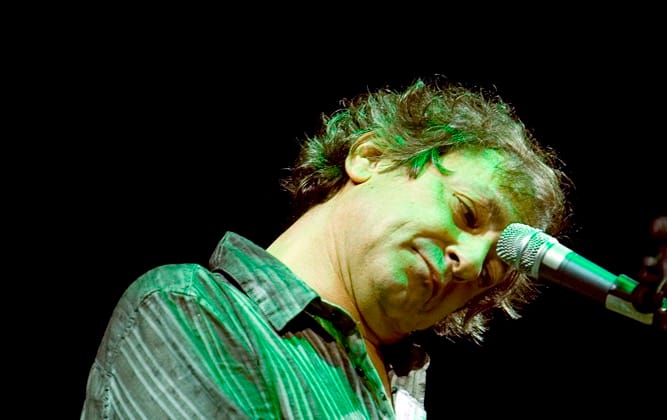
Jorge Palma died in Lisbon on Monday night, aged 76. His family and his agency said in a statement shared on social media that the cause was a cardiorespiratory arrest. He had cancelled recent concerts with his two sons, in Lisbon and Oliveira do Hospital, on medical advice.
He was one of the few Portuguese songwriters whose work crossed every audience in the country without quite belonging to the mainstream, and Tuesday morning's tributes came from across the political spectrum. Prime Minister Luís Montenegro said his voice and his timeless songs had helped transform Portuguese culture. Foreign Minister Paulo Rangel quoted a line of his lyrics and called it a sad day, very sad, for Portuguese music. The Socialist leader José Luís Carneiro described an extraordinary body of work that had crossed generations, and a free man.
The conservatory, and leaving it
Palma was born in Lisbon in 1950. There was a piano in the house, which he later described as his toy, and he was reproducing what he heard on the radio before anyone taught him anything. Lessons began when he was six, the Conservatório de Música de Lisboa at ten, and in 1963 he took second place at an international piano competition at the Juventudes Musicais festival in Palma de Mallorca.
At fourteen he walked away from all of it. Elvis first, then the Beatles and the Rolling Stones; he abandoned the classical studies, stopped going to piano lessons, and failed his fourth year at the Liceu Camões.
Paid in white goods, then Copenhagen
He played in the group Sindicato, which appeared at the first Vilar de Mouros festival in 1971. In 1972 he recorded his first single under his own name, "The Nine Billion Names of God", the title taken from an Arthur C. Clarke story. The label paid him in household appliances: a washing machine and a fridge. He auctioned them off among friends the following year, when he was called up for military service and chose instead to leave the country, flying to London and on to Copenhagen, where he cleaned hotel rooms.
He came back after the revolution of 25 April 1974 and released his first album, Como uma viagem na palma da mão, in 1975, playing almost every instrument on it himself. Later in the decade he was in Paris, busking in the street and the metro with Dylan, Paul Simon and James Taylor.
Só
Back in Lisbon in the 1980s he returned to the conservatory and finished his piano studies in 1990. The following year came Só, recorded at forty: fifteen songs from the previous two decades revisited at the piano alone, among them "Bairro do amor", "Na terra dos sonhos", "O meu amor existe", "Estrela do mar", "Deixa-me rir" and "Frágil". The label, he recalled, was not inclined to spend on an artist who did not sell many records, so they let him record voice and piano. Thirty years later strangers were still stopping him to talk about it.
Four more albums of originals followed, ending with Vida in 2023, alongside the Palma's Gang with members of Xutos & Pontapés and Rádio Macau, and the band Rio Grande. In May 2025 he took a show called "3 Palmas na Mão" on stage with his sons Vicente and Francisco. He won the Prémio José Afonso in 2002 and the first Prémio Pedro Osório in 2012, and was made a Comendador da Ordem do Infante D. Henrique. Accepting a lifetime award in April this year, a red carnation in his lapel, he thanked the staff of the national health service for doing everything with very little, and asked the country not to let April 1974 fade into a distant memory.
Feature photograph: Jorge Palma in concert, by José Goulão, via Wikimedia Commons, CC BY-SA 2.0.