Infraestruturas de Portugal Aims to Run a Quarter of the Railway on Solar Power, Beginning With a 10 Million Euro Plant at Entroncamento
The state rail and road company wants 50 MWp of solar capacity, enough to cover a quarter of its needs, Negócios reported. The first plant, at Entroncamento, has a 10 million euro tender open until 29 December.
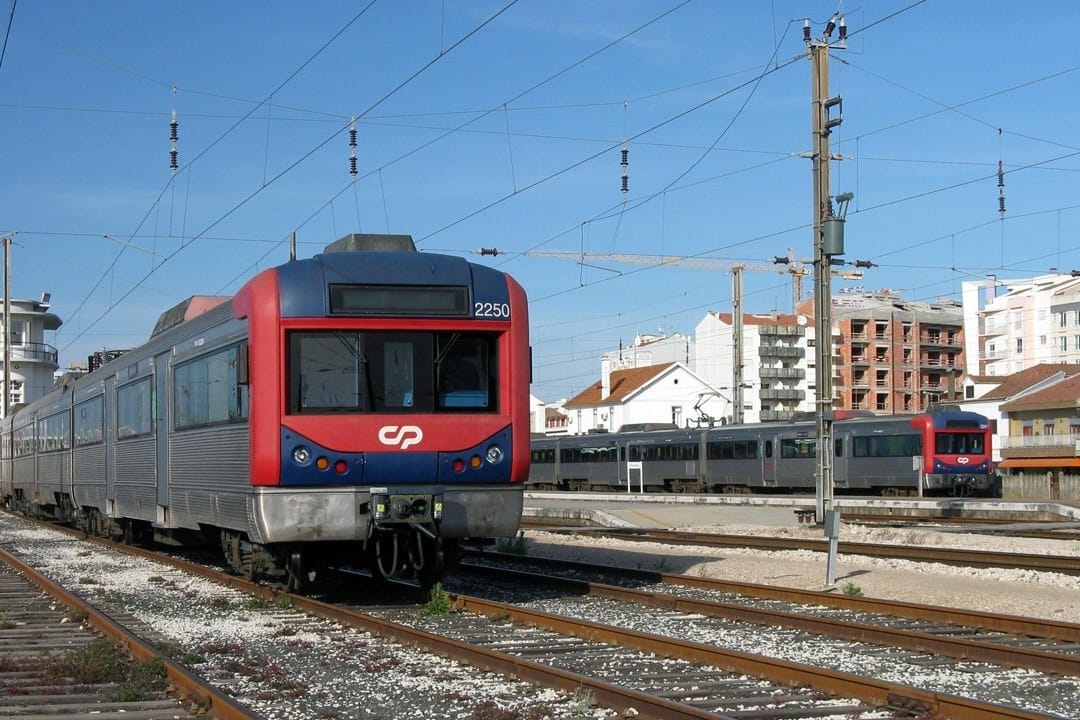
Infraestruturas de Portugal (IP, the state company that runs the country's rail and road networks) is preparing to generate some of the electricity that moves its trains. Its first solar plant for the railway will be built at its logistics complex in Entroncamento, the rail junction town in Santarém district, and a public tender for the work is already open.
Jornal de Negócios reported on 19 October that the Entroncamento unit is the first of several IP wants to build in the coming years. The company's target is 50 MWp (megawatts peak, the maximum output of the panels) of installed capacity, which Negócios said could cover a quarter of the network's total needs. The newspaper put the first plant at 5 MWp, a tenth of the target it said is set for 2030, in a project worth 10 million euros.
What the tender says
The official notice gives a slightly different size. IP's procurement notice in the Diário da República (the official gazette) is for a "solar photovoltaic park and adaptation of the substation, phase 1 (up to 9 MWp)" on the Linha do Norte (the Lisbon to Porto main line) at Entroncamento. "Up to" sets a ceiling, so a 5 MWp plant would fall within it; the notice itself does not state a final figure.
The notice, as amended and published on 13 October, sets out the main terms:
- a base price of 10 million euros before VAT;
- a deadline for bids of 17:00 on 29 December 2026;
- a contract period of 2,280 days, which is a little over six years by our arithmetic;
- award on price (60 percent) and technical merit (40 percent);
- no EU funding, according to the notice.
The amendment changed only the bid deadline. The original notice, n.º 19868/2026, was published on 4 August. The project also appears on IP's own list of open tenders, next to a separate tender for solar panels for self-consumption at its Pragal campus in Almada.
Why it matters
Electric trains in Portugal draw their power through IP's traction substations, and the cost of that electricity feeds through to the train operators. Under IP's network statement (the rulebook for companies running trains on its lines), IP passes the direct cost of buying traction electricity on to rail operators such as CP (Comboios de Portugal, the state train operator).
That cost has been rising. In its 2025 performance report to the government, IP said its rail income rose 9 percent to 103.8 million euros, partly because of higher traction electricity charges. It linked that to supply contracts with variable prices in force since January 2024, whose values "have been rising recently" (our translation).
In principle, every unit of power IP generates itself is one it does not have to buy at those prices. That matters to anyone who commutes by train, since energy is part of what operators pay to run services. Neither IP nor Negócios has said whether it will change ticket prices or operators' charges, and IP has not published its own announcement of the 50 MWp plan. The figures on the wider programme and the 2030 target therefore rest on the Negócios report.
The solar plan sits alongside other work on the same main line, including the bid for EU funds for European train control and rail radio between Lisbon and Porto.