Registering as a Bone Marrow Donor in Portugal
Researched and written with AI tools from official sources. How we make our guides
Who can join Portugal's bone marrow donor register, how to sign up online and give a sample, and what happens if you are ever a match.
Last verified: October 2026.
Who this is for
- Residents of Portugal aged 18 to 35, of any nationality, who want to help patients needing a transplant.
- Immigrants who know that patients from their own background struggle to find a matching donor.
- People already on the register who want to know what happens if they are called.
Not for you if: you want to give blood. Read "Giving Blood in Portugal".
Portugal's bone marrow donor register (CEDACE) lists volunteers willing to give blood-forming cells to a patient who needs a transplant. You can join if you are 18 to 35, healthy, have never had a blood transfusion, and live in Portugal. You fill in a health form online, then give one blood sample in person. Joining is free, you do it once, and you stay on the register until you are 55. Most donors are never called, but a match could save a life.
Why the register needs you
Some blood diseases, mainly leukaemias, can only be cured with a bone marrow transplant. The cells must match the patient's as closely as possible. The best donor is a brother or sister who matches, but that happens in only 25 to 30 percent of cases. Everyone else needs an unrelated volunteer.
The match is checked with a genetic test called HLA typing. Portugal's register is linked to registers around the world, so when you join, patients abroad can find you too. Through that network, about 70 percent of patients now find a matching donor.
The odds are lower for patients of other ethnic backgrounds. Most donors on the world's registers are white, of European descent, so there are too few donors from other backgrounds. If your roots are in Africa, Asia, Latin America, or elsewhere, you are exactly the kind of donor the registers lack.
Age matters too. Patients who get cells from younger donors survive at higher rates, which is why the register only takes new donors up to 35.
Who can register
You can sign up if all of these apply to you:
- You are between 18 and 35.
- You are healthy, with no illness that could pass to the patient or that would put you at risk if you donated.
- You have healthy lifestyle habits.
- You have never received a blood transfusion.
- You live in Portugal.
The conditions do not mention nationality. What counts is that you live here.
A doctor reviews your answers before you give a sample, so the final decision is medical. If you registered in the past, even on paper, that registration still counts. Do not sign up again.
How to register
Signing up has two stages: an online form and a visit in person. You need access to the same email address for both.
- Fill in the online form. Go to the IPST donation platform and choose bone marrow (medula óssea). Read the terms, then answer the medical questionnaire. The platform has an English version: use the EN button at the top.
- Wait for the medical review. A doctor checks your answers. If nothing rules you out, you are invited to give a blood sample.
- Give the blood sample. This happens in person. It is a small sample for HLA typing, not a full blood donation. The platform's "where to give" map (Onde Dar) lists collection sessions. Look for sessions marked for screening marrow candidates (triagem candidatos medula óssea). The map is still in test mode, so check that a session is still planned before you go.
- You are on the register. You get a unique donor code, which keeps your identity and health data confidential. Your HLA type goes onto the Portuguese register and the world network.
Three laboratories at IPST's Blood and Transplant Centres in Lisbon, Coimbra, and Porto handle new donors. They sign people up, collect samples, and run the tests for their regions.
What happens after you register
Usually, nothing happens for a long time. Because people differ so much genetically, most donors on the register are never called. It can take years before you match someone.
If a patient's HLA type looks like yours, this is what follows:
- A second blood sample. The register asks for a new sample to confirm the match.
- You confirm again. If the tests show a full match, you are asked whether you are still willing to donate.
- A medical check. If you say yes, you have a medical examination and clinical tests before the collection is planned.
Keep your contact details up to date, so the register can reach you if you are a match.
How the cells are collected
There are two methods. You choose which one, although the transplant team may say which it prefers.
From your blood (apheresis)
This is the method that does not need surgery.
- For about five days beforehand, you have injections under the skin of a medicine called filgrastim. It moves the cells from your bone marrow into your blood.
- The injections can cause bone or muscle aches. These are usually mild, and paracetamol helps. Most people keep working, but you should avoid hard exercise, such as a gym workout.
- On the day, a thin tube goes into a vein, usually in your arm. Your blood passes through a machine that keeps only the cells needed and returns the rest to you.
- The collection takes 4 to 6 hours. Afterwards you can go back to normal life. Sometimes the collection continues the next day.
From your hip bone
- You have a general anaesthetic in an operating theatre, so you also see an anaesthetist beforehand.
- The doctors draw the cells from your hip bones with needles. No injections are needed beforehand.
- The procedure takes 1 to 2 hours. You normally stay in hospital for 24 hours.
- The main risks are those of the anaesthetic, plus some bleeding and soreness where the needles went in. The soreness can last a few days.
With either method, only a small share of your cells is taken, and your body replaces it quickly. Bone marrow regenerates, so you can donate more than once.
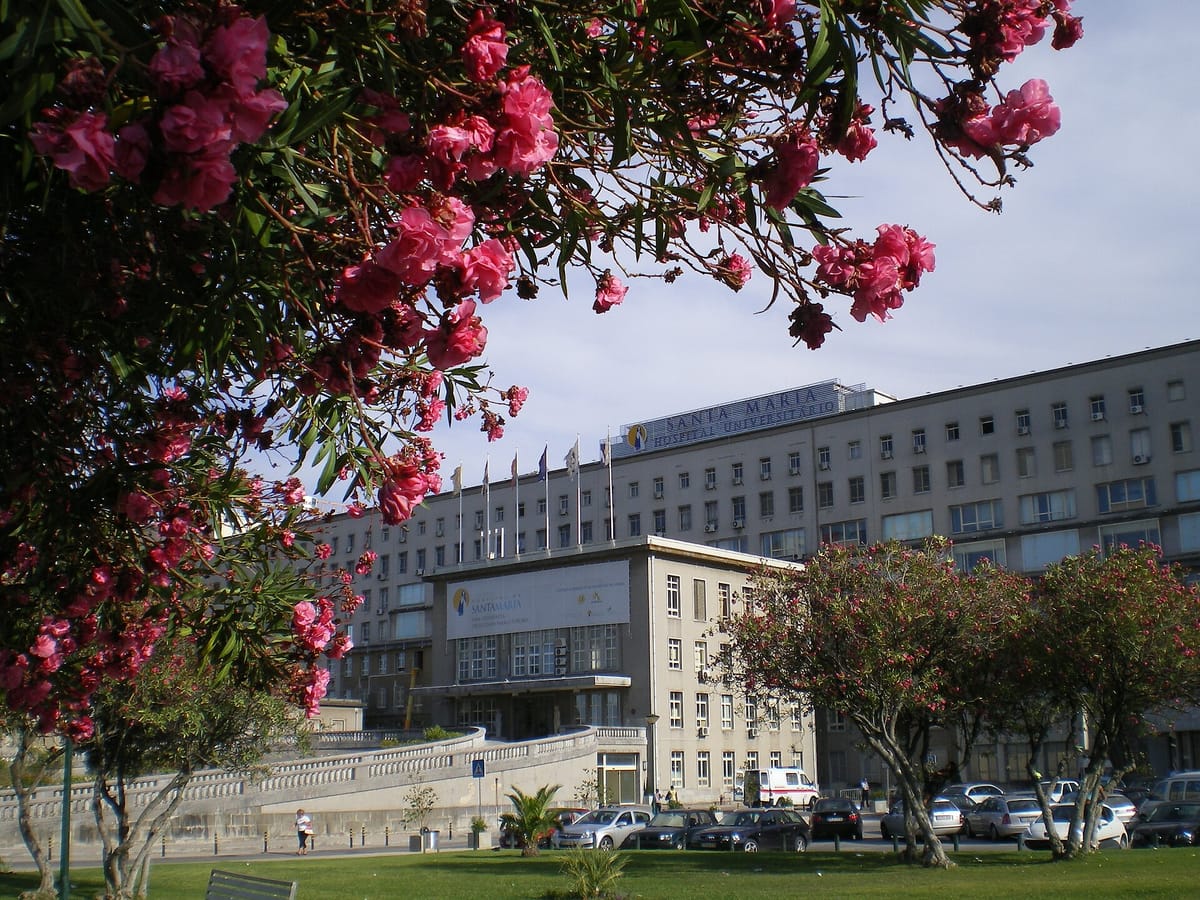
Collections take place at the cell collection units of the Portuguese Institute of Oncology (IPO) in Lisbon and Porto, and at Santa Maria Hospital in Lisbon.
What it costs you, and what you get back
You are not paid to donate, and no one may pay or be paid for your cells. The law says donation is voluntary and unpaid. But you should not be out of pocket either:
- Medical tests are free.
- Travel, accommodation, and transport costs are paid back by IPST, the national blood and transplant institute, if you keep proof of what you spent.
- Lost earnings are covered. IPST pays compensation for income you lose because of the donation, again with proof. The compensation only covers the loss; it is not a payment for donating.
- Medical care is free. You get free care in the national health service (SNS) until you have fully recovered, including follow-up after the donation.
Keep every receipt, ticket, and payslip linked to the donation, and ask the register how to claim when you are called.
Your privacy and the patient's
The donation is anonymous. Your identity is not revealed to the patient, and the patient's is not revealed to you. You cannot choose who receives your cells, unless the patient is a genetic relative, such as your brother, sister, parent, or child. Your cells can go to any patient in the world who needs them.
If you change your mind
You can leave the register at any time, without giving a reason. Ask the register in writing to cancel your registration. Your consent is always given in writing and you can always withdraw it.
Think hard before you withdraw late, though. Before the transplant, the patient has high-dose chemotherapy to prepare for your cells. If you pull out after that treatment has started, the patient's life could be at risk. If you have doubts, say so early.
Who to contact
- The register (CEDACE): email [email protected].
- Lisbon: Blood and Transplant Centre, transplant area, Alameda das Linhas de Torres 117 (at Pulido Valente Hospital). Phone 217 504 100. Donors are seen Monday to Thursday 08:00 to 16:00, and Friday 08:00 to 15:00.
- Coimbra: Blood and Transplant Centre, Rua Escola Inês de Castro, São Martinho do Bispo. Phone 239 791 070. Transplant area donors are seen Monday to Friday 08:00 to 16:00.
- Porto: Blood and Transplant Centre, Rua do Bolama 133. Phone 220 045 240. Transplant area donors are seen Monday to Friday 08:00 to 16:00.
This guide is general information, not medical advice. The register's doctors decide whether you can donate.
Sources
This guide is written from official sources and, where relevant, organisations' own websites.
- Instituto Português do Sangue e da Transplantação (IPST), Como ser potencial dador de medula óssea (age 18 to 35, healthy, no transfusion, resident in Portugal; register once, earlier paper registrations still valid) (Portuguese only)
- IPST, Plataforma de dádiva: questionário de inscrição de dador de medula óssea, terms sections I to X (online form then in-person registration, same email for both, healthy habits, valid to age 55, doctor's review, HLA blood sample, world network, confirmation steps, both collection methods, donor's choice, withdrawal in writing, expenses, lost earnings, free SNS care, anonymity, unique code, CEDACE email) (Portuguese and English)
- IPST, Plataforma de dádiva: Onde Dar map (session type for marrow candidate screening; map in test mode) (Portuguese and English)
- IPST, Registo Português de Dadores de Medula Óssea, CEDACE (what the register does; donor centres in Lisbon, Coimbra and Porto; collection units at IPO Lisboa, IPO Porto and Hospital de Santa Maria) (Portuguese only)
- IPST, Perguntas frequentes CEDACE: porquê ser dador (leukaemias, sibling match 25 to 30 percent) (Portuguese only)
- IPST, Perguntas frequentes CEDACE: probabilidade de encontrar um dador compatível (about 70 percent; lower for patients of other ethnic backgrounds) (Portuguese only)
- IPST, Perguntas frequentes CEDACE: prioridade aos dadores mais jovens (better survival with younger donors) (Portuguese only)
- IPST, Perguntas frequentes CEDACE: quando serei chamado (most donors never called; may take years) (Portuguese only)
- IPST, Perguntas frequentes CEDACE: colheita a partir do sangue periférico (five days of filgrastim, side effects, 4 to 6 hours, possible second day) (Portuguese only)
- IPST, Perguntas frequentes CEDACE: colheita a partir da medula óssea (general anaesthetic, 1 to 2 hours, 24-hour stay, risks) (Portuguese only)
- IPST, Perguntas frequentes CEDACE: o que é um transplante de medula óssea (high-dose chemotherapy before the cells are given) (Portuguese only)
- IPST, Perguntas frequentes CEDACE: só se pode dar medula óssea uma vez? (marrow regenerates; more than one donation possible) (Portuguese only)
- IPST, Perguntas frequentes CEDACE: pode um dador desistir (withdraw at any time in writing; risk to the patient if late) (Portuguese only)
- IPST, Perguntas frequentes CEDACE: quem paga os custos (expenses refunded with proof, free tests, compensation for lost earnings) (Portuguese only)
- IPST, Centro de Sangue e da Transplantação de Lisboa, contacts (transplant area address, phone and donor hours) (Portuguese only)
- IPST, Centro de Sangue e da Transplantação de Coimbra, contacts (Portuguese only)
- IPST, Centro de Sangue e da Transplantação do Porto, contacts (Portuguese only)
- Diário da República, copy hosted by IPST, Lei n.º 12/2009, de 26 de março, articles 2 (covers bone marrow and blood stem cells), 22 (voluntary, unpaid donation; living donors' compensation limited to expenses and losses, now paragraph 4 after Lei n.º 99/2017) and 23 (confidentiality) (Portuguese only; original text, amendment checked in Lei n.º 99/2017)
- Diário da República, copy hosted by IPST, Lei n.º 22/2007, de 29 de junho, republishing Lei n.º 12/93, de 22 de abril, articles 8 (consent in writing, freely revocable) and 9 (medical care until full recovery; compensation for harm and expenses) (Portuguese only; article 9(4) was later revoked by Decreto-Lei n.º 168/2015)
Last verified October 2026. Rules and fees change; check the official source before acting.