Giving Blood in Portugal
Researched and written with AI tools from official sources. How we make our guides
Who can give blood in Portugal, what to bring, how often you can donate, common waiting periods, what happens on the day, and your rights as a donor.
Last verified: October 2026.
Who this is for
- You live in Portugal, are aged 18 to 70, and want to give blood.
- You gave blood in another country and want to keep donating here.
- You lived in the UK between 1980 and 1996 and were told you could never donate.
Not for you if: you want to know about donating organs after death. Read our guide to organ donation in Portugal instead.
You can give blood in Portugal if you are 18 to 70, weigh at least 50 kg, and are in good health. At 17 you can donate with a parent's or guardian's consent. Nationality does not matter, but foreign donors must show proof that they live here. A health professional screens you before every donation. The whole visit takes about 30 minutes on average. Donation is voluntary and unpaid, and the law lets you take the time off work you need to donate.
Who runs blood donation
The Portuguese Institute of Blood and Transplantation (Instituto Português do Sangue e da Transplantação, IPST) is the public body for blood donation. It has three regional blood and transplant centres, in Lisbon, Coimbra, and Porto. Hospital blood services and mobile collection sessions also take donations.
You can find a place and date near you on the IPST's online platform, under "Onde Fazer" (where to donate). The platform also has a short self-assessment you can take before you go.
Who can donate
The basic rules are:
- Age 18 to 70. At 17 you need consent from a parent or legal guardian.
- Weight of at least 50 kg.
- Good health and healthy habits.
If you want to give blood for the first time at 60 or over, a doctor at the blood service decides. Regular donors over 65 can keep donating until 70, after an individual medical check.
Before every donation you fill in a questionnaire. Then a health professional checks your weight, blood pressure, and haemoglobin and asks about your health. That screening, not a published list, decides whether you donate that day. Answer every question honestly. It protects you and the patient.
What changed for older donors and UK residents
The IPST has changed several donor selection rules, following European guidance:
- The age limit of 60 for a first donation no longer exists. A doctor decides instead.
- Having lived in the United Kingdom between 1980 and 1996 is no longer an automatic permanent bar.
- Having had a blood transfusion after 1980 is no longer an automatic permanent bar.
- The waiting period for West Nile virus has gone, because each donation is now tested for it.
- You can eat a light meal before donating without waiting to digest it.
If you were turned away in the past for one of these reasons, you can go back and be screened again.
What to bring
- A valid photo ID, such as a Citizen Card, passport, residence card, or driving licence.
- If you are an EU citizen: proof of your address in Portugal.
- If you are not an EU citizen: a valid residence permit, even a temporary one.
- The names of any medicines you take.
- Your SNS user number, if you have one. See Registering with the SNS in Portugal.
The proof of address or residence is required because every donation must be traceable. You register when you arrive. There is no need to sign up in advance.
The questionnaire and interview are in Portuguese. If your Portuguese is limited, ask the centre in advance whether someone can help.
If you donated in another country
The IPST says that if you donated regularly in a country with no extra restrictions, you are welcome to keep donating in Portugal. You still have to meet the rules and pass screening.
There is one specific rule for Chagas disease, which is common in parts of Latin America. It applies if you, or your parents or grandparents, were born in such an area. You wait six months after returning from there and have a blood test. If it is negative, you can donate.
How often you can give
You must wait at least two months between donations. You can donate no more than three times in 12 months if you are a woman, and four times if you are a man.
Plasma and platelet donations follow their own rules. Ask the blood service.
Common waiting periods
Most reasons for not donating are temporary. These are some of the waiting periods the IPST publishes:
| Situation | Wait before donating |
|---|---|
| Tattoo or piercing | 4 months |
| Antibiotics | 14 days after the last dose, if you have no symptoms |
| Flu symptoms | 15 days after you recover, without medicine |
| Surgery without complications or transfusion | 4 months |
| Endoscopy or colonoscopy | 4 months |
| Tooth extraction, implant, or root canal | 7 days after treatment ends |
| Scale and polish, or brace adjustment | 24 hours |
| Pregnancy | 6 months after the birth |
| Breastfeeding | 90 days after you stop |
| New sexual partner | 3 months |
Travel is assessed case by case. Tell the screener where you went, how long you stayed, and whether you were ill during or after the trip.
Some medicines lead to a wait and others do not. Bring their names. For example, cholesterol medicine does not stop you donating, and neither do antidepressants if you feel well. If you are unsure, go and be screened rather than ruling yourself out.
What happens on the day
- Eat and drink. Do not come fasting. Have breakfast or a snack, but not a heavy meal. Drink extra water or tea the day before and on the day.
- Register with your ID.
- Fill in the questionnaire and sign the consent form.
- See the health professional for screening.
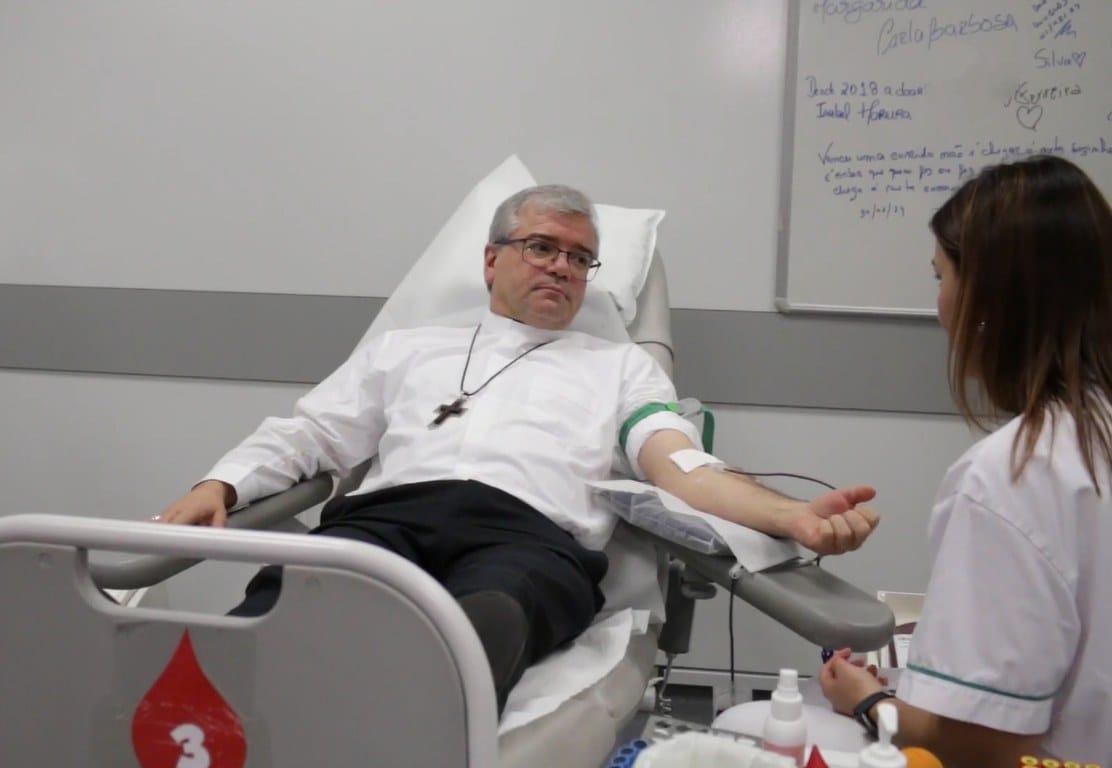
- Donate. About 450 ml of blood is collected.
- Rest and have a snack before you leave.
Every donation is tested for your blood group, hepatitis B and C, HIV, and syphilis. You do not need to know your blood group before your first donation. All the equipment is sterile and used once, so you cannot catch an infection by giving blood.
After you donate
Keep drinking, avoid strong sun, and do not exercise that day. Some jobs and activities need a longer wait:
- At least 12 hours: drivers of buses and heavy vehicles, air traffic controllers, divers, climbers, scaffolders, electricians, miners, and parachutists.
- 24 to 72 hours: airline pilots.
- 6 hours of rest before driving more than 100 km.
- No dangerous sports or hobbies on the day.
Tell the staff what you do for a living before you donate.
Your rights as a donor
The Blood Donor Statute gives you these rights:
- Time off work. You may leave work for the time needed to give blood, without losing any rights or benefits. The blood service gives you a document that justifies the absence. See our guide to employment contracts for your other rights at work.
- Free parking at SNS facilities while you donate.
- Donor insurance linked to the donation.
- Information, confidentiality, no discrimination, and public recognition.
- Exemption from SNS user fees, in the cases the law sets out.
Today SNS user fees only apply to emergency visits that SNS 24 or a health centre did not refer. The IPST says you are exempt in three cases:
- you have donated twice in the last 12 months
- you have 10 or more donations and can no longer donate for medical reasons
- you have donated more than 30 times in your life
After your first donation you receive a National Blood Donor Card. It proves you are a donor. If you stop donating for more than 24 months without a good reason, you lose the donor benefits.
Blood donation is unpaid. Selling blood is against the law.
This guide is general information, not medical advice. The health professional who screens you makes the final decision.
Sources
This guide is written from official sources and, where relevant, organisations' own websites.
- IPST, blood donor page: https://www.ipst.pt/index.php/pt/dadorsangue-2 (50 kg, 18, or 17 with consent; care before and after donating; links to the donor statute and donor insurance), checked 2 October 2026
- IPST, new criteria for selecting blood donors: https://ipst.pt/index.php/pt/comunicacao/destaques-ipst-ip/1143-novos-criterios-na-selecao-de-dadores-de-sangue (first donation age limit of 60 removed; regular donors to 70; West Nile waiting period removed with individual testing; light meal allowed; UK 1980 to 1996 and transfusion after 1980 changed), checked 2 October 2026
- IPST, blood FAQs: https://www.ipst.pt/index.php/pt/sangue-faqs (ages 18 to 70 and medical judgement; ID and proof of address or residence permit; about 30 minutes; two-month minimum interval and three or four donations a year; waiting periods for tattoos, piercings, antibiotics, flu, surgery, endoscopy, dental work, pregnancy, breastfeeding, and new partners; travel assessed individually; Chagas rule; tests done; 450 ml; activities after donating; rights; user fee exemption conditions; donor card; no sale of blood; donors from abroad), checked 2 October 2026
- IPST, home page and regional centres: https://www.ipst.pt/index.php/pt/ (blood and transplant centres in Lisbon, Coimbra, and Porto), checked 2 October 2026
- IPST, where to donate: https://plataforma.dadiva.ipst.pt/donor/where-to-donate (locations and sessions; self-assessment on the same platform), checked 2 October 2026
- IPST, Lei n.º 37/2012, of 27 August (Blood Donor Statute), as published: https://www.ipst.pt/files/IPST/LEGISLACAO/Legislacao_Nacional/Legislacao_Sangue/Lei_37_2012.pdf (article 6 rights, including time off, user fee exemption, insurance, free parking; loss of benefits after 24 months; article 7 absence from work justified by the public body), checked 2 October 2026
- IPST, Decreto-Lei n.º 83/2013 (blood donor insurance): https://www.ipst.pt/files/IPST/LEGISLACAO/Legislacao_Nacional/Legislacao_Sangue/Decreto_Lei_83_2013.pdf
- Diário da República, Lei n.º 37/2012, of 27 August: https://diariodarepublica.pt/dr/detalhe/lei/37-2012-174551
Last verified October 2026. Rules and fees change; check the official source before acting.