Donating Breast Milk in Portugal
Researched and written with AI tools from official sources. How we make our guides
Who can donate surplus breast milk in Portugal, how the Lisbon and Porto milk banks check and collect it, and which babies receive donor milk.
Last verified: October 2026.
Who this is for
- Breastfeeding mothers in Portugal with more milk than their own baby needs.
- Parents of a premature or sick baby in a neonatal unit who want to know about donor milk.
- New mothers living in or near Lisbon or Porto, whatever their nationality.
Not for you if: you are still pregnant and planning the birth. Read "Having a Baby in Portugal".
Yes, you can donate. Portugal's public health service (SNS) runs two human milk banks (banco de leite humano), in Lisbon and Porto. Both take surplus milk from healthy mothers who breastfeed their own baby, and both offer home collection. Donating is voluntary, and the Porto bank says it costs you nothing. The milk feeds premature and sick babies in hospital. In Porto you can donate in the first 6 months after the birth; Lisbon's leaflet says the first 4 months.
Where the milk banks are
We found two milk banks on official health service websites in October 2026.
Lisbon: Banco de Leite Humano, Maternidade Alfredo da Costa (ULS São José). It opened in November 2009 and was the first in the country. Its milk goes to premature babies at the maternity and in other neonatal units across Greater Lisbon.
- Phone: 96 133 37 30, every day from 08:00 to 16:00
- Email: [email protected]
- Address: Maternidade Dr. Alfredo da Costa, Rua Viriato, 1069-089 Lisboa
Porto: Banco de Leite Humano do Norte (ULS São João). This is the Northern Human Milk Bank, run by the São João hospital in Porto.
- Email: [email protected]
- Its page lists no phone number for donors.
Collection points near Lisbon. The Lisbon bank has worked with the Lisboa Ocidental local health unit since 2017. In 2024 it signed an agreement with the Arrábida local health unit to set up a donor clinic and a milk collection point at Hospital São Bernardo in Setúbal. If you live on the south bank, ask the Lisbon bank whether this point is open.
We found no other milk bank on official sites, for example in Coimbra, the Algarve, Madeira, or the Azores. If you live far from Lisbon and Porto, contact the nearer bank and ask.
Who can donate
The two banks publish slightly different conditions. Read the ones for your area.
Porto. You can donate if all of these apply:
- You breastfeed your own baby only (no formula), and you notice a surplus, even a small one.
- Your baby was born less than 6 months ago.
- You are healthy. You do not smoke, drink alcohol, use drugs without a prescription, or take medicines regularly, including herbal products.
- You drink no more caffeine than about 3 coffees a day.
- You have never had a positive test for HIV 1 or 2, hepatitis B or C, HTLV I or II, or syphilis.
- Your home is clean and you have easy access to a freezer.
- You agree to regular blood tests.
Lisbon. The bank's leaflet, dated March 2019 and still linked from its page, asks that:
- you gave birth less than 4 months ago;
- you have not started weaning your baby, and you feed your baby only breast milk;
- your pregnancy was followed by a doctor, and you are healthy and do not smoke; and
- you live in Greater Lisbon.
You can donate to Lisbon wherever you gave birth, in a public or a private hospital. The leaflet does not list the health checks. The team explains them when you get in touch.
Your nationality. Neither bank's page sets any condition about nationality or residence status. What counts is where you live, because of collection.
How donating works
- Get in touch. Email the bank for your area. In Lisbon you can also phone. The team answers your questions before you start.
- Answer a health questionnaire. In Porto, a confidential questionnaire checks whether you can donate. The process stays anonymous.
- Have a blood test. In Porto, you agree to blood tests at the start and from time to time while you donate.
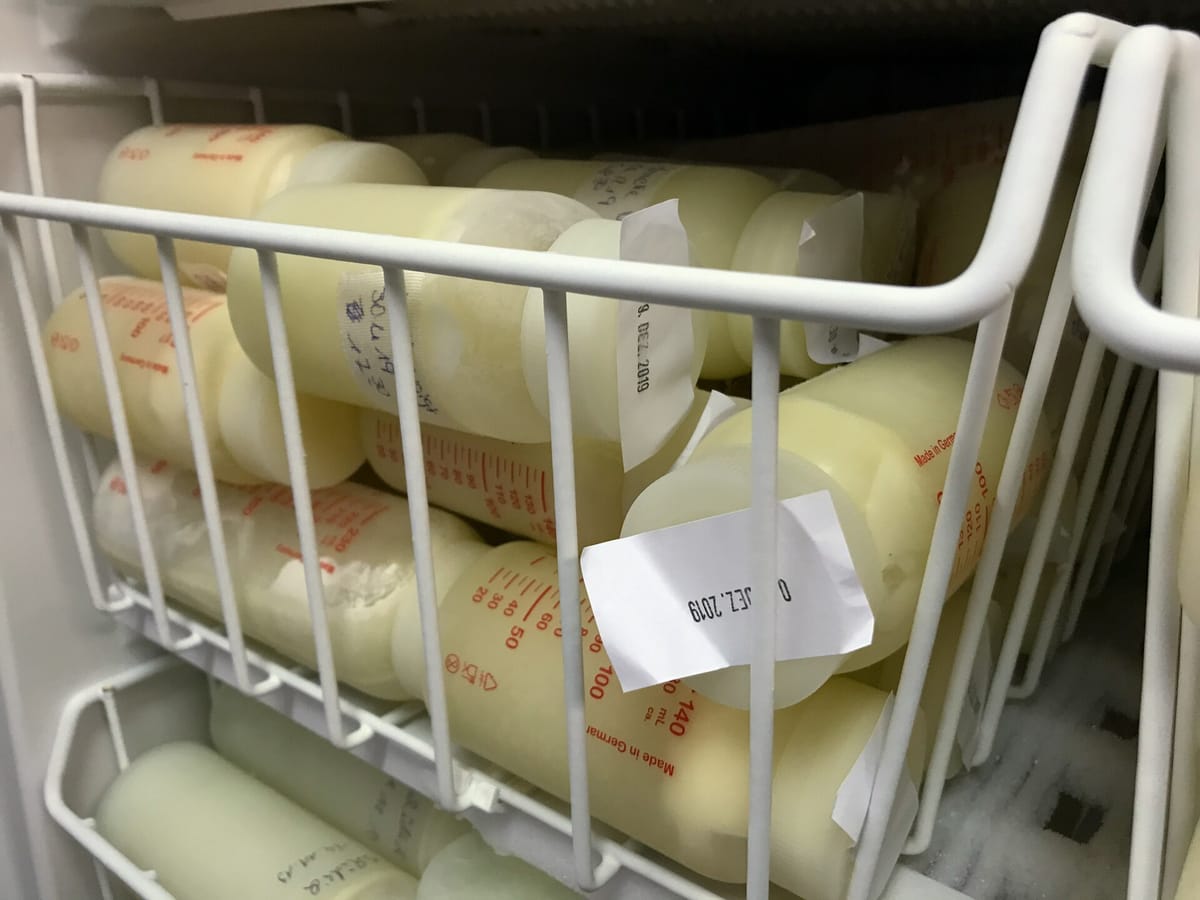
- Learn how to express and store your milk. The Porto team teaches you the safety and storage steps and checks you follow them. You need easy access to a freezer at home.
- Hand over your milk. Both banks collect from your home, so you do not need to travel to the hospital (see below for limits).
- The bank treats your milk. The Lisbon bank tests and treats donated milk, then stores it and sends it to the babies who need it.
If you begin to run short of milk for your own baby, the Porto bank asks you to contact its team.
Collection, delivery, and cost
Porto. A specialist team collects the milk from your home after it has trained you. The whole process is free.
Lisbon. The bank collects from your home if you live in the Lisbon area. Volunteers from a charity, the Banco do Bebé, support donor families in the city of Lisbon and take the milk to the maternity. If you live outside the area, you can still donate, but only if you take the milk to the maternity yourself and keep it at the right temperature on the way.
Payment. Neither bank's page mentions any payment to donors. The Lisbon bank describes its donors as volunteers, and the Porto bank says donating costs you nothing.
Who receives donor milk
Donor milk is for babies in hospital. Doctors use it when a mother's own milk is not enough, or when she cannot feed her baby, for example because she is ill or stress has reduced her supply.
- In Lisbon, premature babies in the intensive and intermediate care units at the Maternidade Alfredo da Costa and other neonatal units can receive it if a neonatal doctor prescribes it. The milk goes to the Alfredo da Costa, Dona Estefânia, and Santa Marta hospitals, and to the neonatal units at Fernando Fonseca, Garcia de Orta, Cascais, and Beatriz Ângelo hospitals.
- At Garcia de Orta in Almada, for example, the unit gives donor milk to babies born before 32 weeks, and to babies of any age with a gut or heart condition, if the family agrees.
- In Porto, the bank's page says donor milk is the recommended food for premature babies, and for newborns with other illnesses, when the mother's own milk is not available.
Supply is limited. The Garcia de Orta unit says the bank always tries to supply every baby who qualifies, but this depends on how much milk it has.
If your baby is in a neonatal unit, ask the doctors there whether donor milk is available and right for your baby. The decision is a medical one. The official pages describe no way for a parent to get donor milk for a baby at home.
If you need help breastfeeding, the Maternidade Alfredo da Costa runs a breastfeeding support line on 96 707 03 38. The paediatric clinic answers from 08:30 to 16:00, and the maternity ward after 16:00.
This guide is general information, not medical advice. Talk to your doctor or the milk bank team about your own health and your baby's.
Sources
This guide is written from official sources and, where relevant, organisations' own websites.
- ULS São José, Banco de Leite Humano (contacts, hours, opening date, who receives the milk) (Portuguese only)
- ULS São José, Banco de Leite Humano, folheto informativo, March 2019 (conditions, home collection, delivery from outside Lisbon, prescription by neonatal doctors) (Portuguese only; issued under the former name CHULC)
- ULS São José, Banco de Leite Humano, cartaz, March 2019 (conditions, address) (Portuguese only)
- ULS São José, Mais de 4.000 recém-nascidos apoiados pelo Banco de Leite Humano da MAC, 22 May 2026 (hospitals that receive the milk, Banco do Bebé transport, partnerships) (Portuguese only)
- ULS São José, Banco de Leite Humano da MAC já alimentou 3.500 prematuros, 27 May 2024 (volunteer donors, testing and treatment of milk) (Portuguese only)
- ULS São José, Assinado acordo com a ULS Arrábida para recrutamento de dadoras de leite, 19 July 2024 (Setúbal collection point) (Portuguese only)
- ULS São João, Banco de Leite Humano do Norte (conditions, questionnaire, blood tests, home collection, no cost, contact) (Portuguese only)
- ULS Almada-Seixal, ULSAS estabelece protocolo com Banco de Leite Humano da ULS São José, 19 November 2024 (which babies receive donor milk at Garcia de Orta, family consent, limited supply) (Portuguese only)
Last verified October 2026. Rules and fees change; check the official source before acting.