Government Tells ANA the State Need Not Pay for Land Expropriations or Further Clean-Up at Lisbon's New Airport
A ministers' letter answering ANA's July report says the duty to provide land for the Luís de Camões airport does not make the state liable for expropriations, and clean-up costs are up for negotiation. ANA disagrees.
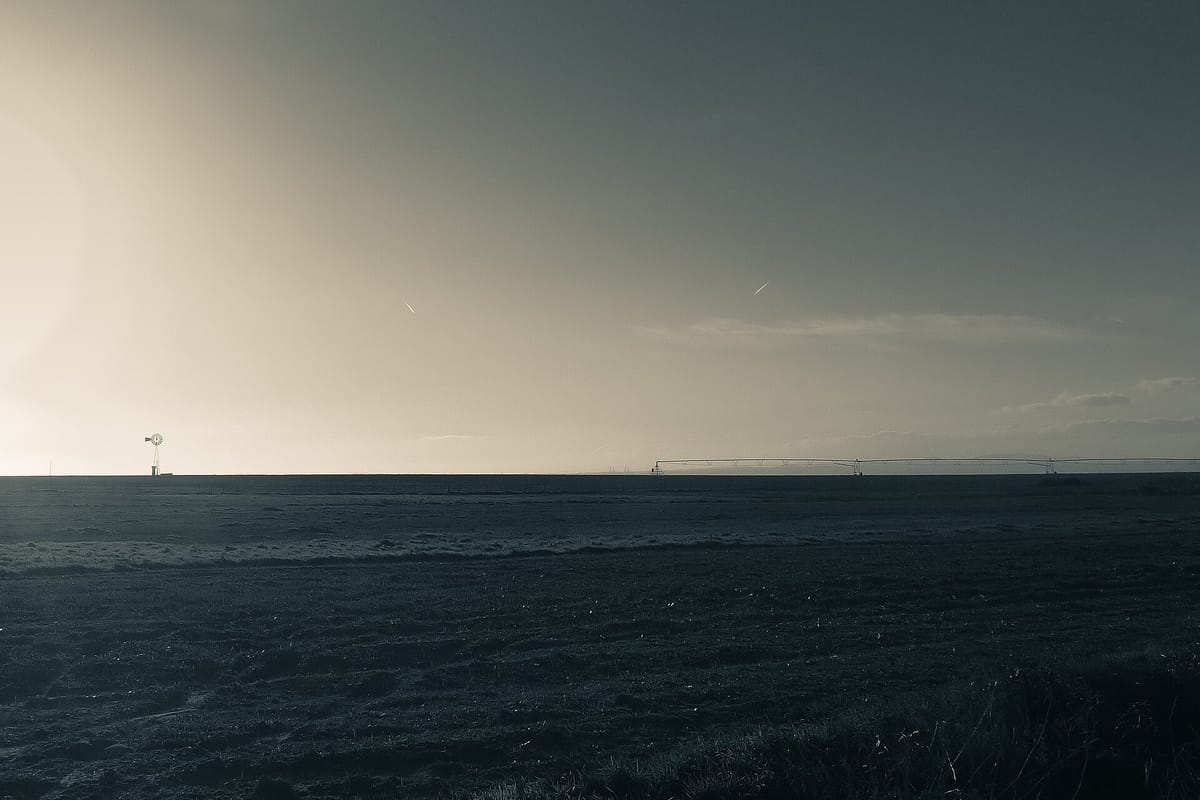
The government has told ANA, the Vinci-owned airport operator, that the state does not automatically pick up the bill for any land expropriations or further clean-up work needed for Lisbon's new airport at the Campo de Tiro de Alcochete (the Alcochete firing range). The position is set out in the ministers' reply to ANA's July technical report. Observador published the wording on 15 October, and Público reported on Friday 23 October that ANA disagrees: the company has always said these are costs for the grantor, meaning the state.
What the letter says
The reply is signed by the Infrastructure Minister, Miguel Pinto Luz, and the Finance Minister, Joaquim Miranda Sarmento. Under the 2012 concession contract, the state must make the land for the airport available. According to Observador, the letter says that duty "does not, however, mean the grantor taking on the costs or liabilities arising from any expropriations of third-party land, to be carried out by the concession holder".
On the firing range itself, it says any further demilitarisation and decontamination work "cannot at this stage be automatically charged to the grantor" and should be discussed and clarified between the two sides during the negotiation phase. That is a change of tone. In January 2025, ECO reported that the government had promised to hand over the land "free of charges relating to any demining and/or decontamination works".
The same letter adds that ANA's contractors may use the new road corridors to the site, which are the state's responsibility, but that this cannot put the timetable for those corridors at risk, with ANA "assuming the risks" of its own assumptions. It is the letter we reported on in September, when the ministries asked ANA to explain why the second terminal had disappeared from its plans.
What the state has already committed
The contract wording matters. Council of Ministers Resolution 119/2026 describes clause 50 as requiring the state to "make efforts" to provide land that is in the state's public domain or belongs to a public authority. The same resolution authorised the Air Force to spend up to 4.5 million euros, plus VAT, on clearing the range of explosives, a job due to finish by the end of 2029.
When the government chose the site in 2024, Resolution 66/2024 said it lay entirely on public land with no need for expropriations, except that a fourth runway would require two smaller ones covering about 100 hectares in total.
What it means for landowners
- Building restrictions are already in force. Resolution 30/2026 set preventive measures across parts of Alcochete, Benavente, Coruche, Montemor-o-Novo, Montijo, Palmela and Vendas Novas from 21 February 2026, for two years and extendable.
- Inside the airport perimeter (zone 1), all building and subdivision work is banned. In most of the rest of the area, works need a binding opinion from ANAC, the civil aviation authority.
- Compensation is possible where the measures sacrifice "pre-existing and legally consolidated rights", under the land-planning law the resolution cites. Works validly authorised before the measures took effect are exempt, unless they would seriously and irreversibly harm the airport.
The letter concerns who would pay for any expropriations; it does not change these rules.
What happens next
Observador reports that ANA's answers are due in its next report in January. The complete application must reach the government by January 2028, and Resolution 119/2026 puts the opening between 2036 and 2037. Meanwhile, growth at the current airport is lagging well behind Porto's, as our report on August's passenger figures showed.