GNR Clocks a Mercedes at 292 km/h on Lisbon's Vasco da Gama Bridge, the Fastest Ever Recorded There: the Fines, Points and Bans the Law Sets
A company-owned Mercedes crossed the 8.4 km bridge in 103 seconds on Monday night, 172 km/h over the 120 km/h limit. The driver is still to be named. Here is what the Highway Code charges for speeding, and when it becomes a crime.
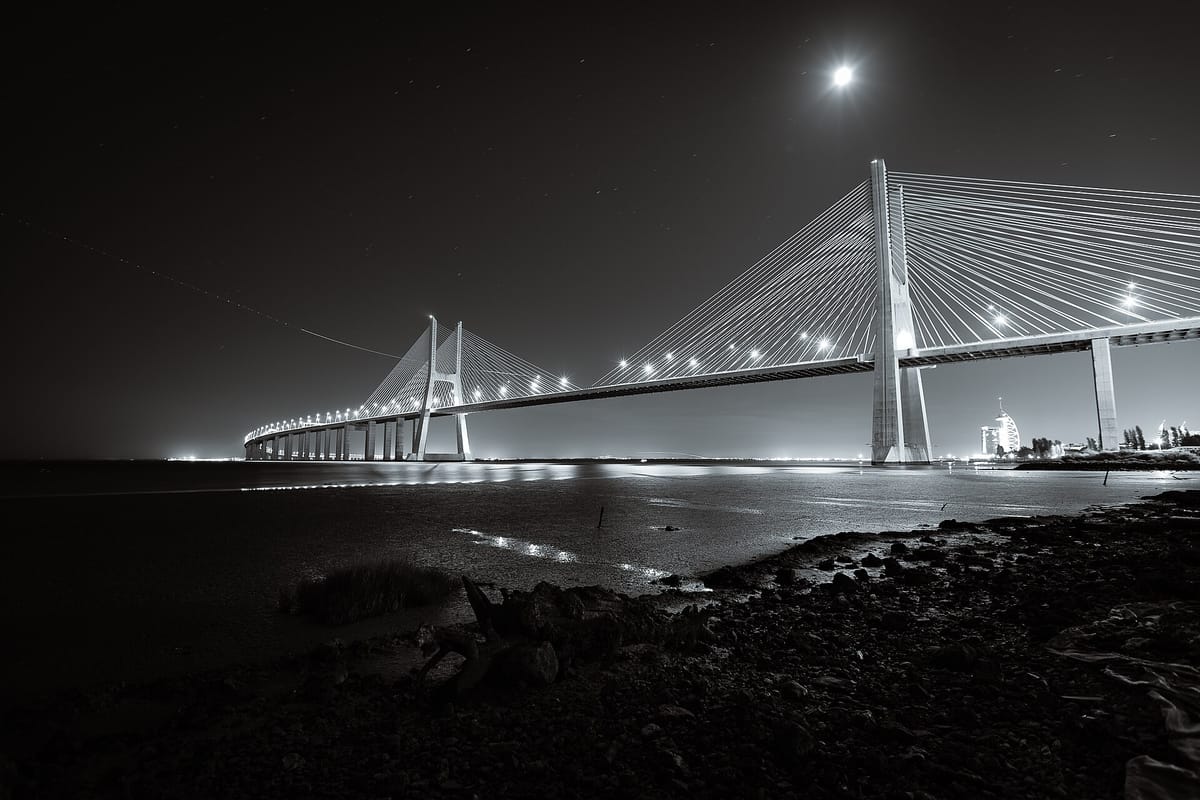
A Mercedes was recorded at an average speed of 292 km/h on the Vasco da Gama bridge in Lisbon on Monday night, the highest the bridge's average-speed cameras have detected since they were switched on in 2024. The limit there is 120 km/h. The car was 172 km/h over it, and the driver has not yet been identified.
What happened
According to Observador, which cited TVI and CNN Portugal, the car took just 103 seconds to pass between the two control points at either end of the bridge, which are 8.4 kilometres apart. The GNR's system divides that distance by the time taken.
Notícias ao Minuto, quoting a GNR source, reported that the car was flagged at about 20:45 on 19 October, during an operation by the GNR's National Traffic Unit and its Setúbal traffic detachment. The car belongs to a company, which has been asked to name the person at the wheel.
When the GNR reported on the cameras' first month of operation in July 2024, it said they had checked 1,812,881 vehicles between 15 June and 15 July and logged a top speed of 246 km/h.
What the Highway Code says
Article 27 of the Código da Estrada treats a driver whose average speed over a measured distance is incompatible with the limit as having broken the limit, with the offence counted where the measured stretch ends. For cars and motorcycles, the fines are:
- Up to 20 km/h over in a built-up area, or up to 30 km/h over outside one: 60 to 300 euros.
- 21 to 40 km/h over in town, or 31 to 60 km/h outside: 120 to 600 euros, a serious offence.
- 41 to 60 km/h over in town, or 61 to 80 km/h outside: 300 to 1,500 euros, a very serious offence.
- More than 60 km/h over in town, or more than 80 km/h outside: 500 to 2,500 euros, a very serious offence.
Other motor vehicles hit each tier at lower margins. Under Articles 145 to 148, a serious offence also brings a driving ban of one month to a year and costs two points; a very serious one brings a ban of two months to two years and costs four. Every driver starts with 12 points. At five or fewer you must attend a road safety course, at three or fewer you must resit the theory test, and at zero your licence is cancelled, with no new one for two years.
When speeding becomes a crime
Speeding is normally an administrative offence, but Article 291 of the Código Penal makes it a crime of dangerous driving when a driver grossly breaks the speed limit and in doing so endangers someone's life or physical safety, or high-value property belonging to someone else. The penalty is up to three years in prison or a fine, and Article 69 adds a driving ban of three months to three years. No report so far says the Vasco da Gama case is being treated as a crime.
What it means for you
The bridge record came on the last day of a week of national speed checks by the GNR and PSP. Where the car belongs to a company, as here, the firm is asked to say who was driving, and giving a false name carries its own risks: a Castelo Branco funeral home that named a dead young man as the driver of its speeding van was fined in court and ordered to compensate his parents.