A Week of Speed Checks Hits Portugal's Roads From Tuesday: the Fines, Licence Points and Driving Bans at Stake
The GNR and PSP target speeding from 13 to 19 October under the ANSR's Viaje sem Pressa campaign. Here is what the Highway Code charges for going over the limit, and why staying under it is not always enough.
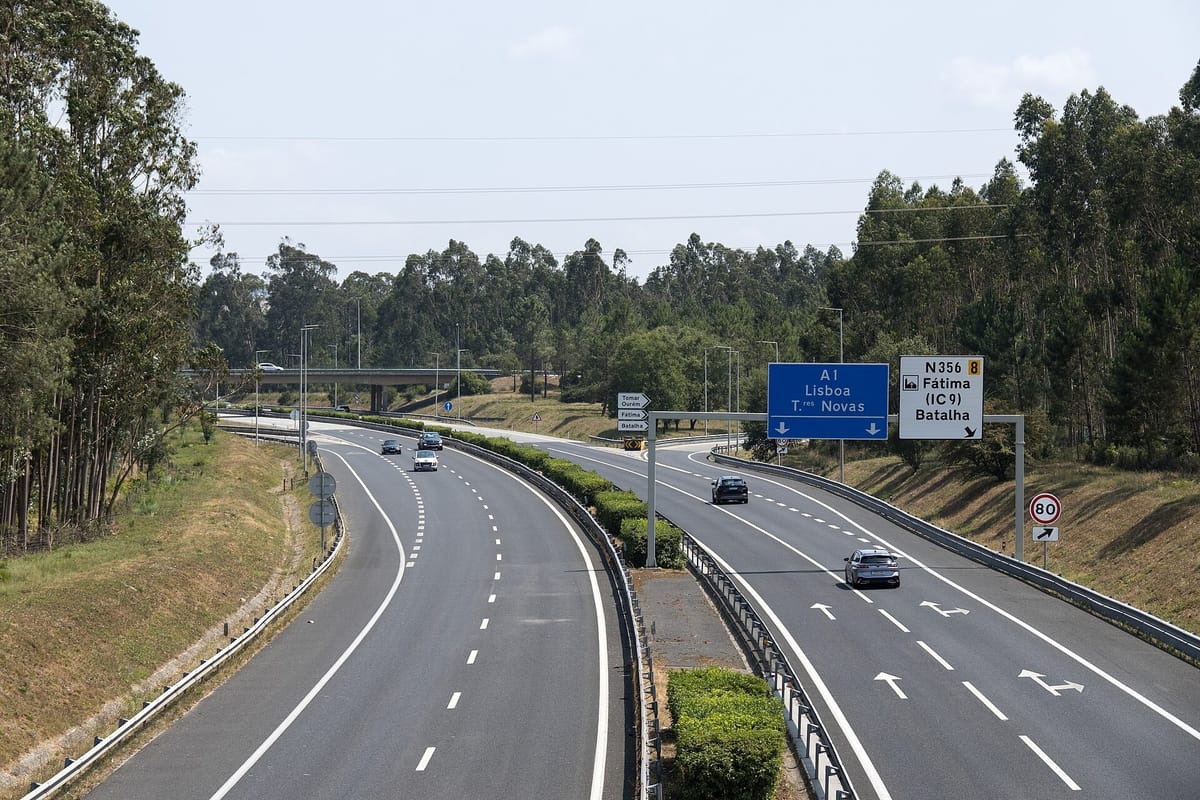
Drivers on mainland Portugal can expect more speed checks this week. From Tuesday 13 to Monday 19 October the GNR (National Republican Guard) and the PSP (Public Security Police) will target speeding under a campaign called "Viaje sem Pressa" ("Travel Without Hurry"). It is run with the ANSR (Autoridade Nacional de Segurança Rodoviária, the National Road Safety Authority).
According to the ANSR's announcement on Monday, the campaign brings together five joint operations. In each, ANSR teams talk to drivers about road safety while the GNR and PSP carry out roadside checks. It is the tenth of the eleven campaigns in this year's Plano Nacional de Fiscalização (National Enforcement Plan).
The ANSR's own figures show that crashes linked to speed that was too high for the conditions killed 154 people and seriously injured 563 between 2023 and 2025.
Within the limit is not always within the law
The authority's main message is that keeping under the posted limit may not be enough. It asks drivers to slow down in rain, poor visibility, heavy traffic, and near schools, crossings, pedestrians and cyclists. It also asks them to leave enough room to stop safely and to plan their time, rather than "making up for a delay with the accelerator".
This advice is backed by the law. Under article 145 of the Código da Estrada (Highway Code), driving at a speed that is excessive for the vehicle, the road, the weather or the traffic is a serious offence in its own right, whatever the sign says.
What speeding costs
For cars and motorcycles, article 27 of the Code sets four bands of fines. Inside towns:
- up to 20 km/h over the limit: 60 to 300 euros;
- more than 20 and up to 40 km/h over: 120 to 600 euros;
- more than 40 and up to 60 km/h over: 300 to 1,500 euros;
- more than 60 km/h over: 500 to 2,500 euros.
Outside towns, the same fines apply at 30, 60 and 80 km/h over the limit. Lorries, buses and other vehicles fall into each band at lower margins. Average-speed cameras count as well: covering a stretch of road too fast is treated as speeding, and the offence is recorded where the measured section ends.
The fine is only part of the cost. For a car or motorcycle driver, going more than 30 km/h over the limit outside towns, or more than 20 km/h over inside them, is a serious offence. It brings a driving ban of one month to one year. More than 60 km/h over outside towns, or 40 km/h over inside them, is very serious, with a ban of two months to two years. A second offence within five years doubles the minimum ban, the ANSR explains.
Points come off the licence too. Every driver starts with 12. A serious speeding offence costs 3 points and a very serious one costs 4, or 5 in a residential shared zone (zona de coexistência). Points are deducted only once the decision is final, according to the ANSR's points guide. Drivers in their first three years after passing are treated more harshly. One very serious offence or two serious ones cancel the licence, and the driver has to sit a special test once the ban ends.
Our explainer on what the Highway Code requires when children ride in the car covers another set of rules that roadside checks often catch.