
Douro Line Trains Halt Between Marco de Canaveses and Régua From 3 November, With Buses Running Until Late March
The second winter closure for the 110 million euro electrification of the 47 km stretch runs to 24 March. Replacement buses will serve the stations, and trains return on 25 March 2027.
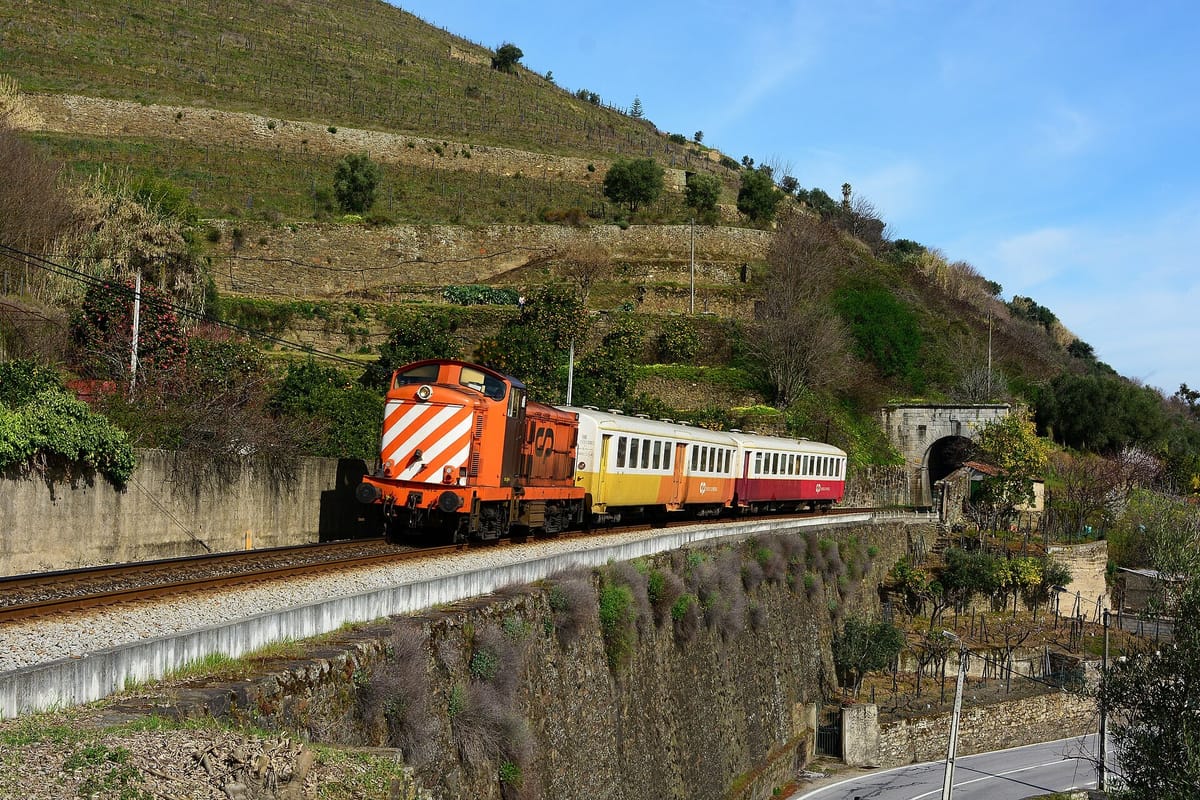
Trains will stop running on the Douro Line between Marco de Canaveses and Peso da Régua from 3 November until 24 March, while work continues on electrifying and modernising that stretch of track. Replacement buses will carry passengers in the meantime, and rail services on the section are due back on 25 March 2027.
The closure was announced on Monday by Infraestruturas de Portugal (IP, the state rail and road infrastructure company), as reported by Lusa. It is the second of three winter shutdowns planned for the project.
What changes for passengers
For the length of the closure, IP says alternative road transport will run with stops in the towns and villages served by the line, on a route drawn up with the local councils. Marco de Canaveses is in the district of Porto and Peso da Régua in the district of Vila Real.
Anyone planning a winter trip from Porto into the Douro valley by rail should expect to switch to the replacement bus for the section between Marco de Canaveses and Régua. Last year the replacement bus timetable was published by CP (Comboios de Portugal, the state train operator) ahead of the closure, and the Peso da Régua council linked to it from its own website, along with the location of each bus stop. Travellers should check the CP website before setting out.
IP chose the winter months because they bring the lowest demand on the line, from regular passengers and from tourists alike. Our guide to riding the Douro Line covers fares, timetables and the stations further upriver.
A 110 million euro project
The contract, worth 110 million euros, will electrify the whole section of about 47 kilometres between Marco de Canaveses and Régua. IP expects the work to take three years (36 months), with three periods in which trains cannot run. Electrification of the Douro Line is already complete as far as Marco de Canaveses.
The first closure began on 3 November 2025 and lasted about five months. IP and CP said at the time that it was needed to reinforce the structure of the six tunnels on the section and lower the track bed inside them. The largest of them, the Juncal tunnel, is 1,624 metres long, the second longest on the national rail network. The two companies described the work as technically complex, because heavy machinery has to operate in confined spaces that are hard to reach.
IP thanked passengers for their understanding and described the work as "essential to modernise and strengthen safety on the railway infrastructure".
.jpg)