Fundo Ambiental Reignites the Incentivo Veículos Elétricos with a €10 Million Envelope — €4,000 Per Household BEV, €5,000 for IPSS, 278 Charging-Station Awards and 1,375 Target Subsidies Through 27 July
Portugal's Fundo Ambiental reopened the 2026 Incentivo Aquisição Veículos Elétricos on 11 June 16:30 with a €10 million envelope: €4,000 per household BEV (≤€38,500), €5,000 for IPSS, 278 charging-station awards and 1,375 target subsidies through 27 July under Aviso 06/2025.
The Fundo Ambiental (Environment Fund), the Ministry of the Environment and Energy's grant-administering vehicle attached to APA (Agência Portuguesa do Ambiente), reopened the 2026 vintage of the Incentivo Aquisição Veículos Elétricos (Electric Vehicle Purchase Incentive) on Wednesday 11 June at 16:30 Lisboa time, with applications accepted through 27 July 2026 or until the €10 million envelope is exhausted, whichever lands first. The programme is the second phase of Aviso 06/2025 — Apoios 2026 / Mitigação às Alterações Climáticas (Notice 06/2025 — 2026 Supports / Climate-Change Mitigation), and it rewires a few of the parameters carried in the first phase that ran in Q1 2026: the per-vehicle cap for individual applicants stays at €4,000 (up from €3,000 at the 2024 floor), the IPSS (Instituição Particular de Solidariedade Social — Private Social Solidarity Institution) bracket lifts to €5,000 per vehicle, and the retroactive eligibility window opens to vehicles acquired from 1 January 2025 onwards. The relaunch lands eight days after the European Commission's 21 May Spring Forecast for Portugal, three days after the 10 June ECB rate-cut-cycle reset and one day after the OECD June 2026 Economic Outlook (the No. 119 vintage) — the broader macro and fiscal-policy file is, for once, pushing in the same decarbonisation direction.
The €10 Million Envelope and the Three Award Brackets
The €10 million envelope splits across three distinct brackets. The household passenger-car bracket carries €5.5 million and the highest projected award count at roughly 1,375 incentives. Eligible cars are 100% battery electric vehicles (BEVs) with a base price at or below €38,500 — and at or below €55,000 for vehicles with more than five seats. The cap per incentive sits at €4,000 per vehicle for individual applicants, with one incentive per beneficiary maximum. The IPSS bracket carries €500,000 and roughly 100 expected awards at a higher €5,000 cap per vehicle — the IPSS premium recognises that social-solidarity institutions running their fleets on BEVs face a sharper capex constraint and a higher policy multiplier than household buyers. The micromobility and charging-infrastructure bracket carries the remaining funding and roughly 278 awards covering charging-station capex and adjacent low-emission solutions. The rules underneath the vehicle itself are moving too: what Euro 7 changes for brakes, tyres and batteries from 29 November.
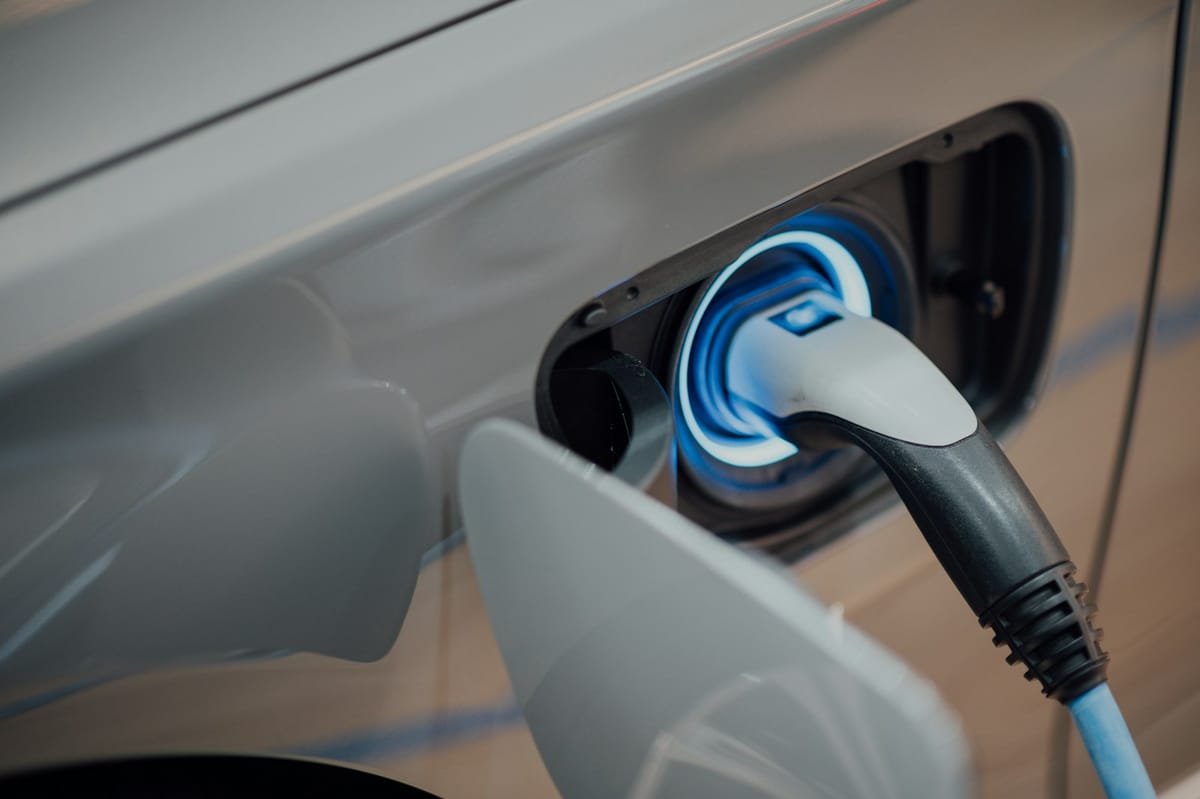
The charging-station-infrastructure component pays 80% of equipment cost (subject to a €800 ceiling) and 80% of the electrical-installation cost (subject to a €1,000 ceiling), combinable into a single €1,800 maximum per beneficiary on the household side. The micromobility tail covers electric bicycles, cargo bicycles, electric motorcycles and other 100% electric low-emission mobility solutions — the Fundo Ambiental file confirms that the conventional Light Commercial Electric Vehicle category is explicitly excluded from the 2026 programme (the rationale: the LCEV market segment has scaled past the policy-multiplier threshold and the envelope is sized to push the passenger-car and micromobility brackets).
Who Qualifies, What the Eligibility Tests Look Like
The headline eligibility test is tax-residence compliance. Individual applicants must hold a Portuguese Número de Identificação Fiscal (NIF, Tax Identification Number) and be in good standing with the Autoridade Tributária e Aduaneira (AT, Tax and Customs Authority) and with the Instituto da Segurança Social (ISS, Social Security Institute) — situação tributária regularizada (regularised tax status) and situação contributiva regularizada (regularised contribution status) are the two operational tests. IPSS applicants must produce the standard institutional registration documents and the equivalent tax-and-social-security clearance. Both tracks operate on a first-come, first-served basis at the Fundo Ambiental platform, with applications processed sequentially in the order of submission.
The retroactive window is the operational hinge for the relaunch. Vehicles acquired on or after 1 January 2025 — including those purchased in the period between the Q1 2026 first-phase closure and the 11 June 2026 second-phase opening — can apply, provided they have not been the beneficiary of any prior phase of the 2024-2026 incentive cycles. The mechanism gives owners who missed the first phase a second window and equalises the temporal treatment across 2025 and 2026 acquisitions. The exclusion is restricted to double-dipping (no vehicle can receive support from both phases) and to vehicles that benefited from materially comparable Portuguese or EU-funded incentives in the same period.
The Application Flow — Fundo Ambiental Portal, Documents, Tap-Through
Applications run through the Fundo Ambiental platform at fundoambiental.pt/apoios-2026/mitigacao-as-alteracoes-climaticas/, which carries the candidatura webform, the document-upload pipeline and the Aviso 06/2025 regulamento text. The first technical step is the Portal das Finanças certidão de não dívida (certificate of no debt) — the AT-issued document confirming situação tributária regularizada, valid for six months from issue, downloadable through the Cidadãos > Cidadãos > Os Seus Serviços > Documentação e Certidões > Certidões path. The Segurança Social Direta certidão de não dívida is the parallel ISS-issued document, accessed through the Cidadão > Conta-Corrente > Documentos de Prova > Pedir path on seg-social.pt.
The supporting documents stack: the Documento Único Automóvel (DUA, Single Vehicle Document) for the BEV being claimed, with the matrícula (registration plate) and chassis number on the front; the Declaração de Aceitação issued by the seller or dealer confirming the model, the price-after-incentives and the BEV powertrain certification; the factura (invoice) showing the vehicle's IVA-inclusive purchase price and the line item showing it sits below the €38,500 (or €55,000 for >5-seater) ceiling; the comprovativo de pagamento (payment confirmation) demonstrating the purchase was effected in the 1 January 2025 - 27 July 2026 window. For the charging-station bracket, the certificado de instalação eléctrica (electrical installation certificate) issued by a credenciada-DGEG installer is the equivalent of the DUA on the vehicle bracket. Applications missing any document at submission are routinely deferred to a 10-day pedido de esclarecimentos cycle that materially compresses the first-come-first-served queue.
The Aviso 06/2025 Framework and the Decarbonisation Architecture
Aviso 06/2025 — the Fundo Ambiental's January 2025 notice covering the Apoios 2026 / Mitigação às Alterações Climáticas package — frames the incentivo as one strand of the Plano Nacional Energia e Clima 2030 (PNEC 2030, National Energy and Climate Plan 2030) deliverable architecture. PNEC 2030 targets 850,000 to 1 million BEVs on the Portuguese fleet by 2030 against the latest ACAP (Associação Automóvel de Portugal — Portuguese Automobile Association) end-2025 stock count of roughly 195,000 BEVs; the policy gap is wide and the per-year sales lift implied by the PNEC trajectory is 110,000-130,000 BEVs against the 2025 sales print of 55,000 BEV new registrations. The €10 million envelope, even at full execution, supports 1,375 households or 0.2% of the gap-closing trajectory — the programme is a marginal-incentive nudge anchored on the broader EU CO2 emission-standards architecture and the Portuguese ISV-IUC fiscal-incentive matrix that does the heavy lifting on the BEV economics.
Minister Maria da Graça Carvalho, responsible for the Ambiente e Energia portfolio in the Montenegro Government, framed the relaunch as a push 'to encourage the transition to more sustainable mobility, through replacement of combustion-engine vehicles with zero-emission vehicles' and to reduce fossil-fuel dependency at the household level. The relaunch sits adjacent to the 10 June Brussels Spring 2026 Forecast for Portugal that pencilled emissions trajectory inputs into the broader fiscal-trajectory file, and the 10 June RED III Acceleration-Zones Diploma (Decreto-Lei n.º 116/2026) that mapped 7% of continental Portugal for 12-month fast-track solar and wind licensing — the incentivo is one of the demand-side levers in the broader supply-side acceleration package.
The Historical Tape — €30M in 2022 to €10M in 2026
The Incentivo Aquisição Veículos Elétricos has run continuously since 2017, with the envelope swinging from €4 million at the launch year to a €30 million peak in 2022 (the post-pandemic recovery push) and progressively compressing through €15 million in 2023 and €10 million across 2024, 2025 and now 2026. The 2026 vintage is the same nominal envelope as 2025 but with a higher per-vehicle cap (€4,000 versus €3,000 at the 2024 floor), reflecting the OE2026 policy lift to keep the per-incentive value real-terms-flat against the BEV-price compression. The IPSS €5,000 bracket is a 2026 innovation — the 2025 vintage did not carry the IPSS premium tier, with social-solidarity institutions claiming inside the standard €3,000 cap. The Fundo Ambiental's institutional commentary frames the IPSS uplift as policy-design recognition of the higher fleet-renewal multiplier on the social-economy side.
What This Means for Expats and Residents
- The €4,000 incentive stacks with the BEV ISV (Imposto sobre Veículos) exemption for a sharper expat-purchase math: BEVs are exempt from the headline Imposto sobre Veículos (Vehicle Tax) at first registration, which on a comparable petrol or diesel sedan in the €30,000-€38,500 range runs €2,500-€5,500. Stacking the ISV exemption with the €4,000 Fundo Ambiental cash incentive and the BEV-friendly Imposto Único de Circulação (IUC, Annual Road Tax) bracket — €34.92 a year for BEVs against €185 a year for a comparable Categoria B diesel — drops the five-year total cost of ownership delta to roughly €8,000-€12,000 in favour of the BEV against the diesel/petrol comparator, with the actual figure scaling on annual mileage and electricity-tariff selection.
- D7 and D8 visa holders are eligible if AT and Segurança Social are in good standing: The eligibility test runs on situação tributária and situação contributiva regularizada at the AT and ISS — D7 retirees with a clean tax-residence record and D8 digital-nomad-visa holders with a clean recibos-verdes filing record both qualify on the eligibility side. The practical pre-application work is pulling the two certidões de não dívida and confirming that the BEV at the dealer carries the correct vehicle-base-price documentation supporting the €38,500 (or €55,000) cap.
- NHR 1.0 legacy beneficiaries can layer the incentive with the 20% Categoria A flat rate: NHR 1.0 holders who registered before 1 January 2024 carry the 20% Categoria A flat rate through their 10-year window; layering the €4,000 BEV incentive and the IUC discount produces a meaningful net-of-tax improvement on the post-relocation budget. IFICI holders (the new scientific-research-and-innovation regime) carry the same 20% headline rate and the same incentive eligibility.
- The 27 July closure is a hard ceiling — file inside the first two weeks of the window: The first-come, first-served queue means that the €10 million envelope historically exhausts within four to six weeks of opening on past phases of the same incentive (Q1 2026 first phase closed inside three weeks). Expat households with the BEV already on the driveway should pull the certidões de não dívida this week and file inside the first fortnight to land inside the queue. The 10-day pedido de esclarecimentos cycle pushes any incomplete filing to the back of the queue and routinely costs the incentive.
- The charging-station €1,800 stacking is the most under-used component: The 80%-of-equipment €800 plus 80%-of-installation €1,000 combination on a single household charging-station capex pays the typical Wallbox or Schneider Electric 7.4 kW installation almost entirely. For expat households moving into a single-family Norte or Algarve home with private off-street parking, the charging-station bracket is a structurally better economic deal than the headline car-purchase bracket and runs in parallel — both can be claimed in the same application cycle.
The Fundo Ambiental Aviso 06/2025 regulamento text and the application portal sit at fundoambiental.pt/apoios-2026/mitigacao-as-alteracoes-climaticas/. The PNEC 2030 framework document is at apambiente.pt. The ACAP BEV-stock and BEV-sales monthly tape is at acap.pt with the May 2026 tape carrying the most recent monthly-print. We will return to the file at the 27 July closure date with the executed-incentives tally and the geographic distribution map. On the vehicle-modification, IMT and motoring side of the file, our explainer on the new IMT rulebook for legally modifying a registered car, including petrol-to-electric retrofits sets the latest reference. On the green-cities, sustainability and climate-adaptation side of the file, Porto's shortlisting for the 2028 European Green Capital sets the latest reference. On the motoring, vehicle-tax and driver-admin side of the file, the change to how and when drivers pay the IUC car tax sets the latest reference. On the vehicle-cover and car-insurance side of the file, our guide to car insurance in Portugal sets the latest reference. On the driving-and-licensing side of the file, our guide to getting a Portuguese driving licence from scratch explains the escola de condução route, the theory and road exams, and the new tutor rules.