FBI Names a Portuguese Company in an Alleged Helicopter-Parts Network Bound for Iran
US investigators have identified Business United Unipessoal Lda. as an alleged intermediary in a helicopter-engine sale to Iran. Miguel Frasquilho, a company once linked to him, denies any involvement.
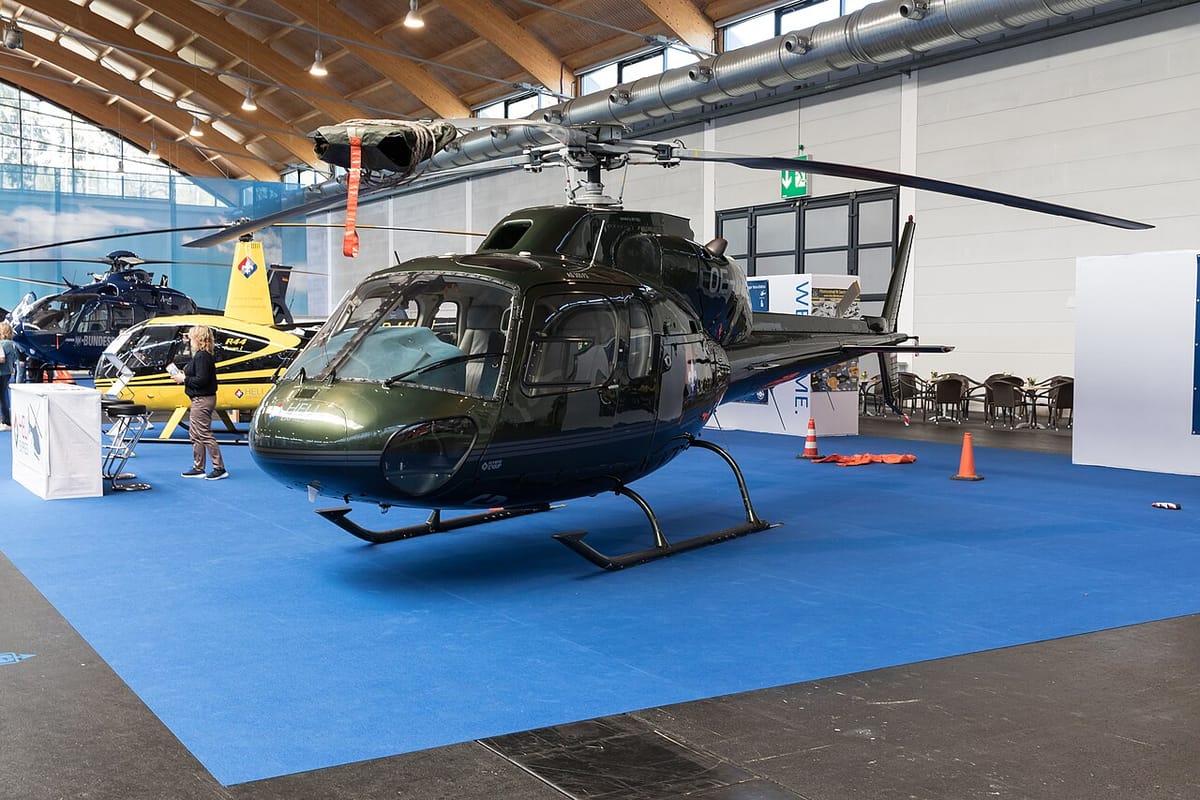
A Portuguese company has surfaced in a United States federal investigation into an alleged international network that acquired aircraft and aviation components destined for Iran, a country subject to sweeping US export controls and sanctions. The case was reported by the newspaper Público and confirmed in Portuguese media on Monday.
According to the reporting, the Federal Bureau of Investigation (FBI) identified the firm Business United Unipessoal Lda. in connection with the network. The company is alleged to have acted as an intermediary in the sale of a single helicopter engine valued at roughly 209,000 dollars, or about 181,000 euros. No charges against the Portuguese company have been made public, and the details rest on the US investigation as described by Público.
The Portuguese angle has drawn attention because a separate company once linked to Miguel Frasquilho — the former chairman of TAP, the national airline, and of AICEP (the Agency for Investment and Foreign Trade of Portugal) — appears in the same investigative record. Frasquilho firmly distanced himself from the matter. Speaking to Público, he said he had never been a partner in the company and had “absolutely nothing to do” with any operations to buy or sell helicopters or components.
Iran's access to Western-made aircraft and spare parts has been tightly restricted for years. US sanctions and export-control rules bar the transfer of American-origin aviation technology — including engines and components — to Iranian end users without specific authorisation, and Washington has repeatedly pursued the intermediaries and shell companies used to route such equipment through third countries. Investigations of this kind typically trace a chain of brokers and front entities rather than a single direct sale, which is why a Lisbon-registered firm can end up named in paperwork over a transaction worth only a few hundred thousand dollars.
For now, the publicly known facts are narrow: a US investigation, a named Portuguese company, an alleged role as a go-between in a helicopter-engine deal, and a prominent former executive who says he had no part in it. Whether Portuguese authorities open their own inquiry, and whether the US case results in charges, remains to be seen.
The episode is a reminder that Portugal, as a European Union member with an open, trade-oriented economy, is not insulated from the global machinery of sanctions enforcement. Companies incorporated in Lisbon can be swept into cross-border investigations when their names appear on invoices for controlled goods — a risk that compliance officers and regulators across the bloc watch closely.