Fall Armyworm Spreads to Granada, About 300 Kilometres From Portugal, Putting Maize and Rice Growers on Alert
DGAV says the fall armyworm, an EU priority quarantine pest that can fly more than 100 kilometres a day, was found in Loja in October. Portugal is officially free of it, and anyone who spots a suspect caterpillar should report it at once.
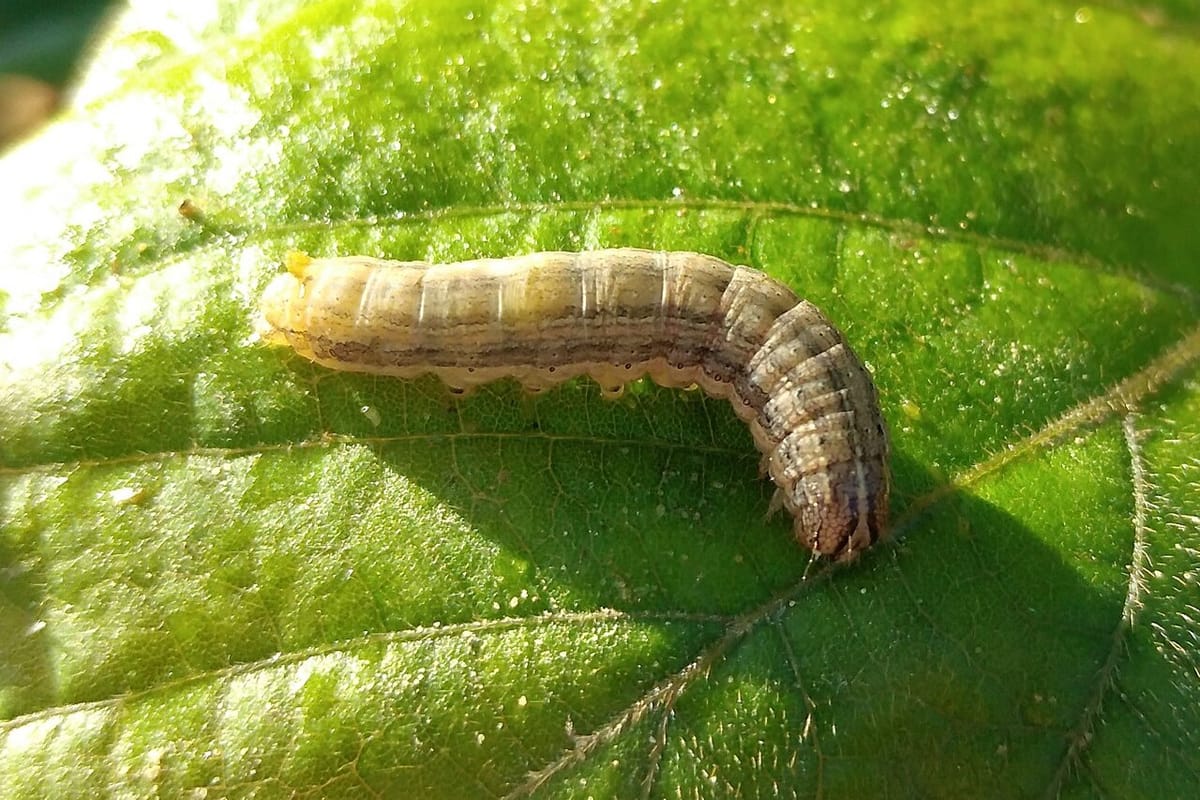
The fall armyworm, a caterpillar that strips maize and rice and can feed on more than 350 plant species, has been found in southern Spain about 300 kilometres from mainland Portugal. The Direção-Geral de Alimentação e Veterinária (DGAV, Directorate-General for Food and Veterinary Affairs) issued a plant-health alert on Thursday asking farmers, producer organisations' technicians and anyone else who spots a suspect caterpillar to report it at once.
Portugal is currently officially free of the pest. Its only recorded case was a single adult moth caught in September 2023 in a sugar-cane plantation in Madeira; no further insects were found and the pest was declared eradicated on the island.
Where it has been found
According to the DGAV alert (in Portuguese), Spodoptera frugiperda was first found in the EU in 2023, in Cyprus and then Greece. It has been established in the Canary Islands since 2020. On the Spanish mainland it was detected in Antequera (Málaga) in 2025 and in Loja (Granada) in October 2026. Loja is about 300 kilometres from Portugal in a straight line.
That distance matters because the adult moth is a strong flier. DGAV says it can travel more than 100 kilometres a day, and that after it reached Africa in early 2016 it spread across almost the whole continent in little more than two years. Larvae and pupae can also travel in infested plant produce or be carried by accident in vehicles.
The EU lists the fall armyworm as a priority quarantine pest. DGAV says the Spanish finds, with favourable weather, raise the risk that it will reach and settle in mainland Portugal, and it wants closer watch across the country, especially in the south, which is nearest to the Spanish finds and has the most favourable conditions.
What it does to crops
The damage comes from the caterpillars, which eat leaves, stems, flowers, fruit and cobs. Maize is its favourite host, followed by crops such as rice, sorghum, soya, cotton and sugar cane, but it also attacks other cereals and many fruit, vegetable and ornamental plants. Heavy attacks can strip plants of their leaves and cause significant losses.
What to look for
In maize, DGAV asks growers to check for:
- leaves that are scraped or full of holes, with ragged lesions;
- droppings (frass) piled up in the funnel of leaves at the top of the plant;
- damaged cobs;
- caterpillars hiding inside that funnel or in the cobs, where they are protected while they feed.
What to do if you suspect it
Anyone, professional or not, who suspects the pest should contact DGAV's plant-health services straight away (DGAV alert page; general line 213 239 500, [email protected]). They will arrange official identification and, if it is confirmed, take protective measures straight away.
Those measures are set out in DGAV's contingency plan (in Portuguese). Under EU Implementing Regulation 2023/1134, a confirmed find leads to a demarcated area: an infested zone covering susceptible plants within 100 metres of the find, and a buffer zone at least 5 kilometres and up to 100 kilometres wide around it. Professional operators inside the area are told by their Direção Regional de Agricultura e Pescas (DRAP, Regional Directorate of Agriculture and Fisheries) which measures they must apply. DGAV already runs a yearly survey with pheromone traps placed by the regional directorates.
It is DGAV's second plant-health warning in a week: on 21 November it asked nurseries and councils to watch their ash trees for the emerald ash borer.