Eleven Sorefame Carriages From the 1970s Are Being Rebuilt as a Luxury Train-Hotel, With €9.8 Million of Compete 2030 Behind It
Alva Rail, registered at the Hotel & Spa Valverde Santar in Nelas, is putting about EUR 21.6 million into the project and naming Belmond and the Orient Express as its reference points. Routes, suites, fares and dates have not been disclosed.
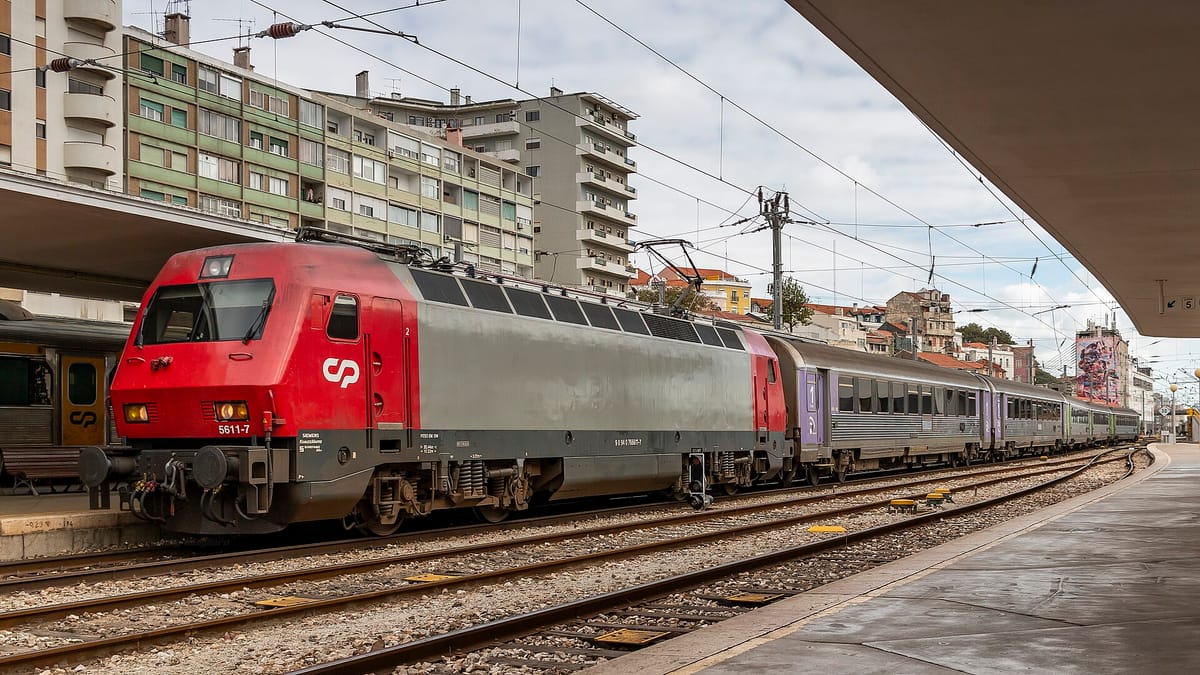
Eleven railway carriages built by Sorefame in the 1970s, and retired from CP service, are to be stripped back and rebuilt as a luxury hotel on rails. Alva Rail, a company registered at the Hotel & Spa Valverde Santar in Nelas, in the Dão, is putting about €21.6 million into the project, of which €9.8 million has been approved as public support under Compete 2030, the EU-funded competitiveness programme.
The stated reference points are Belmond and the Orient Express: a small number of very expensive beds moving slowly through scenery, sold as an experience rather than as transport. The promoters describe the target market as both Portuguese and international.
What has and has not been said
The announcement is an approval of funding, not a launch. Routes, the number of suites, the fare, the operating model and the opening date have not been disclosed. Nor has the arrangement with Infraestruturas de Portugal for paths on the network, which is the hard part of any charter rail venture: a slow tourist train has to be slotted between commuter and freight services on lines that are already the subject of a competition-authority push to open Portuguese rail to new operators.
What is notable is the choice of rolling stock. Sorefame, the Amadora engineering works that built much of Portugal's post-war railway fleet before being absorbed into what is now Alstom, made carriages that were heavy, riveted and stainless-steel bodied. They are also the kind of vehicle that can be gutted and refitted without the structural compromises a modern lightweight body imposes. Using eleven of them keeps a piece of Portuguese industrial history in service rather than in a scrapyard.
Where this sits in the market
Portugal already sells rail as scenery. The Linha do Douro runs a summer steam-hauled heritage train between Régua and Tua, and the Comboio Presidencial has done occasional gastronomic charters. None of that is accommodation. A sleeping train is a different licence, a different safety case and a different price point.
It also lands at a moment when the money is flowing into Portuguese hospitality faster than the visitors are. Hotel investment in the first half of the year exceeded the whole of 2025, while overnight stays in the second quarter rose just 1.2%. Revenue per visitor is doing the work, which is precisely the bet a train-hotel makes.
What this means for you
- If you are a resident planning a domestic trip: nothing is bookable yet, and on the usual timeline for rolling-stock refits, nothing will be for a couple of years.
- If you follow public funding: €9.8 million of Compete 2030 money in a single luxury tourism project is a large ticket, and the programme's contracting documents will eventually record the job-creation and regional-development conditions attached to it.
- If you are a railway enthusiast: eleven Sorefame vehicles leaving storage for a refit is the largest positive movement in Portuguese heritage rolling stock in years.
The test will be the path allocation, not the interior design. Portugal's network is busier than it was, with new Alstom trainsets arriving and a high-speed programme in procurement, and a train that runs at tourist speed has to fit around all of it.