Electric Cars and Toll Exemptions Are Draining Portugal's Road Money, and the Transport Regulator Floats Charging Lorries by the Kilometre
An AMT study says the fuel levy and tolls that pay for Portugal's roads are both shrinking, as motorway concessions start to expire in 2028. Its options: distance charging for lorries and vans, congestion charges, and a levy electric cars would pay too.
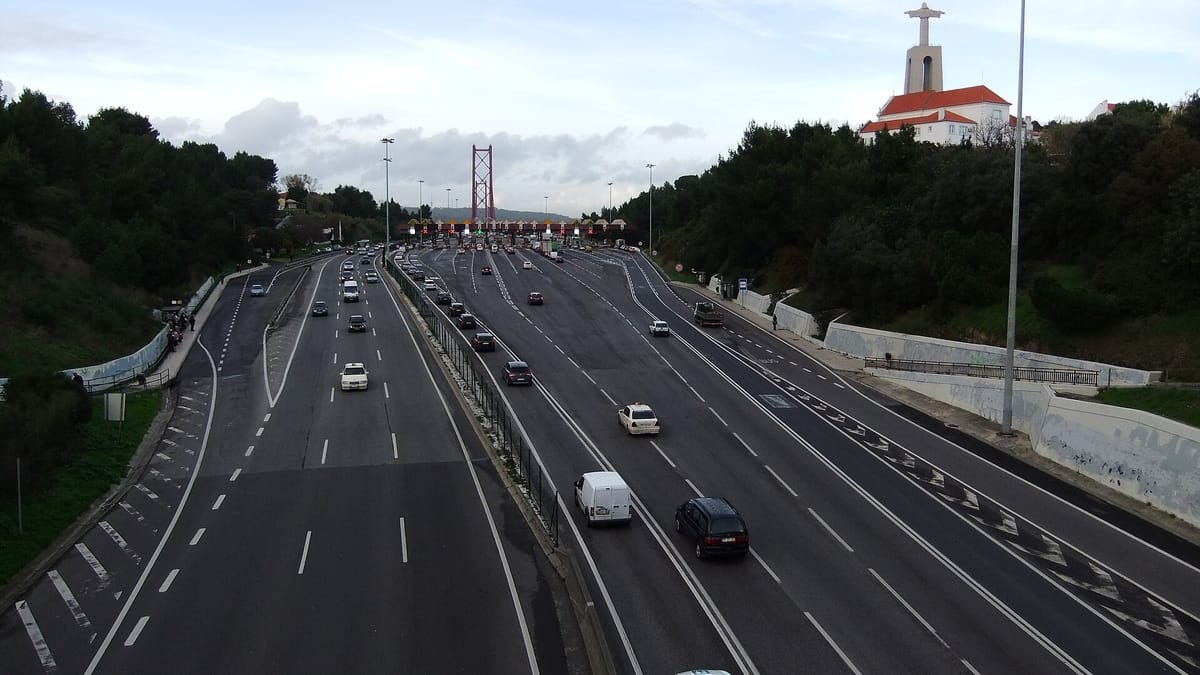
Portugal's way of paying for its roads is running out of road, the country's transport regulator warned on Tuesday. In a strategic study presented at a conference in Oeiras, the AMT (Autoridade da Mobilidade e dos Transportes, the Mobility and Transport Authority) concludes that "the model that served to build the network is not enough to conserve and manage it in the future", and sets out the alternatives, starting with charging lorries and vans for every kilometre they drive.
Both of the network's main revenue streams are shrinking. The first is the CSR (Contribuição de Serviço Rodoviário, the road service contribution), a slice of the tax on petrol and diesel that goes to Infraestruturas de Portugal (IP), the state road company. It raised 691 million euros in 2025, according to figures in the study reported by ECO. Drivers of electric cars pay none of it. IP estimates that if electric vehicles reach 20 to 30 percent of the market by 2030, the fall in fuel sales could cost it 140 to 200 million euros a year.
The second is tolls. Toll revenue was 234.3 million euros last year, 28 percent less than in 2024, after the PS and Chega, both in opposition, pushed through the end of tolls on seven motorway concessions in the interior in 2025. The study also warns of a "grey debt" of deferred maintenance.
What the regulator puts on the table
The AMT argues for a "hybrid" model that leans on the user-pays and polluter-pays principles. Its options include:
- Distance-based charging ("road pricing"), especially for heavy goods vehicles and commercial vans, along the lines of Germany's lorry toll, which varies with distance, emissions class and number of axles. Austria and the Netherlands are cited as other examples.
- Congestion charges on the approaches to the Lisbon and Porto metropolitan areas or on very busy interurban roads, at set hours, with the money earmarked for the roads. London, Stockholm and Oslo are the models.
- Tolls that vary with emissions, time of day, traffic and how often a road is used.
- A rethink of the CSR so that it is "technologically neutral", which in practice means electric cars would also contribute, as Jornal de Negócios reads the proposal.
The study also suggests the state could become a "client" of the road system, paying the operator a stable base fee for keeping roads available and maintained, rather than acting only as a residual funder. The AMT stresses that it is not recommending a single solution and that the choice is a political one.
Concessions start ending in 2028
The timing matters because the first motorway concessions expire soon. The Oeste concession (the A8 and A15), run by Autoestradas do Atlântico, ends in 2028 and the Norte concession in 2029. In 2030 the Algarve's Via do Infante, Costa de Prata, Interior Norte and Lusoponte's two Tagus bridges in Lisbon follow. Tendering can take two to four years, the regulator warns, and it favours shorter, more flexible public-private partnerships focused on maintenance rather than construction.
Miguel Pinto Luz, the infrastructure minister, opened the conference by rejecting new toll exemptions, as several bills proposing them reach Parliament ahead of the 2027 budget debate. He put the cost of the exemptions already granted at 400 million euros a year and accused a "negative coalition" of treating tolls in a "populist" way.
Nothing changes for drivers yet. But with heavier lorries due from March 2027 and a record 80.7 billion kilometres driven by cars last year, the question of who pays for the wear is now on the government's desk.