Efacec Goes Back on the Block as Mutares Studies a 2027 Exit From the Engineering Group the State Rescued
Mutares, which bought Efacec from the State in 2023, is studying a sale of the Porto-area engineering group from 2027. Efacec has an order book above 1 billion euros and about 1,660 staff.
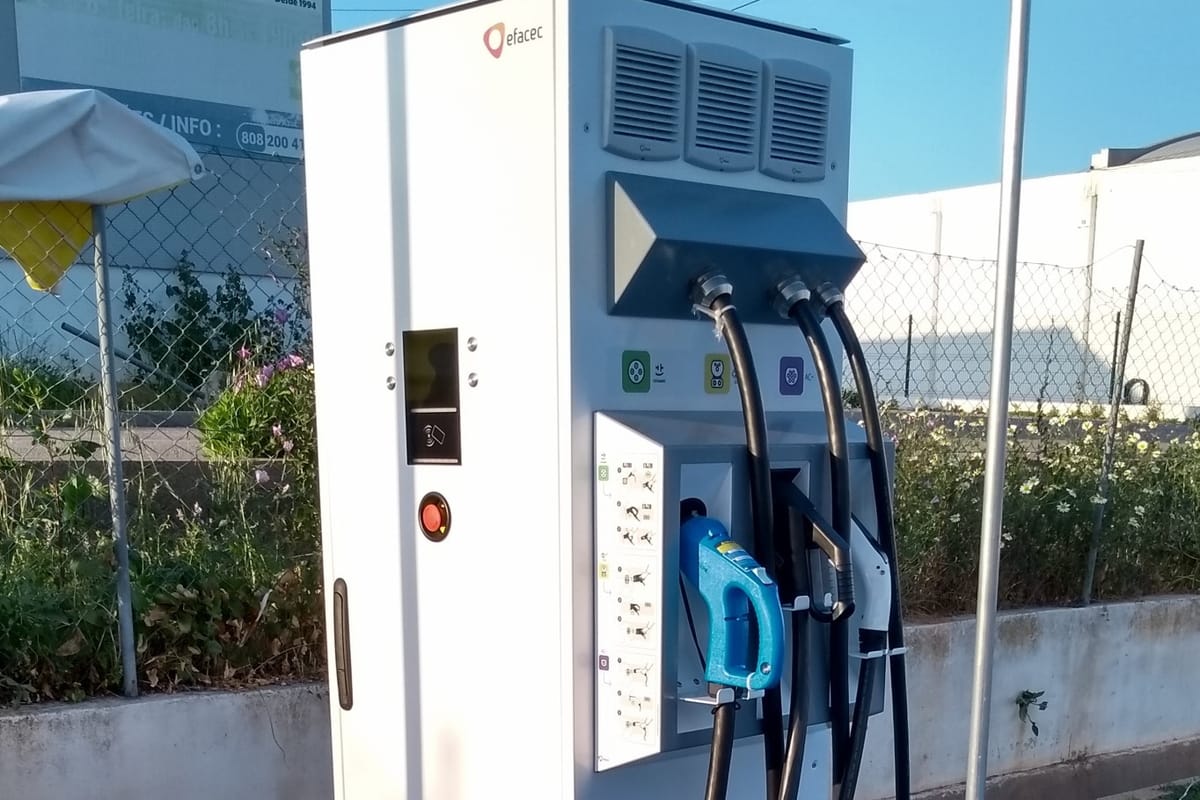
Efacec, the electrical engineering group based in the Porto area that the Portuguese State nationalised in 2020 and sold three years later, is up for sale again. Its German owner, the investment firm Mutares, repeated on Thursday that it is "examining strategic exit options" for the company, in the nine-month results statement it published on 12 November. A separate Mutares announcement on 2 November said a sale would come in 2027 at the earliest.
Efacec employs about 1,660 people, according to Mutares, and makes power transformers, medium-voltage switchgear, grid automation systems and electric vehicle chargers. For workers and suppliers in Greater Porto, a sale means a third owner in seven years.
What Mutares reported
Mutares' holding company made a net profit of 33 million euros between January and September 2026, down from 84 million euros a year earlier. The sale of NEM Energy to Hyundai Heavy Industries Power Systems lifted the result. Write-downs on its retail investments pulled it back. ECO reported the results on Friday morning.
Efacec is one of the stronger companies in the group. In its 2 November announcement, Mutares gave these figures for Efacec:
- Revenue of 229 million euros and adjusted EBITDA (operating profit before interest, tax, depreciation and one-off items) of 34 million euros in the nine months to September;
- a full-year forecast of 320 to 335 million euros in revenue and 45 to 55 million euros in EBITDA, growth of more than 20 percent and more than 55 percent respectively;
- an order book of more than 1 billion euros, about four times its 2025 revenue, with 334 million euros of new orders so far this year;
- a medium-term target of more than 500 million euros in revenue and more than 100 million euros in EBITDA, after it roughly doubles production capacity.
Mutares puts the demand down to grid modernisation, renewable energy and data centres. It says demand for transformers in Europe and North America currently exceeds supply.
The State's part in the story
The State took control of Efacec in 2020. In June 2023 the Council of Ministers chose Mutares' bid and authorised Parpública, the State holding company, to complete the sale. According to RTP, Mutares agreed to put in 15 million euros of capital and 60 million euros of loan guarantees. The State agreed to inject 160 million euros, and the Banco Português de Fomento, the State development bank, put in another 35 million euros through convertible bonds. That came on top of about 200 million euros the State had already spent keeping the company going, mostly on wages.
The economy minister at the time, António Costa Silva, told parliament in December 2023 that Efacec could not be sold until 2026 without the State's prior consent, including through a stock market listing or a merger. He also said the Banco de Fomento would have an observer at the company.
What it means for you
Nothing changes yet for Efacec's staff or customers: Mutares says no decision has been taken and that it can give no assurance that a deal will happen, or when. If the timing holds, a buyer would arrive after the consent period described in 2023 ends. That means the State may have less say over who buys Efacec this time. Whether any part of the public money will come back to the State has not been made public.
Efacec's growth depends on the same grid upgrades now under way in Portugal, including the new grid rules for data centres. For a similar case of the State selling a company it rescued, see the TAP sale contract signed this month.