Court of Auditors President Weighs a Constitutional Court Challenge to the Government's Overhaul of Her Court
Filipa Urbano Calvão says she may refuse to apply parts of the Government's Court of Auditors reform in court cases, sending them to the Constitutional Court, unless the President seeks a review first. The bill, which lifts the prior-approval threshold to 10 million euros, is still in committee.
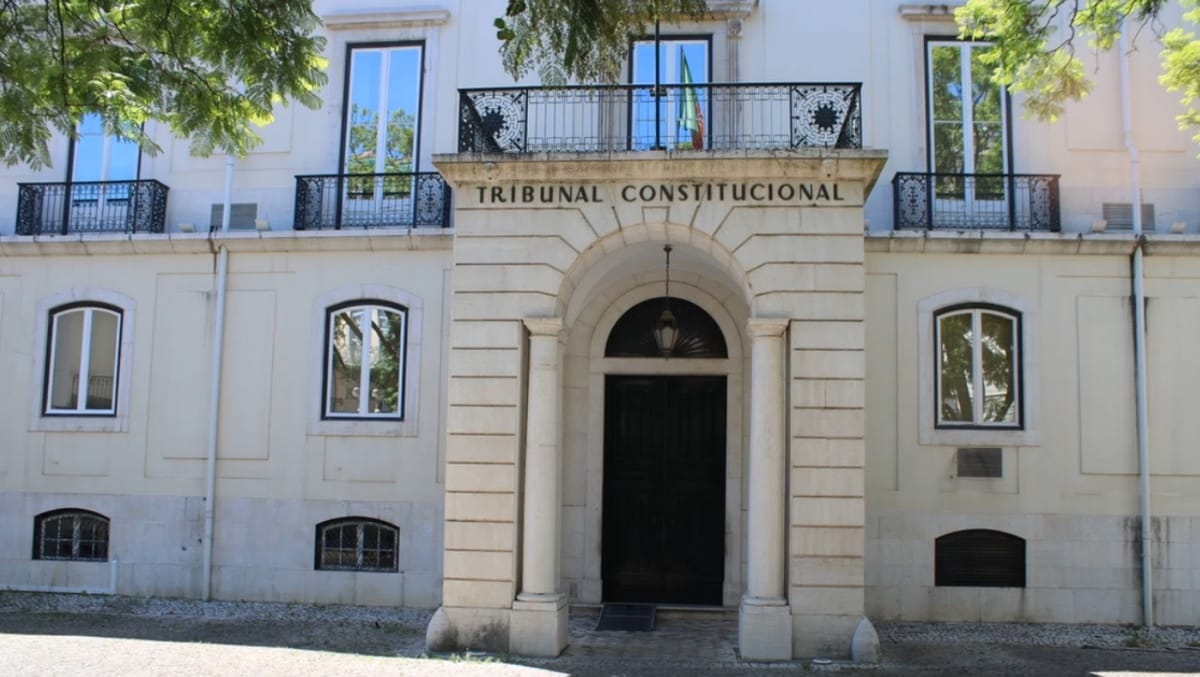
The president of the Tribunal de Contas (Court of Auditors), Filipa Urbano Calvão, has said she is prepared to take the Government's rewrite of her court's founding law to the Tribunal Constitucional (Constitutional Court) if provisions she considers unconstitutional survive in the final text and the President of the Republic does not ask the Constitutional Court to review it first.
She spoke to Conversa Capital, a programme of RTP's Antena 1 radio and the business daily Jornal de Negócios, in remarks reported on Saturday 3 October by Público and by the Lusa news agency. The reform is Proposta de Lei n.º 72/XVII/1.ª (Government Bill 72/XVII), which would replace Lei n.º 98/97, the 1997 Lei de Organização e Processo do Tribunal de Contas (Law on the Organisation and Procedure of the Court of Auditors).
What she said
According to Lusa, Calvão said there are grounds to submit the reform to the Constitutional Court. If the President of the Republic does not share that view, she said she would consider declining to apply, in specific cases before her court, the provisions she regards as unconstitutional, so that the question reaches the Constitutional Court through what Portuguese law calls fiscalização concreta (concrete review).
On the plan to scrap most prior approvals of public contracts, she said that "the belief that by streamlining the procedures of the public administration we will guarantee effectiveness in pursuing the public interest and public finances is yet to be demonstrated", according to Público. She argued that stronger internal controls do not remove the need for external scrutiny. "The court cannot leave the stage," she said, adding that it would need to take on "a different role" in overseeing the Inspeção-Geral de Finanças (General Inspectorate of Finance, IGF).
According to Jornal Económico, she said contract value should not be the only test for prior review, and that if preventive control goes the court should be able to halt works carried out in breach of the law. She put the court's average response time at about a month and a half.
What the bill changes
The bill as filed with the Assembleia da República (Parliament) makes four main changes. The Government says the new threshold alone removes more than 90 percent of current prior approvals, according to Lusa.
- A 10 million euro threshold for prior review. Article 55 says acts and contracts worth less than 10 million euros, excluding VAT, are not subject to fiscalização prévia, the court's advance approval known as the visto. Contracts above 950,000 euros must still be reported to the court for monitoring and possible later audit; for EU-funded projects, only those of 10 million euros or more.
- Exemptions for accredited bodies. Under Article 54, bodies whose internal decision and control systems are accredited by the finance minister, on the advice of the IGF, are also exempt from prior review.
- A disaster carve-out. Contracts for reconstruction and for support to people and businesses after a declared state of siege, state of emergency or situação de calamidade (state of calamity) are exempt.
- Narrower personal liability. Article 75 says financial liability for officials requires intent or gross negligence (dolo ou culpa grave), excluding minor negligence.
The court's objections on record
The court's Comissão Permanente (Standing Committee) set out its constitutional objections in a formal opinion to Parliament, Parecer 1/2026-CP, dated 12 May 2026. Its executive summary says the bill breaks with the constitutional model of independent external audit, weakens financial oversight, and violates both the court's independence and regional autonomy. A second opinion for the committee stage, Parecer 3/2026-CP, says it maintains its reservations about the constitutionality of some provisions.
Where the bill stands
According to the parliamentary record, the bill was filed on 28 April and debated on 20 May. On 22 May it passed its first reading with votes in favour from PSD, IL and CDS-PP. Chega, Livre, PCP, BE and PAN voted against, as did at least one Socialist deputy; the PS and JPP otherwise abstained. It has since been in committee in the Comissão da Reforma do Estado e Poder Local (Committee on State Reform and Local Government), whose hearings ran from July to 9 September, when Calvão herself appeared. No final vote is recorded yet.
How a referral could happen
The president of the Court of Auditors is not among the office holders who can ask the Constitutional Court directly to strike down a law. Under Article 278 of the Constitution, only the President of the Republic can seek a preventive review of an ordinary law, within eight days of receiving it. Article 281 reserves requests to review laws already in force to office holders such as the President, the Speaker, the Prime Minister, the Ombudsman, the Prosecutor General and one tenth of MPs.
The Court of Auditors is, however, a court under Article 209, and Article 204 bars all courts from applying rules that breach the Constitution. Under Article 280, a court decision refusing to apply a rule on those grounds can be appealed to the Constitutional Court, and such appeals are mandatory for the Public Prosecutor when the rule is in a law. That is the route Calvão described.
For residents, the stakes are practical: the visto is the check made before councils, hospitals and other public bodies sign large contracts. The outcome decides whether most of that spending is checked before the money is committed or only afterwards.