Court of Auditors Certifies Parliament's Accounts for the First Time but Flags 571,000 Euros of Software It Could Not Verify
In its first full certification of Parliament's accounts, the Court of Auditors found 22 software contracts worth about 571,000 euros booked as assets without proof, 16.65 million euros of debt certificates missing from the budget accounts, and a 63.9 million euro surplus.
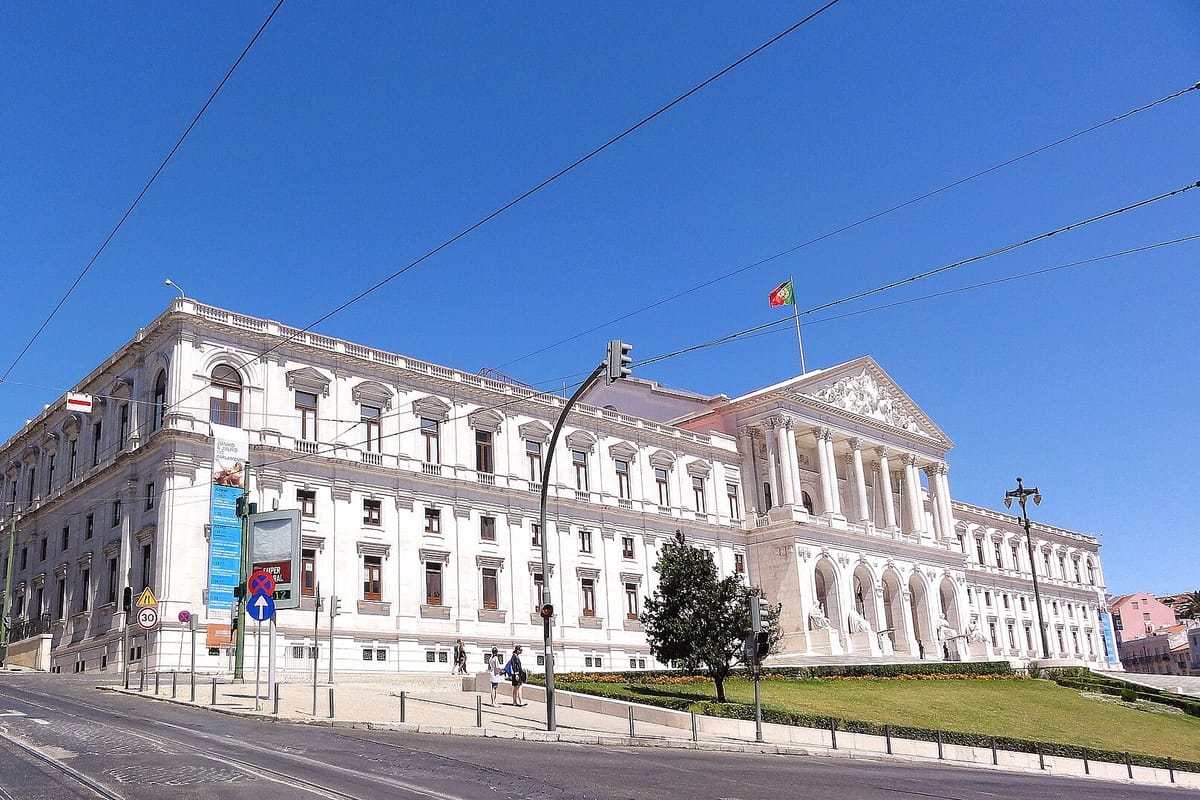
The Tribunal de Contas (Court of Auditors) has certified the accounts of the Assembleia da República, Portugal's parliament, for the first time, and found that they give a true and fair picture of its finances in 2025. The certification came with qualifications, however. The court could not confirm how about 571,000 euros of software spending had been booked as assets, and it found that 16.65 million euros of short-term state debt investments were missing from the budget accounts. Court president Filipa Urbano Calvão handed the report to the President of Parliament, José Pedro Aguiar-Branco, on Tuesday.
Until 2024 the court only issued an annual opinion (parecer) on Parliament's accounts. This year's certification report (in Portuguese) is a full financial audit, approved by the court's judges on 22 October.
What the auditors found
- Software counted as assets without proof. In 2025 Parliament began treating any software licence or right lasting more than 12 months as an intangible asset. The court said contract length alone is not enough: an asset exists only if Parliament controls the software, not if it simply pays for access to a supplier's service. In a sample, the auditors found at least 22 cases, worth about 571,000 euros net, where the paperwork did not show such control. Whether the accounts need correcting is unknown.
- Licences booked as investment. About 512,000 euros spent on licences of a year or less was classed as capital investment in the budget statements when it should have been current spending.
- Debt certificates left out. Subscriptions to CEDIC (special short-term public debt certificates) totalling 16.65 million euros, and the matching repayments, were not recorded in the budget accounts. This repeats a problem the court flagged in its opinion on 2024. Because everything was repaid within the year, the end-of-year balance was not affected.
- Public contracts. Some contracts were published late or incompletely on Portal BASE, the official public procurement portal, and there was too little evidence that contract managers had monitored how they were carried out.
The court said the software problem was below the level that would change its overall opinion, even if all 1.175 million euros of software on the books had to be corrected. It warned that the same approach could cause significant errors in later years, because these amounts build up over time.
A bigger surplus
The auditors also highlighted how much money Parliament carried into 2026. Its budget balance rose from 19.6 million euros to 63.9 million euros, and its net result went from a deficit of 1.7 million euros to a surplus of 12.3 million euros. The court gave three reasons: larger transfers from the State Budget, including through a supplementary budget; almost all expected revenue collected; and only about 70 percent of the approved spending used. The balance includes 27.5 million euros in public subsidies for election campaigns and political parties.
Parliament's response
All members of Parliament's administrative council signed a joint reply agreeing with the court's opinion and recommendations. They said they would revise their asset manual and review the current IT contracts to separate licences that can be counted as assets from software-as-a-service subscriptions, which cannot. The court has given the council six months to report back.
Why it matters
Parliament runs on transfers from the State Budget, which is to say on taxpayers' money. A full audit of its books, rather than a lighter opinion, gives residents a clearer view of what it spends, how it records that spending and how much it leaves unspent. Read our earlier report on the overhaul of the Court of Auditors' powers that Parliament approved in October.