Coimbra Plans to Cut Its City Bus Network From 112 Lines to 52, With Shorter Routes and More Frequent Buses From Spring 2027
Coimbra's council and its SMTUC bus service propose 52 shorter, more frequent lines in place of 112, with no trip needing more than one change. Two public sessions are on Saturday 17 October, and the network should start at the end of March 2027.
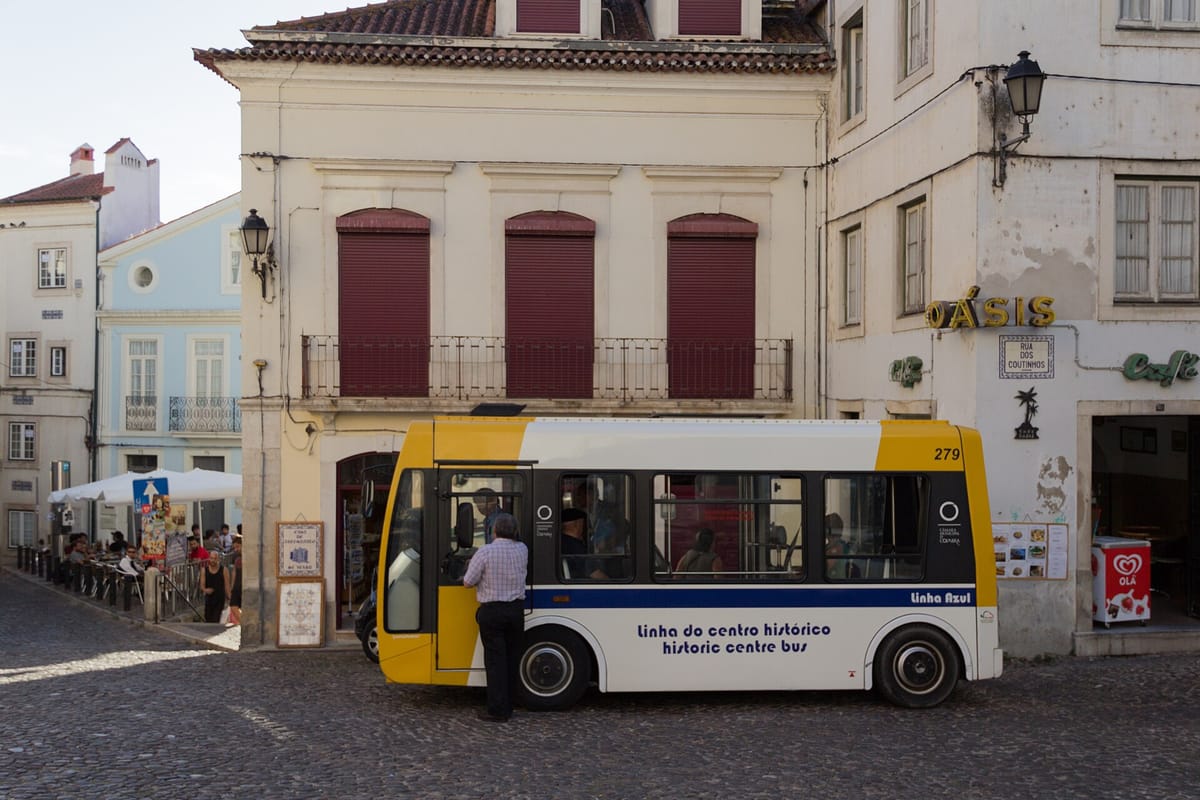
Coimbra wants to rebuild its city bus network from scratch. A proposal from the Câmara Municipal de Coimbra (Coimbra City Council) and the Serviços Municipalizados de Transportes Urbanos de Coimbra (SMTUC, the council's own bus service) would replace today's 112 lines, which run on more than 200 different routes, with 52 shorter lines running more often. Passengers would change buses more, but the aim is that no journey needs more than one change.
The plan was presented to the public for the first time on Friday evening, 16 October, in Eiras, after a morning session for the heads of the parish councils. Two more public sessions take place today, Saturday 17 October. The council says the new network should start running at the end of the first quarter of 2027.
What the proposal changes
The figures below come from Sandra Lameiras of OPT, the transport planning firm that prepared the study for the council, and from Tiago Cardoso, head of the council's mobility, traffic and transport department, as reported by the Lusa news agency.
- Fewer, shorter lines. The network would go from 112 lines to 52, and the average line from 19 kilometres to 12.
- Seven neighbourhood lines. Short, high-frequency lines to give close coverage in central Coimbra.
- Five urban lines. Links between the city's main destinations, such as the hospitals, the universities and the shopping centres.
- Two circular lines. Each about 15.8 kilometres long and running in both directions, one on each bank of the Mondego.
- Radial lines for the rest. Most of the 52 would link the outskirts to the centre, shorter than today's but more frequent.
- New names. Lines would be lettered by type and area: N for the north, B for neighbourhood (bairro) lines, U for urban lines and C for the circulars.
"We stop having lines that cross the whole city and move to a logic of quadrants: lines for the north, centre, south, east and west, which then meet other lines at specific points," Cardoso said. Shorter lines, he added, would make it possible to run more trips and more frequent buses. Lameiras said cutting the number of lines does not mean cutting the network's connections, and that keeping them was one of the requirements of the study's terms of reference.
The current network, she said, is hard to read and poorly integrated with the newer operators in the area: the intermunicipal coaches and the Metrobus, the electric bus rapid transit line run by Metro Mondego.
Why now: the Metrobus
The new network has to be ready when the Metrobus is complete. Its last piece is the line to the hospital, which the council expects to finish at the end of the first quarter of 2027. SMTUC already redrew 26 lines in August when the Metrobus reached Praça da República; this proposal goes much further and rewrites the whole network.
Since 1 October, the MOVE-C intermodal card has covered CP trains, SMTUC, the SIT Metropolitano coaches and the Metrobus across the 19 municipalities of the Coimbra region, according to the council. A monthly pass costs 30 euros within one municipality, 35 euros for two neighbouring ones and 40 euros for the whole region. That matters for a network built on changes: a transfer between operators no longer means a second ticket, as long as the pass covers the area of the trip.
SMTUC may not run all of it
Cardoso said the plan was not drawn up around what SMTUC can currently deliver. "If in the end it turns out that SMTUC does not have the capacity to do it, the service could possibly be partly put out to concession. We could have certain areas run under a concession," he said. No decision on that has been announced.
How to have your say
The proposal is not final. The council says contributions from the sessions will be compiled and considered before the network is settled. The two sessions left are both today, and each one deals with the lines planned for its own part of the municipality:
- South and west: Saturday 17 October, 10:00 to 12:00, at the EB 2,3 de Taveiro school.
- Centre: Saturday 17 October, 15:00 to 17:00, at the Mercado Municipal D. Pedro V (D. Pedro V Municipal Market).
The session for the north and east was held on Friday at the EB 2,3 Rainha Santa Isabel school. Places must be booked in advance through the council's registration form, and the full programme is on the council's announcement.
If you cannot make it, there will be another chance. After the sessions, the council plans to put the proposal on a dedicated website with a journey simulator, so that passengers can check their own trips under the new network and send comments and criticism. No date has been given for the site.
What is not known yet
The proposal has not been published in full. The council has not released the line maps, the timetables or the frequencies each line would have, so it is not yet possible to say how a given trip would change. Nothing has been said about fares.
Sources: Coimbra City Council (the sessions and the 2027 start); Lusa, as published by Observador (the details presented in Eiras).