Changing Your Name in Portugal in 2026: A Practical Guide to the Six Words You Get, the Free Routes and the 200 Euro Special Process
Portuguese law caps a full name at six words, two given names and four surnames, and sets out exactly when you may change it. Most changes cost nothing, because they follow a change in your legal status. Simply wanting a different name costs 200 euros.
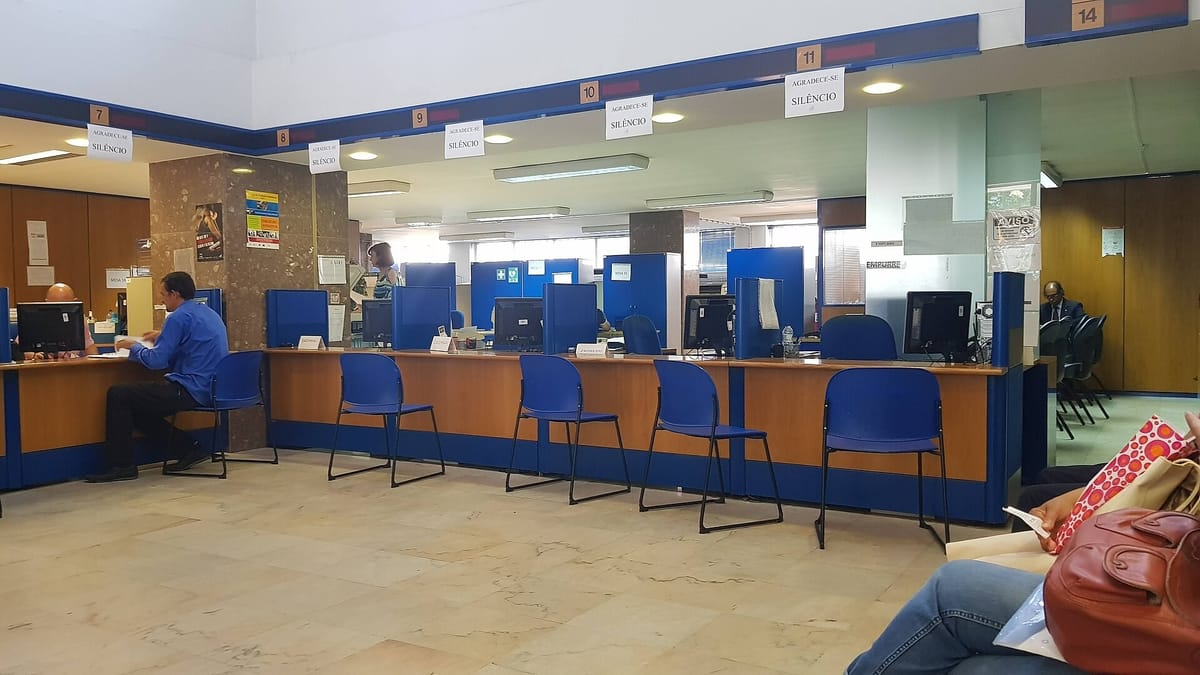
Portugal treats a name as a registry entry rather than a personal preference. What you may be called is set out in an article of the Código do Registo Civil (Civil Registration Code), what you may change it to is set out in the next article, and the price of getting it wrong is a rejected application at a counter. That is frustrating if you arrived expecting a form. It is useful once you know the rules, because most of the changes people actually want are free, and the expensive one is the rarest.
This guide covers the rules on composing a name, the two routes to changing one, what marriage and divorce do to your surnames, what it all costs, and what happens to your other documents afterwards. It applies to names in the Portuguese civil register, which means it applies to you if you were born here, naturalised here, married here, or registered a child here.
Six words, and how they are counted
Article 103 of the Código do Registo Civil is the whole of the arithmetic. A complete name may have at most six grammatical vocables, simple or compound, of which only two may be given names and four may be surnames.
Two refinements make that limit less tight than it sounds. The Instituto dos Registos e do Notariado (IRN, Institute of Registries and Notaries) confirms that connecting elements, the de, da, do and e that hold Portuguese names together, do not count towards the total. And a compound vocable, two or more simple words with a meaning of their own, counts as one. São-José is one given name. Castelo-Branco and Mil-Homens are one surname each.
The rules on the given names themselves are stricter than the rules on surnames:
- Given names must be Portuguese, drawn from the national onomastics or adapted graphically and phonetically to Portuguese. A foreign-origin name can be Portuguesed rather than refused.
- The first given name must not raise doubt about the sex of the person being registered.
- The spelling must follow the orthography currently in force.
- Siblings may not be given the same given name, unless one of them has died.
- Foreign given names are admitted in their original form in three situations: the person being registered is foreign, or was born abroad, or holds another nationality besides Portuguese. They are also admitted where one of the parents is foreign or holds another nationality besides Portuguese.
That third bullet is the one immigrant families most often need and least often know. A child born in Portugal to a parent who holds a second nationality can be registered with a foreign given name in its original spelling, with no adaptation, because the law says so.
Surnames are more generous. They are chosen from among those belonging to both or to one of the parents, or which either parent has a right to use. They may be ancestors' surnames, from grandparents or great-grandparents, but if those do not appear among the parents' own surnames you have to prove the link. Identical surnames held by both parents may be repeated, consecutively or with others in between. Connecting elements may be added or removed. Words that would normally be given names may be used as surnames provided they form part of the parents' surnames. There is no rule about the order. For a foreign child, the choice of surnames follows the law of that child's nationality; where the child also holds Portuguese nationality, Portuguese law prevails.
The list, and what it is not
The IRN publishes a list of given names, running to 88 pages and roughly 7,500 entries, each tagged masculine or feminine. It reaches from Aabirah to Zuzanna and takes in a great deal that is not remotely traditional: Aaliyah, Abdelrahman, Aayush, Zoey.
The list is not a closed menu. The IRN describes the names on it as examples of what sits in the Civil Registry database, which is a record of what has already been admitted rather than an exhaustive statement of what may be. A name that is not on it is not thereby banned, and a name that is on it will not be refused.
Where there is genuine doubt, the code provides a mechanism instead of an argument. Article 103 says doubts about the composition of a name are resolved by order of the director-general of Registries and Notaries, through the Conservatória dos Registos Centrais (Central Registry Office). For a birth, the IRN says the request for clarification is always made through the civil registry office chosen for the registration. In any other case you present a written request at the Conservatória dos Registos Centrais itself.
This is the consulta de nome, and it is one of the few things in this guide with a price on it before you have changed anything. The Regulamento Emolumentar dos Registos e do Notariado (Registry and Notarial Fee Regulation), reproduced in full on the IRN's costs page, charges 50 euros for a name consultation and 75 euros where the consultation involves an onomastic opinion.
The two routes to a different name
Article 104 opens with the rule that everything else is an exception to: a name fixed in a birth record can only be changed with the authorisation of the conservator of the Central Registry Office. That is the processo especial de alteração de nome, the special name-change process.
Then it lists the situations that do not need that authorisation, because they follow automatically from a change in your legal position. They are recorded as an averbamento, an annotation on the existing record, on your written request:
- A change founded on the later establishment of filiation, on adoption or its review or revocation, or on a marriage after the birth record.
- A change resulting from rectification of the record.
- Simply inserting or removing connecting particles between the words of the name, or adding surnames where the record carries only a given name.
- Renouncing surnames adopted through marriage, and more generally losing the right to the name.
- A change resulting from the rights in Article 1876 of the Código Civil (Civil Code).
- Adopting the name you originally wanted, where the birth record was drawn up while an onomastic consultation on its admissibility was still pending. You have six months from notification of the decision to ask for this.
- A change of given name resulting from a change in the registered sex.
The practical difference is stark. The IRN states plainly that a name change arising from those situations has no cost, and that the special name-change process costs 200 euros. The fee regulation carries the same figure at item 6.4.
For either route the request is in writing and states your reasons. For the status-driven routes you attach proof of the situation. For the special process you attach a criminal record certificate if you are 16 or over. You can file at any civil registry office, not only the one holding your record. Where the person is a minor under 16, the request must come from both parents, or from one with the other's agreement, and that remains true even where parental responsibilities have been regulated by a court.
The code gives no statutory list of grounds the Central Registry conservator must accept. The authorisation is theirs, and the quality of your written reasons is the case you are making.
Marriage: you add, you do not swap
Article 1677 of the Código Civil is short and widely misread. Each spouse keeps their own surnames, and may add to them up to two surnames of the other. Nobody is required to change anything, and nobody gives anything up. The surname decision is taken as part of the marriage process itself, which is covered in the guide to getting married in Portugal as a foreigner.
The Diário da República's own explanatory note works through what that allows. If Maria Santos marries João Silva, Maria may become Maria Santos Silva. João may equally become João Silva Santos. The surnames may be interleaved, so that both end up as Santos Silva or as Silva Santos. What the note treats as outside the purpose of the rule is a crossed adoption in which each spouse simply takes the other's name and neither ends up with a shared family name, and the absurd case where both already share a surname and each adds it again.
The status protections that follow are the parts people need years later:
- Widowhood. A spouse who adopted the other's surnames keeps them, even on remarrying, if they do not wish to take the next spouse's surnames. Where a widowed spouse remarries, the annotation recording that retention is made on a declaration before the conservator, entered in the marriage process.
- Judicial separation of persons and property. Each spouse keeps the surnames of the other that they had adopted.
- Divorce. In principle the right to the ex-spouse's surnames is lost. It can be kept with the ex-spouse's consent or with the authorisation of a court, most often on professional grounds. The application for judicial authorisation can be made inside the divorce proceedings or in a separate action after the divorce has been decreed.
Article 104 of the Código do Registo Civil then sets out how that retention is actually recorded: on the ex-spouse's authorisation given in an auto before the conservator, or in an authentic or authenticated private document, or in a term drawn up in court, or on court authorisation.
There is a reverse remedy as well. Article 1677-C of the Civil Code allows a court to deprive a spouse who has kept the other's surnames, after death, judicial separation or divorce, of the right to use them where that use seriously harms the moral interests of the other spouse or of their family. In separation or divorce the application is made by the other spouse or ex-spouse; in widowhood it can be made by the descendants, ascendants and siblings of the deceased.
Both of these have a price. The fee regulation charges 75 euros for the procedure authorising use of an ex-spouse's surnames after divorce, and 75 euros for the procedure depriving someone of the right to use the other spouse's surnames.
Changing the registered sex and the given name
This is a separate procedure with its own rules, and it is free. The fee regulation lists the procedure for changing the registered sex and the consequent change of given name among the acts that carry no charge, and the Ministry of Justice service page says the same.
It is open to Portuguese nationals who are adults; to those aged 16 and 17, through their legal representatives; and to adults under the maior acompanhado regime, unless a court has declared that the person may not make the change. You apply in writing at a civil registry office, using the published form, giving your Cartão de Cidadão number and your new given name. Applicants aged 16 or 17 also need a medical report, which must attest only to the minor's decision-making capacity and informed will and must not refer to any gender-identity diagnosis; it may be issued by any doctor or psychologist registered with the Ordem dos Médicos or the Ordem dos Psicólogos. They must also give free and informed consent in front of a conservator.
You have 30 days after the registration to update your Cartão de Cidadão. Children's birth records are updated separately: adult children can ask for the update themselves, and for minor children both parents must request it. Applications can be filed at any civil registry office, and people living abroad can file at the consulate for their area of residence, which forwards the file to a registry office for decision.
What happens to everything else
Once the change is authorised, the IRN says the name is altered in the civil register and all civil registry acts relating to the person, their descendants and their spouse are updated. Article 104 also requires name changes annotated on birth records to be communicated to the identification service.
That is the registry side. Your own paperwork is not automatic in the same way, and the order that causes least trouble is: civil register first, then the Cartão de Cidadão, then everything that reads from it. A bank, a landlord and an employer will each want to see the new card rather than the annotation on the record.
What this means for you
- If you have just naturalised. Your name enters the Portuguese register at that point, and the six-vocable rule applies to it. If you were born abroad, Article 103 lets your given name stay in its original form rather than being adapted, and it is easier to establish that at the outset than to unpick afterwards.
- If you are registering a baby here. Do the onomastic consultation before the registration if there is any doubt, not after. The code has a specific route back for a name held up by a pending consultation, and it closes six months after the decision.
- If you are getting married. Nothing obliges either of you to change anything, and the rule adds rather than replaces. Decide before the ceremony, because adding a spouse's surnames after a marriage that is already registered is a change to the birth record, with its own paperwork.
- If you are divorcing and you built a career under a married name. Ask for the retention inside the divorce proceedings. It is a cleaner route than the separate action, and the alternative is your ex-spouse's written consent years later.
- If you simply dislike your name. That is the 200 euro special process, it needs a criminal record certificate, and it depends on one conservator's authorisation. Write the reasons properly.
A short checklist
- Count your vocables: two given names, four surnames, connecting particles free.
- Check whether your change is one of the free status-driven routes in Article 104 before paying for the special process.
- Bring written reasons and proof of the situation; bring a criminal record certificate if you are 16 or over and using the special process.
- File at any civil registry office; consulates handle the gender-mention procedure for residents abroad.
- For a child under 16, both parents sign, regardless of any parental-responsibilities order.
- After the change lands, replace the Cartão de Cidadão and then work outwards through banks, tax, social security and employer.
- Budget 50 or 75 euros if you need a name consultation first, and 75 euros for either of the divorce-surname procedures.
The system is more permissive than its reputation and less permissive than most people assume. Almost everything that flows from a change in your legal position is free and takes an annotation. Almost everything that flows from simply wanting a different name costs 200 euros and rests on a decision that is not yours. Knowing which of those two you are in is most of the work.
Sources
This guide is written from official Portuguese and EU sources.
- Diário da República, Código do Registo Civil, Artigo 103.º (Composição do nome), consolidated text (Portuguese only)
- Diário da República, Código do Registo Civil, Artigo 104.º (Alteração do nome), consolidated text (Portuguese only)
- Diário da República, Código Civil, Artigo 1677.º-C (Privação judicial do uso do nome), consolidated text (Portuguese only)
- Diário da República, Lexionário, Direito ao nome em caso de casamento, on Articles 1677.º to 1677.º-C of the Civil Code (Portuguese only)
- Instituto dos Registos e do Notariado, Composição do nome (Portuguese only)
- Instituto dos Registos e do Notariado, Alteração do nome no registo de nascimento (Portuguese only)
- Instituto dos Registos e do Notariado, Custos dos serviços, reproducing the Regulamento Emolumentar dos Registos e do Notariado (Portuguese only)
- Instituto dos Registos e do Notariado, Lista de nomes próprios (PDF) (Portuguese only)
- Ministério da Justiça, Mudança de sexo e de nome próprio (Portuguese only)