Changing Your Name in Portugal in 2026: A Practical Guide to the Registos Centrais Authorisation, the Six-Word Limit and the Seven Changes You Can Make by Simple Request
Most name changes in Portugal need the authorisation of one office in Lisbon and cost 200 euros. Seven situations escape that entirely. This guide sets out both routes, the legal limits on what a Portuguese name may contain, and every fee involved.
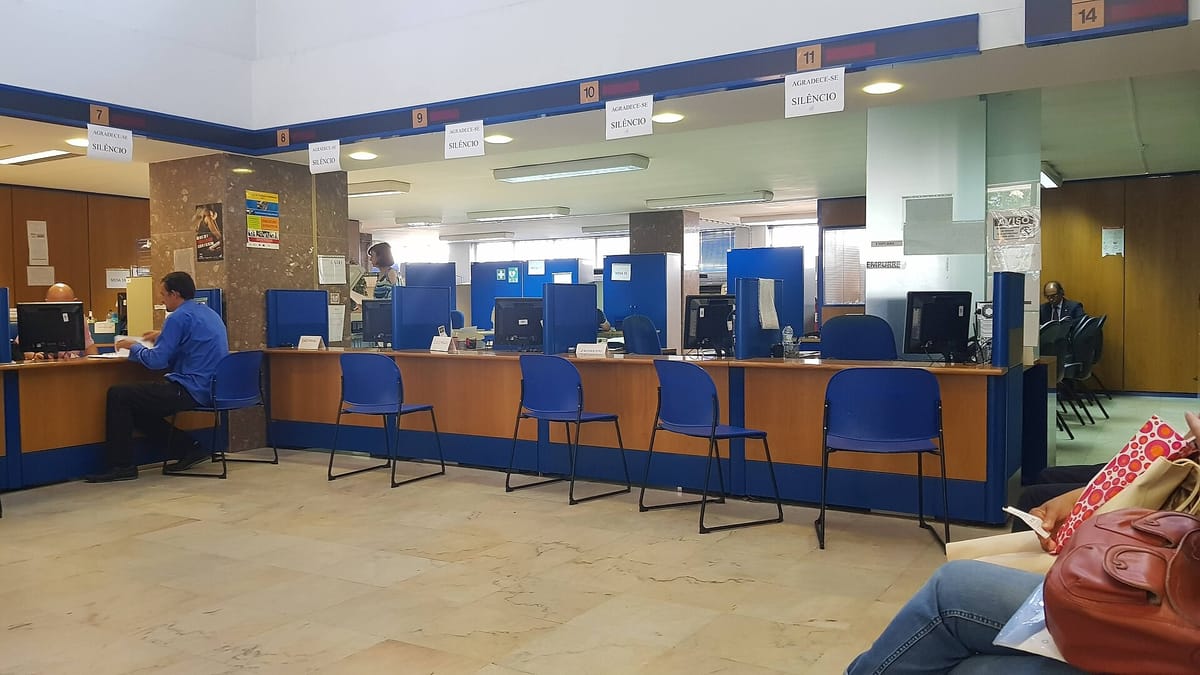
Portuguese names are not a private matter. What goes on your birth record is set by law, what you can change afterwards is set by law, and the decision on most changes is taken by one office in Lisbon. If you have naturalised, married, divorced, or simply been living with a misspelling that a registrar entered decades ago, the route out runs through the Código do Registo Civil (Civil Registry Code).
This guide covers what the law actually says: which changes you can make by simply asking, which need authorisation, what a Portuguese name is legally allowed to contain, and what each step costs.
The basic rule, and the seven exceptions
Article 104(1) of the Civil Registry Code is short and absolute: the name fixed in the birth record may only be modified with the authorisation of the conservador dos Registos Centrais (the registrar of the Central Registry Office).
That is the default. Article 104(2) then lists seven situations that escape it. In those cases the change is recorded on a simple application by the person concerned, with no authorisation needed at all. Under Article 104(3), if that application is made verbally it must be reduced to writing by the registrar.
The seven exceptions are:
- (a) A change founded on the establishment of parentage, on adoption, on the review or revocation of an adoption, or on a marriage that took place after the birth record was drawn up.
- (b) A change resulting from the rectification of a registry entry.
- (c) A change consisting only of inserting or removing linking particles between the words that make up the name, or of adding surnames where the record shows only the given name.
- (d) A change resulting from renouncing surnames adopted by marriage, and more generally from the loss of the right to a name.
- (e) A change resulting from exercising the rights in Article 1876 of the Civil Code.
- (f) Simply adopting the name originally wanted, where the birth record was drawn up while an onomastic consultation on that name was still pending.
- (g) A change of given name following a change to the recorded sex.
Two timing points sit in the same article. Under Article 104(5), where exception (f) applies, the application must be made within six months of being notified of the decision admitting the name. And under Article 104(4), where someone loses the right to a name under the final part of exception (d), the entry is made by the registrar on their own initiative.
Everything else, including the case most people mean when they say they want to change their name, falls under the first paragraph and needs authorisation.
What a Portuguese name may legally contain
Before planning a change, it helps to know the shape the result has to fit. Article 103(2) sets out the rules.
A full name may consist of no more than six grammatical words, simple or compound. Of those, at most two may be given names and four may be surnames. Within that frame:
- Given names must be Portuguese, drawn from the national onomastic stock or adapted to Portuguese in spelling and pronunciation, and they must not raise doubt about the sex of the person registered.
- Foreign given names are admitted in their original form if the person is foreign, was born abroad, or holds another nationality alongside Portuguese.
- Foreign given names in their original form are also admitted if one of the person's parents is foreign or holds another nationality alongside Portuguese.
- Siblings may not be given the same given name, unless one of them has died.
- Surnames are chosen from those belonging to both or one of the parents, or to which either parent has a right of use. Failing that, one of the names by which they are known may be chosen.
Those third and fourth points matter enormously for foreign residents and their children, and they are frequently misunderstood. The rule is not that everyone in Portugal must carry a Portuguese first name. It is that the Portuguese-form requirement is waived where there is a foreign connection, whether through the person themselves or through a parent.
Under Article 103(4), doubts about the composition of a name are settled by order of the director-general of Registries and Notaries, routed through the Conservatória dos Registos Centrais.
The official list of first names
The IRN publishes the list of words admitted as given names, built up from the rulings given on past consultations. It is a working document rather than a closed catalogue, and it is long: the current edition runs to 88 pages and 7,547 entries, of which 4,018 are listed as feminine and 3,529 as masculine.
It is also far more international than its reputation suggests. The first page alone carries Abdelrahman, Aayush, Aaliyah, Abdoulaye and Abril alongside Acácia and Açucena. If the name you want is on it, in the spelling you want, you are in straightforward territory. If it is not, that is not automatically a refusal; it is the point at which a consultation becomes worth paying for.
What it costs
The fees come from the Regulamento Emolumentar dos Registos e Notariado (Registry and Notary Fee Regulation), published by the IRN. The relevant entries sit in the section on special processes and procedures before the registrar:
- Name change process: 200 euros (item 6.4). This is the fee for the authorisation route under Article 104(1).
- Depriving a spouse of the right to use the other's surnames: 75 euros (item 6.5).
- Authorising use of a former spouse's surnames after divorce: 75 euros (item 6.6).
- Name consultation: 50 euros, rising to 75 euros where it requires an onomastic opinion (items 9 and 9.1).
One procedure is expressly free of charge: the change of the recorded sex in the civil register and the consequent change of given name. The fee regulation lists it among the exempt acts.
Note also that where a divorce or separation by mutual consent is processed at the registry, the 280 euro fee for that process is stated to include authorisation to use the former spouse's surnames. If the surname question is being settled as part of the divorce, it is not a separate charge.
Surnames from marriage, and what happens on divorce
Marriage surnames have their own machinery in Article 104.
Keeping a former spouse's surnames after divorce (Article 104(6)) requires the ex-spouse's authorisation. That can be given in a statement recorded before the registrar, in an authentic or certified private document, in a court record, or by authorisation of the court itself where the ex-spouse will not give it.
A widowed spouse who remarries and wishes to keep the surnames of the first marriage (Article 104(7)) does so on a statement made before the registrar, recorded in the marriage file.
Renouncing surnames taken on marriage runs the other way and needs no authorisation at all: it is exception (d) in the list above, a simple application. If you took your spouse's surname and want it off, that is the cheap and quick route, not the 200 euro process. The rules on how those surnames are taken in the first place are part of the civil marriage process at the Conservatória do Registo Civil.
How the change is recorded, and who finds out
A name change is not written over the original entry. It is added to the birth record as an averbamento (a marginal annotation). Article 69(1) lists the facts recorded this way, and name change appears there at point (n), with change of sex and the consequent change of given name at point (o) and the retention of spousal surnames at point (p).
Two consequences follow.
First, under Article 123(1), certain changes can be folded into a clean new birth record rather than left visible as annotations. The list includes the establishment of parentage and the name change that follows from it, and change of sex with the consequent change of given name. That is done on a verbal application by the person concerned or their legal representative.
Second, the register protects the sensitive case. Article 214 restricts full-copy certificates and photocopies of records carrying an annotation of change of sex and consequent change of given name: they may be issued only at the request of the person themselves, their heirs, or judicial or police authorities for the purposes of a criminal investigation.
Once the annotation is made, Article 104(8) requires name changes to be communicated to the identification service, on terms set by order of the president of the IRN. In practice that is the link between the civil register and your identity document, and the point at which renewing your Cartão de Cidadão becomes the next job. Budget for the knock-on work: bank, tax office, Segurança Social, landlord, employer and utilities all key off the name on that card, in much the same way they key off your registered address when you move.
If your birth record is not Portuguese
The whole of Article 104 speaks about "the name fixed in the birth record". That presupposes a Portuguese birth record, which you will have if you were born here and registered here, or if a foreign birth was transcribed into the Portuguese register, which is the normal consequence of acquiring Portuguese nationality.
If you are a foreign national resident in Portugal with no Portuguese birth record, Article 104 is not the instrument for you. Your name in Portugal follows your own country's documents, and a change has to be made there first and then reflected in the Portuguese systems that hold your data. The Civil Registry Code governs the Portuguese register, not foreign ones.
A short practical sequence
- Work out which route you are on. Read Article 104(2) against your situation. If you land in one of the seven exceptions, you are making an application, not asking permission, and the 200 euro process fee does not apply.
- Check the target name against Article 103. Six words, two given names, four surnames, and surnames that trace to a parent or to a name you have a right to use. This is where most ambitious changes actually fail.
- If the given name is unusual, consider a consultation first. At 50 euros, or 75 with an onomastic opinion, it is cheaper than discovering the problem inside a 200 euro process.
- File at a Conservatória do Registo Civil. The authorisation decision belongs to the Conservatória dos Registos Centrais in Lisbon, but the process is opened at a registry office.
- Then chase the documents. The register tells the identification service; it does not tell your bank.
One caution
The Civil Registry Code sets no waiting period and no cap on how often a name may be changed, and nothing in Article 104 promises that an authorisation will be granted. The decision is discretionary and rests with one office. Nothing in this guide is a prediction of how that discretion will be exercised in any individual case, and the code does not publish the criteria. What it does publish, and what is worth working from, is the boundary: Article 103 tells you the shape of the answer that is capable of being approved.
Sources
This guide is written from official Portuguese and EU sources.
- Diário da República, Código do Registo Civil (Decreto-Lei n.º 131/95), consolidated text, Articles 69, 103, 104, 123 and 214 (Portuguese only)
- Instituto dos Registos e do Notariado, Custos dos serviços: Regulamento Emolumentar dos Registos e Notariado, items 6.1 and 6.4 to 6.6, items 9 and 9.1, and the list of exempt acts (Portuguese only)
- Instituto dos Registos e do Notariado, Lista de Nomes Próprios: the official list of words admitted as given names (PDF, Portuguese only)