Medicine Co-payment (Comparticipação) in Portugal in 2026: A Practical Guide to the Four Escalões, the Reference-Price Trap, the Low-Income Pensioner Regime and the Thirty-Five Disease Schemes
Why the same prescription costs two euros one month and thirty the next. The four co-payment tiers, how the reference price quietly shifts the bill onto you, the 12,180 euro pensioner threshold, and the letter on your prescription that is worth fifteen percentage points.
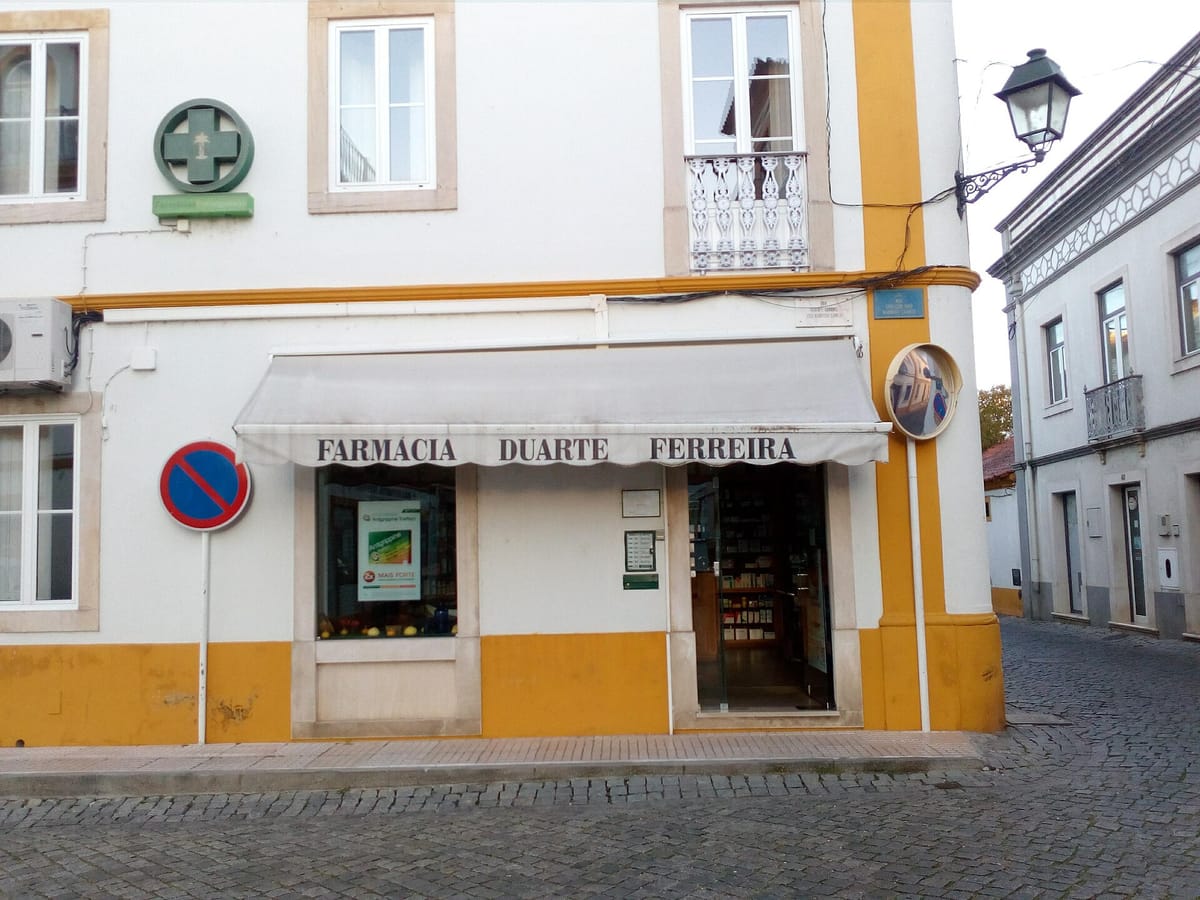
You hand a prescription over a Portuguese pharmacy counter, the assistant scans a code, and a number appears. Some months it is two euros. Some months, for what looks like the same kind of medicine, it is thirty. Nothing about the transaction explains why.
The answer is a system called comparticipação: the share of a medicine's price that the state pays. It is not means-tested for most people, it is not decided by your doctor, and it has almost nothing to do with how ill you are. It is decided by which pharmacotherapeutic subgroup your medicine belongs to, by whether a cheaper equivalent exists, and by where you collect it. On top of that sit two overrides, one for low-income pensioners and one for around thirty-five specific diseases.
The whole structure was rewritten in 2026. Decreto-Lei n.º 118/2026 of 17 June replaced the 2015 decree that had governed it for a decade, and came into force on 1 July 2026. This guide sets out how the system now works, what determines the number you pay, and the two ways that number can be reduced.
The two levers
Article 35 of the 2026 decree says the state's contribution to the price of medicines prescribed to SNS users and dispensed in community pharmacies is established through two mechanisms: a percentage of the retail price, and a reference-price system.
Those are not alternatives you choose between. They stack. The percentage tells you how much of a price the state pays. The reference-price system tells you which price that percentage is applied to. Getting a nasty surprise at the counter is almost always the second mechanism, not the first.
The four escalões
Article 35(2) fixes four tiers:
- Escalão A: 90 percent of the retail price, or of the reference price where one applies.
- Escalão B: 69 percent.
- Escalão C: 37 percent.
- Escalão D: 15 percent.
What puts a medicine in a tier is its pharmacotherapeutic group and subgroup, set out in the annex to Portaria n.º 195-D/2015. The annex is a long list, and reading a few entries tells you the logic better than any summary. Escalão A carries anti-haemophilics, medicines for cystic fibrosis, medicines specific to haemodialysis, antituberculosis and antileprotic medicines, antimyasthenics and antiparkinsonians, most ophthalmic subgroups and the antineoplastics and immunomodulators. Escalão B carries much of the cardiovascular, respiratory and blood groups. Escalão C is where the everyday items sit, including most of Group 13, the medicines used in skin conditions, and the antiallergics.
Escalão D is different in kind. It is not a list of therapeutic groups at all. Under Article 35(8) of the decree, and Article 2(2) of the ordinance, it is the tier used for new medicines that, for specific reasons and after a reasoned opinion in the assessment process, are brought in under a transitional availability regime. If your medicine is at 15 percent, it is usually because it is new, not because it is unimportant.
The annotation trap
Some subgroups in the annex carry a letter in brackets, and those letters change the answer completely depending on where you collect the medicine. Article 3(2) of the ordinance defines them:
- (a) Medicines prescribed and dispensed by SNS establishments and services, whether the patient is admitted or an outpatient. If a community pharmacy dispenses them instead, the state pays at Escalão C.
- (b) Same, except that if a community pharmacy dispenses them the state pays nothing at all.
- (c) Medicines prescribed and dispensed in internal medicine, pneumology or paediatrics services of hospitals classified in group III.
This is the mechanism behind a specific and common shock: a medicine that costs you nothing when the hospital pharmacy hands it to you, and costs you the full price when you try to buy it locally. It is not an error and the pharmacy cannot fix it.
The reference-price system, and why your brand matters
This is the part that produces most of the unexplained variation at the counter.
The decree defines a grupo homogéneo as the set of medicines with the same international non-proprietary name, dosage and route of administration, in the same pharmaceutical form or in equivalent forms, that includes at least one generic or biosimilar on the market. The preço de referência is then the value on which the state's contribution is calculated for every medicine in that group.
Article 36 sets out the consequence in two lines. The maximum co-payment is worked out by applying your escalão to the reference price of the homogeneous group, not to the price of the box you picked up. And if the retail price of your medicine is lower than the figure that produces, the state's contribution is limited to that lower price.
Read those together and the practical rule is this. If you choose a medicine priced above the reference price, you pay the entire excess yourself, on top of your normal share. A 90 percent co-payment does not mean you pay a tenth of the price on the box. It means you pay a tenth of the reference price, plus all of the difference between the reference price and what you actually chose.
Portuguese pharmacies are required to make the cheaper options available. Portaria n.º 224/2015 obliges every pharmacy to keep for sale at least three medicines with the same active substance, pharmaceutical form and dosage from among those with the five lowest prices in each homogeneous group. You have a direito de opção, a right to choose, and on a dematerialised prescription you exercise it with a código do direito de opção, a separate code from the one used to dispense. Exercising that right upward is what costs money.
The pensioner regime
The first override is for low-income pensioners, and it is worth real money.
Article 35(3) adds 5 percentage points to the state's contribution on Escalão A medicines, and 15 percentage points on Escalões B, C and D, for pensioners whose total annual income does not exceed the threshold below. In practice:
- Escalão A: 95 percent instead of 90.
- Escalão B: 84 percent instead of 69.
- Escalão C: 52 percent instead of 37.
- Escalão D: 30 percent instead of 15.
Article 35(4) then adds a separate and more generous rule for the same group: the state's contribution is 95 percent across all four tiers for medicines whose retail price is at or below the fifth-lowest price in the homogeneous group they belong to. That fifth-lowest price is updated quarterly by INFARMED, after the reference prices for the homogeneous groups are approved, and takes effect at the same time as them. This is why the pharmacy's stocking duty above matters so much to pensioners specifically: the three cheapest options a pharmacy must carry are drawn from exactly the five prices this rule turns on.
The income threshold, in 2026 numbers
The test is not your pension. Article 35(6) says the income figure is the household's income divided by the number of members of the household, calculated as provided in Decreto-Lei n.º 70/2010 and consistently with Decreto-Lei n.º 232/2005.
The threshold itself is 14 times the retribuição mínima mensal garantida (guaranteed minimum monthly wage) in force in the previous calendar year, or 14 times the indexante dos apoios sociais (social support index) currently in force, whichever is higher. For 2026 that resolves as follows. The RMMG in force during 2025 was 870 euros, set by Article 3 of Decreto-Lei n.º 112/2024, which gives 12,180 euros. The IAS for 2026 is 537.13 euros, set by Article 2 of Portaria n.º 480-A/2025/1, which gives 7,519.82 euros. The higher figure governs, so the 2026 threshold is 12,180 euros of annual income per household member.
How the pharmacy knows
Article 35(5) requires beneficiaries to prove their status through a document issued by the competent official services. At the counter the mechanism is simpler than that sounds: under Portaria n.º 224/2015, whenever a prescription is for a pensioner covered by the special regime, the prescription must carry the letter "R" beside the patient's data. On a materialised prescription written for such a pensioner, the prescription-location identification is done with a green vinheta.
If you believe you qualify and your prescriptions do not carry the R, the fix is with whoever prescribes, not with the pharmacy. The pharmacy applies what the prescription says.
The disease regimes
The second override is by diagnosis. Article 41 of the 2026 decree lets the health ministry create special public-availability regimes by ordinance, for particular pathologies or therapeutic groups, particular therapeutic indications, special groups of patients, or integrated disease-management systems. Each ordinance has to name the technologies covered, the co-payment conditions, the prescribing and dispensing rules, and which medical specialty may prescribe. It may also cap the number of packs per period and say who bears the cost.
INFARMED publishes the operative table of these regimes, and it is the single most useful page in this whole area, because it is where the real answer for a named disease lives. Roughly thirty-five entries are listed. The pattern is worth knowing:
- At 100 percent: paramyloidosis (all medicines), cystic fibrosis, haemophilia, lupus, haemoglobinopathy, manic-depressive psychosis, phenylketonuria, hepatitis C, HIV infection, multiple sclerosis, amyotrophic lateral sclerosis, acromegaly, growth-hormone normalisation, chronic renal insufficiency, and transplant rejection prophylaxis.
- At 90 percent: psoriasis, diabetes mellitus, moderate to severe cancer pain, moderate to severe chronic non-cancer pain, inflammatory bowel disease, infertility treatment and medically assisted procreation.
- At 69 percent: pneumococcal vaccines.
- At 37 percent: Alzheimer's disease.
The table's most important column is the last one, which says whether the regime is dispensed at a community pharmacy or a hospital pharmacy. A 100 percent regime you can only access through a hospital pharmacy is a very different thing, logistically, from a 90 percent regime you can use at the pharmacy on your street.
The newest of these regimes is Portaria n.º 433-B/2026/1, published on 21 September 2026, which covers ichthyosis and epidermolysis bullosa and takes effect 90 days after publication.
On the prescription, these regimes have their own marker. Portaria n.º 224/2015 requires the letter "O" beside the patient's data whenever the prescription is for someone covered by a disease-based special regime, and it also requires the field for the medicine's designation to name the despacho that established the regime. A prescription missing that reference will not attract the special rate.
Devices, dressings and everything that is not a medicine
Medical devices and other health technologies have their own tiers, and they are lower. Article 37 sets three:
- Escalão A: 75 percent of the retail price or reference price.
- Escalão B: 35 percent.
- Escalão C: 15 percent.
Article 37(1) also puts a condition on the front of all of it that medicines do not have: the state may co-pay a device where there are public-health reasons or proven economic advantages and the assessment supports it. Article 38 then applies the same reference-price logic as for medicines, with the same cap where the retail price is lower.
When the state pays everything, and when it stops
Two edges of the system are worth knowing about.
Article 40 creates an exceptional availability regime for medicines still going through marketing authorisation where there is no therapeutic alternative and there is a risk to life or of serious complications. If such a medicine is supplied for public-health reasons before the funding decision is finished, Article 40(3) says the supply is free of charge. Article 40(5) also allows an individual authorisation for one named patient in exceptional, reasoned cases.
At the other edge, Article 42 lists the grounds on which funding can be withdrawn or changed: efficacy not demonstrated, lower clinical value than alternatives used for the same purpose, evidence of use outside the approved indications, a changed economic assessment, new trial data, or unforeseen adverse effects. For medicines specifically, funding can also go if the price exceeds non-generic funded alternatives by more than 20 percent, or if the medicine is reclassified as not requiring a prescription without public-health reasons to keep funding it. And Article 42(3) removes co-payment from any funded technology in frequent shortage.
What changed in 2026, and what did not
The escalão percentages did not change. They are the same four figures the 2015 ordinance set, and Portaria n.º 195-D/2015 remains the instrument that sorts therapeutic groups between them.
What changed is the frame around them. The 2026 decree revoked Decreto-Lei n.º 97/2015 in full except for its Article 38, and Article 62 provides that legal references to the old decree are read as references to the corresponding provisions of the new one. So a 2019 ordinance citing the old law still works. Article 60 also carried the transitional rules: the new decree does not apply to public-availability requests pending when it came into force, and, importantly for patients, the exceptional co-payment regimes already in force remain until they are replaced or revoked under the new decree. That is why the INFARMED table still lists despachos from 1989 and 1999 alongside ordinances from 2026.
What this means for you
- Ask for the cheapest option in the homogeneous group, not the cheapest box. Your co-payment is calculated on the group's reference price, so anything above it is entirely yours. The pharmacy must stock three of the five cheapest equivalents; asking is a one-sentence saving.
- If you are a pensioner on a low income, check that your prescriptions carry the R. The difference between Escalão C at 37 percent and the same medicine at 52, or at 95 if it is at or below the fifth-lowest price, is substantial across a year of repeat prescriptions. The marker has to be on the prescription, so raise it with the prescriber.
- If you have a chronic diagnosis, look it up on INFARMED's exceptional-regimes table before accepting the price you are being charged. Thirty-five pathologies have their own rate, some of them at 100 percent, and the prescription has to name the instrument for the rate to apply.
- Do not assume a hospital price will follow you to a pharmacy. The (a) and (b) annotations mean some medicines drop to 37 percent or to nothing when a community pharmacy dispenses them. If the hospital gave it to you free, ask where refills come from before you need one.
- Expect dressings and devices to cost you more than medicines. The device tiers top out at 75 percent, not 90, and co-payment for a device is discretionary on public-health or economic grounds rather than automatic.
- Private prescriptions do not change the arithmetic, but they can break it. Co-payment attaches to medicines prescribed to SNS users and dispensed in a community pharmacy, and the special regimes typically restrict prescribing to named specialties inside the SNS. A private consultation is fine for an ordinary escalão, and often useless for a special regime. Our guide to how the SNS works covers getting into the system, and our guide to Portuguese pharmacies covers the codes you will be asked for at the counter.
Comparticipação is one of the better-designed parts of Portuguese public administration, in that it is consistent and the rules are published. It is also one of the least explained. Nobody at the counter is going to tell you that you paid an extra eleven euros because you asked for a brand you recognised, or that the letter missing from your prescription was worth fifteen percentage points. The savings in this system all come from knowing which of the three mechanisms is deciding your price.
Sources
This guide is written from official Portuguese and EU sources.
- Diário da República, Decreto-Lei n.º 118/2026, de 17 de junho, regime do Sistema Nacional de Avaliação de Tecnologias de Saúde (SiNATS), Artigos 2.º, 35.º a 42.º e 60.º a 63.º (Portuguese only)
- Diário da República, Portaria n.º 195-D/2015, de 30 de junho, grupos e subgrupos farmacoterapêuticos e respetivos escalões de comparticipação, consolidated text (Portuguese only)
- Diário da República, Portaria n.º 224/2015, de 27 de julho, regras de prescrição e dispensa de medicamentos e produtos de saúde, consolidated text (Portuguese only)
- Diário da República, Decreto-Lei n.º 112/2024, de 19 de dezembro, Artigo 3.º, retribuição mínima mensal garantida para 2025 (Portuguese only)
- Diário da República, Portaria n.º 480-A/2025/1, de 30 de dezembro, Artigo 2.º, valor do indexante dos apoios sociais para 2026 (Portuguese only)
- Diário da República, Portaria n.º 433-B/2026/1, de 21 de setembro, regime especial de disponibilização pública para a ictiose e a epidermólise bolhosa (PDF, Portuguese only)
- INFARMED, Regimes excecionais de comparticipação, table of pathologies in force (Portuguese only)