Cascais School Blessing: Portugal's Ombudsman Backs the Religious Freedom Commission, a Secularist Group Says
Portugal's Ombudsman has found that a Catholic blessing at the opening of a Cascais state school raises a question under the law on Church and State, according to a secularist group, echoing the Religious Freedom Commission. Neither opinion is binding.
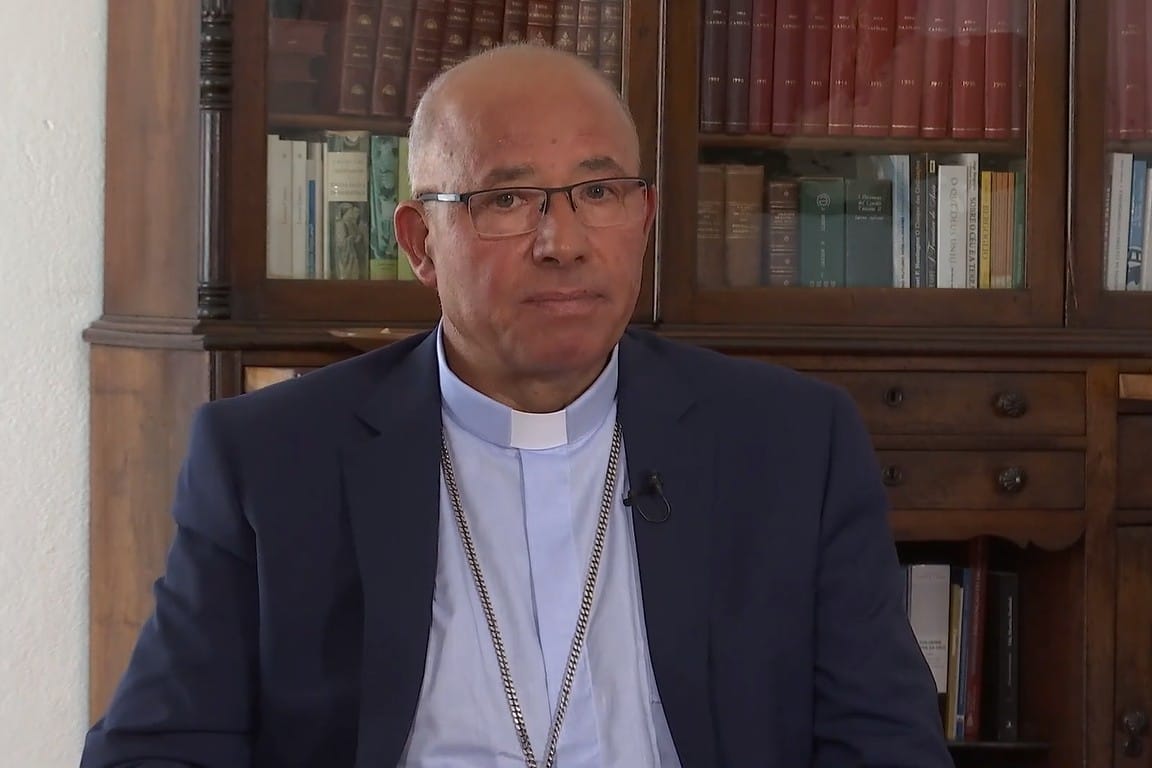
The Provedora de Justiça (Ombudsman), Luísa Neto, has sided with the view that a Catholic blessing at the opening of a new state school in Cascais raised a problem under Portuguese law, according to a secularist group that complained to her. Her office is the second public body to take that line, after the Comissão da Liberdade Religiosa (Religious Freedom Commission) found earlier this month that the ceremony breached the Lei da Liberdade Religiosa (Religious Freedom Act), Lusa reported on Sunday in a wire story carried by Público.
The Associação República e Laicidade (Republic and Secularism Association), which brought the complaints, said on Saturday that it welcomed both opinions. According to the association, the Ombudsman's office "followed the understanding" of the commission and concluded that "the inclusion of a ceremony of a religious nature in an official act of this kind raises a question of conformity with the legal framework that governs relations between the Portuguese State and religious communities."
What happened in Cascais
The new Escola Secundária de Cascais (Cascais Secondary School) opened on 21 September in the presence of the President, the Prime Minister and the Education Minister. Lusa reported on the day that the ceremony included the unveiling of a plaque, a Catholic blessing by the Patriarch of Lisbon, Rui Valério, and a tour of the building, which was co-funded by the EU recovery plan. We reported the commission's finding on 10 October.
On 23 September the association wrote to the commission's chairman, José Vera Jardim, to the Prosecutor General, Amadeu Guerra, and to the Ombudsman, asking each to assess whether the ceremony was unlawful.
Two opinions, one legal point
The association said the two opinions were set out in statements dated 9 October (the commission) and 22 October (the Ombudsman's office), and that it had sent both to the Procuradoria-Geral da República (Prosecutor General's Office). In its words, the opinions "confirm the understanding we always had of the illegality of including religious ceremonies in official acts of the State, which must therefore stop happening in the State sphere."
Both rest on article 4 of Lei n.º 16/2001 (in Portuguese), which says the State adopts no religion, that "in official acts and in State protocol, the principle of non-confessionality shall be respected," and that public education shall not be confessional. The association noted that the article gives effect to article 41(4) of the Constitution, which says churches and other religious communities are separate from the State.
What the Ombudsman's view can and cannot do
Under article 23 of the Constitution, the Ombudsman examines complaints about the actions or omissions of public authorities "without decision-making power," and addresses recommendations to the bodies concerned to prevent and remedy injustice. Public bodies are required to cooperate with the office. Like the commission's finding, the Ombudsman's view therefore carries weight but imposes no penalty on Cascais council, the Patriarchate or the officials who attended.
The Ombudsman's opinion had not been published on the Provedoria de Justiça website by Sunday afternoon, so its full reasoning, and whether it is addressed to any particular body with a recommendation, is known only from the passages the association quoted. Nor had the Prosecutor General's Office said whether it will act on the material the association has sent it.
For immigrant families with children in Portuguese state schools, the principle at stake is set out plainly in the law: public education in Portugal is meant to be non-confessional, whatever the religion of the pupils.