Brussels Will Help Portugal Redirect Billions in Recovery Funds After Storms Derail Key Projects
The European Commission has confirmed it is working with Portugal to identify projects under the country's Recovery and Resilience Plan that cannot be completed before the August 31 deadline, and to redirect those funds toward storm repair and other...
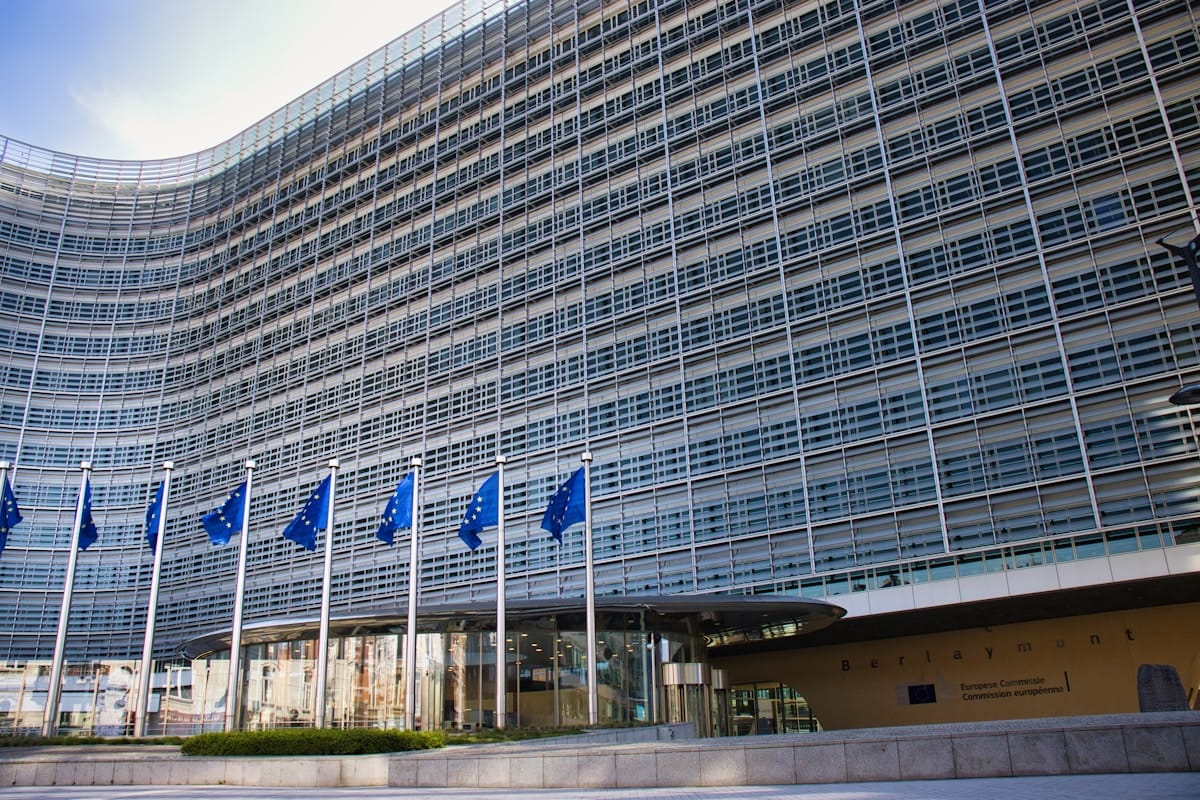
The European Commission has confirmed it is working with Portugal to identify projects under the country's Recovery and Resilience Plan that cannot be completed before the August 31 deadline, and to redirect those funds toward storm repair and other achievable investments.
The confirmation, made via written response to the Lusa news agency on March 23, comes after Prime Minister Luis Montenegro secured assurances at the European Council summit in Brussels that Portugal would not lose or return any PRR funds due to storm-related delays.
What Is the PRR and Why the Deadline Matters
Portugal's Plano de Recuperacao e Resiliencia (PRR) is the country's share of the EU's NextGenerationEU pandemic recovery instrument. Worth approximately 16.6 billion euros in grants and loans, the plan was designed to fund structural reforms and investments in areas including digital transition, climate resilience, housing, healthcare, and transport.
The critical constraint: all projects must be completed and funds disbursed by August 31, 2026. Unlike Portugal 2030 cohesion funds, which have a longer but still challenging timeline, the PRR deadline is non-negotiable. Brussels has refused to extend it.
Storms Forced a Rethink
The succession of severe storms that struck Portugal in late 2025 and early 2026 — most devastatingly Storm Kristin, which caused billions in damage — physically destroyed or delayed several PRR-funded infrastructure projects. Roads, public buildings, and transport networks that were mid-construction were among the hardest hit.
The government's Secretary of State for Planning and Regional Development, Helder Reis, had already flagged in February that some projects were beyond salvage within the timeframe. The most prominent example: the Bus Rapid Transit (BRT) system for Braga, allocated 76 million euros under the PRR, which can no longer be completed by the deadline.
Where the Money Could Go Instead
Rather than lose those funds, Portugal is negotiating with the Commission to reallocate them to projects that can be delivered quickly and address pressing post-storm needs. The government has identified several priority areas:
- Emergency telecommunications: Expanding the SIRESP emergency communications network to all parish councils (juntas de freguesia), civil protection units, fire stations, and health facilities
- Satellite communications: Investment in satellite-based connectivity (such as Starlink) to ensure resilience in areas where terrestrial networks failed during storms
- Energy resilience: Purchasing batteries, solar panels, and energy storage systems for public buildings in regions that lost electricity for weeks
- Storm recovery and reconstruction: Direct repair of damaged infrastructure in affected municipalities
A separate PRR notice launched on February 27 has already made 150 million euros available to businesses in storm-affected municipalities for productive investment and resilience upgrades, with applications closing on March 31.
No Money Will Be Lost, Government Insists
Speaking at the European Council on March 20, Montenegro was emphatic: "We leave here with the guarantee that, between the Portuguese government and the president of the Commission's team, a way will be found to ensure that Portugal will not lose or return any funds related to projects that will not be completed in this period because it is manifestly impossible, given how they were affected by force majeure."
The Commission's spokesperson confirmed the collaborative approach but noted that Portugal has not yet formally submitted its revised PRR. "Based on this dialogue, Portugal will submit its revised Recovery and Resilience Plan," the spokesperson said. "To date, we have not yet received the revised plan."
The EU also reminded member states that additional instruments exist for disaster response, including the EU Solidarity Fund and the possibility of redirecting cohesion policy resources.
The Broader Fiscal Picture
The PRR reallocation comes at a sensitive moment for Portugal's public finances. Montenegro acknowledged at the European Council that the combined impact of storm reconstruction costs and the energy crisis driven by the Middle East conflict could push the country into a budget deficit in 2026 — the first in several years of fiscal consolidation.
However, the Prime Minister argued that sustained economic growth and responsible fiscal management in recent years give Portugal the capacity to absorb the shock without destabilizing public accounts.
For the country's recovery plan, the clock is ticking. With barely five months until the August 31 deadline, the revised PRR will need to clear Commission assessment quickly if the reallocated funds are to be spent in time.
Background: See Brussels has until the end of May to approve Portugal's €516 million PRR reprogramming and IFIC takes the largest top-up at €277.5 million. (Background: see our piece on the Navigator's storm-and-energy-cost Q1 2026.)
Background: See the new PTRR €22.6 billion reconstruction-and-resilience plan and how 65% of it was already in OE2026. On the European-political timetable, Saturday's cerimónia at the Paços do Concelho do Porto for Portugal's 40 years in the European Union sets the latest reference. On the Portuguese corporate-tax compliance tape, our read on the 13 May despacho of the Secretária de Estado dos Assuntos Fiscais Cláudia Reis Duarte walking the IRC Modelo 22 filing deadline from 31 May to 19 June 2026 on the anomalous-storm-sequence rationale sets the latest reference. On the storm-impact credit-relief tape, our read on the 14 May 2026 promulgação by Marcelo Rebelo de Sousa of the Government decree extending the storm-impact credit moratoria by 12 months — locking the BdP-tracked 7,400 clients and €930 million in mortgage and empresa credit through to end-April 2027 sets the latest reference. On the landscape-management-and-PRR-disbursement rail, our 15 May 2026 read on the PRR confirmation that 65% of the €3.38 million PRGP envelope has been disbursed across Portugal's twenty Programas de Reordenamento e Gestão da Paisagem — with a new diploma threading the rail into the Plano Diretor Municipal pipeline ahead of the July-September critical-fire period sets the latest reference.
Related Reading
- Portugal 2030 Faces Its Toughest Year Yet as Billions in EU Funds Hit a Spending Deadline
- After Storm Kristin, Portugal's Insurance Sector Confronts an Uncomfortable Truth
- Portugal Signals Structural Measures if Middle East Conflict Continues to Drive Up Energy Costs
- Portugal's Farming Sector Declares Nearly 500 Million Euros in Storm Losses
- ENTSO-E Report on the Iberian Blackout: What Portugal Must Fix