An Abandoned Thermal Spa Above the Douro Reopens This Year on Four Million Euros, and One of Its Two Bath Houses Will Stay in Public Use
The Termas das Caldas de Moledo, between Peso da Régua and Mesão Frio inside the Alto Douro Vinhateiro world heritage landscape, become the seventeenth thermal facility in the Porto and North region. The rest of the complex goes to a REVIVE concession.
A thermal bathing complex that has stood derelict above the Douro for decades is due to reopen before the end of 2026, on a restoration costing around four million euros. The Termas das Caldas de Moledo sit on the river between the councils of Peso da Régua and Mesão Frio, in the Vila Real district, inside the Alto Douro Vinhateiro landscape that UNESCO lists as World Heritage. When the first of its two bath houses opens, it will be the seventeenth thermal facility in the Porto and North region, and it will carry more than a dozen direct jobs.
The president of Turismo do Porto e Norte de Portugal (TPNP, the Porto and North of Portugal Tourism Board), Luís Pedro Martins, gave the figures to the Lusa news agency on Monday, in an interview timed to the new thermal plan for the northern region, which is presented on Tuesday in Amarante.
Inherited abandoned
The complex belongs to the tourism board itself, which is the unusual part. "I inherited an abandoned thermal heritage that is the property of Turismo do Porto e Norte de Portugal," Martins said. He described the setting: the baths stand directly above the Douro, facing what he called a fantastic landscape of World Heritage status, with the Linha do Douro railway pressed against the back of the site and a national road between Régua and Mesão Frio running through the middle of it.
Returning the site to the region before the end of his term was, he said, a point of honour.
The two bath houses sit in the historic garden of Dona Antónia Adelaide Ferreira, the nineteenth-century Douro wine producer universally known as "a Ferreirinha". The buildings on the other side of the road, which include the Dona Antónia casino and the old Dona Antónia hotel, belong to the Câmara Municipal de Peso da Régua (Peso da Régua Council), and the restoration has been run as a consortium between the council and the tourism board precisely so that the whole ensemble could move together.
One bath house stays public
The commitment both men have made, Martins said of himself and of the mayor of Peso da Régua, José Manuel Gonçalves, is that one of the two bath houses "will always remain for public use". That is a meaningful distinction in a project whose other half is explicitly commercial.
The first bath house, fully restored and equipped, opens by the end of 2026. About two million euros of the money for the second bath house and the gardens is already committed through the regional 2030 programme. The remaining buildings are destined for hotel use, and will go to a public tender under the state's REVIVE scheme, with the winning promoter putting in its own investment on top.
What REVIVE actually does
Peso da Régua Council has confirmed on its own site that the Termas das Caldas do Moledo, as it spells the name, have been formally taken into the third phase of REVIVE, the government programme that puts vacant publicly owned buildings of historic value back into use by conceding them to private operators for tourism.
The council's description of the model is worth repeating, because it is frequently misunderstood: the building stays in public ownership. What is conceded, by public tender, is the right to operate it, generally for between 30 and 50 years. The concession holder is responsible for restoring the building and for running it as a hotel, restaurant, wellness or cultural business, and can offset the amount invested in the rehabilitation against the rent payable in the early years of the concession.
The council says the approved intervention area is already available for public consultation, including plans, sections and the limits of the works, so that potential bidders can examine it before the tender opens, which it expects shortly. The bath house requalification is in its final phase, and the recovery of the old Hotel Vilhena is finished.
The council credits the inclusion in REVIVE to joint lobbying by the municipality and the tourism board, which it says persuaded the government of the strategic importance of recovering the Caldas do Moledo thermal heritage.
A spa that was once compared to Paris
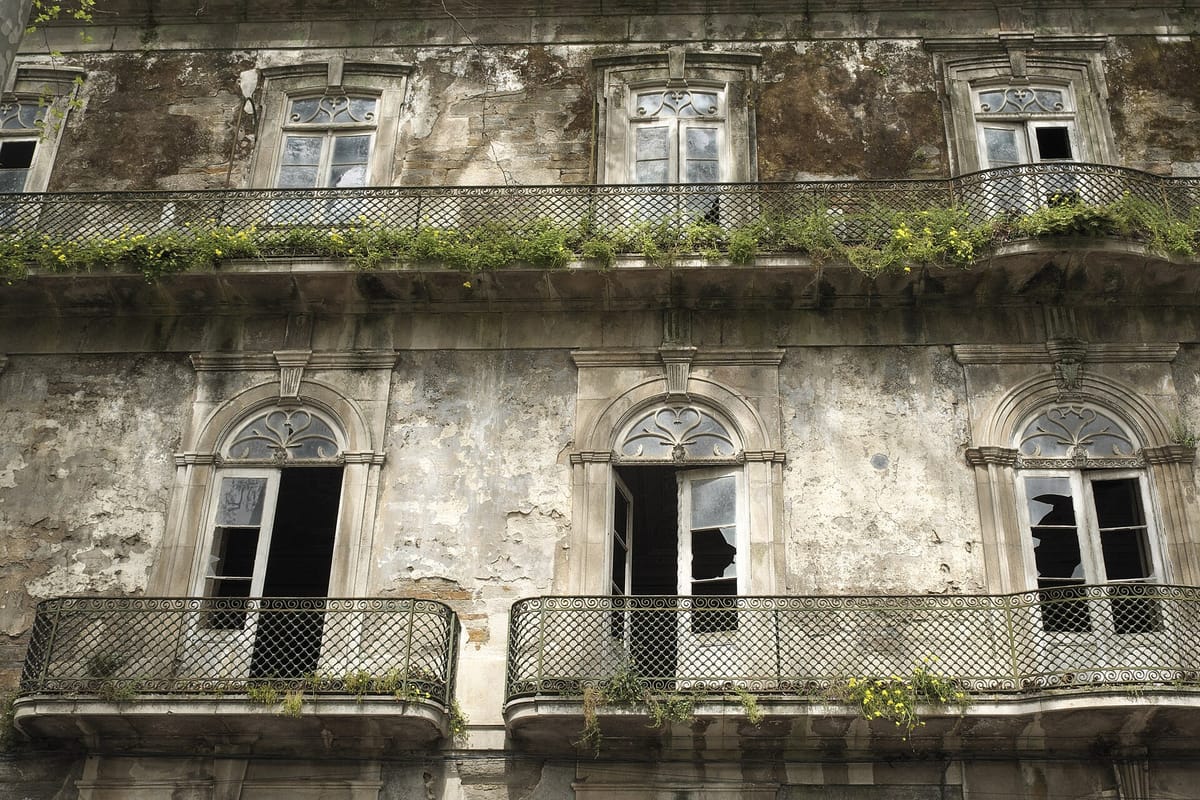
The therapeutic reputation of the Caldas de Moledo waters matured in the eighteenth century, and the resort's great period came under the Ferreirinha. Its fame crossed the border, and the refinement of its services was, at the time, held up against the best that Paris had to offer. What is left of that is the shell visible from the EN222: heavy stone facades, ironwork balconies with plants growing out of them, and broken glass in the arched windows.
What this means for residents and visitors
- A public bath house in the Douro. The undertaking that one of the two balneários stays in public use, given by both the tourism board and the mayor, is the detail most worth watching between now and the opening, because the rest of the site is heading for a commercial concession.
- The railway runs along the back of it. The Linha do Douro is pressed against the rear of the site, and there is a halt at Caldas de Moledo. Anyone planning to arrive by train should check which services actually stop there before relying on it.
- The hotel is not built yet. The tender for the rest of the complex has not opened. Anyone reading "reopens in 2026" as "a hotel opens in 2026" is reading it wrong: what opens this year is a single restored bath house.
- REVIVE tenders are open to foreign bidders. The scheme is a public tender for a long concession on a state-owned building, not a property sale, and the investment offset against early rent is the main commercial incentive in it.
- Seventeen and counting. The north's thermal offer is the densest in the country, and the regional plan being presented in Amarante on Tuesday is the document that will set out what the board intends to do with it.
The naming is slightly unsettled: the tourism board and the news agency write Caldas de Moledo, the council writes Caldas do Moledo, and the REVIVE property list uses the first. Both refer to the same buildings, in the same garden, above the same river.