An Abandoned Four-Engine Launch Drifted Onto an Oeiras Beach With 100 Jerrycans of Fuel Aboard
The Maritime Police recovered the empty vessel off Santo Amaro de Oeiras at about 7am on Saturday, with roughly 4,000 litres of fuel and provisions on board. Hours later the GNR seized 4,200 litres from a warehouse in Alcochete.
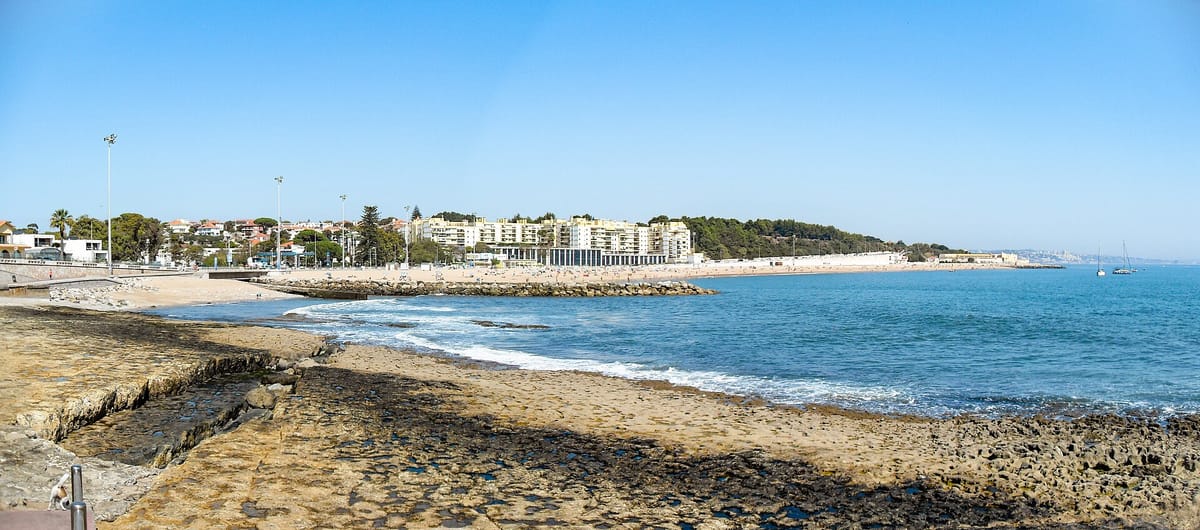
A high-speed launch with four outboard engines and no one aboard was found drifting off Praia de Santo Amaro de Oeiras, west of Lisbon, at about 7am on Saturday. Inside, the Polícia Marítima (Maritime Police) counted roughly 100 jerrycans holding some 4,000 litres of fuel, along with food supplies and assorted equipment.
Officers from the Comando Local da Polícia Marítima de Lisboa and the Capitania do Porto de Lisboa (Lisbon Port Authority) recovered the vessel. Two of its four engines were not working and there was a small hole in the bow. The boat and everything found on it were taken to the Base Naval de Lisboa (Lisbon Naval Base) for safekeeping, and the Maritime Police's Unidade Central de Investigação Criminal (Central Criminal Investigation Unit) was called in to carry out forensic examinations.
A familiar profile
Authorities have not said what the launch was doing, and no arrests have been announced. But the combination they describe, a multi-engine open boat carrying far more fuel than any pleasure trip requires plus provisions for days at sea, matches the craft that Portuguese and Spanish forces have repeatedly intercepted ferrying cocaine between the Atlantic and the Iberian coast.
Similar seizures have become routine. In the Tejo estuary this year, the Maritime Police stopped one boat carrying 215 jerrycans and roughly five tonnes of fuel and another with more than 6.5 tonnes, detaining Spanish nationals in both cases. In the Algarve, a launch was found with about 70 jerrycans and material consistent with prolonged operations at sea. In July, the Navy and the Polícia Judiciária (Judicial Police) took 2.6 tonnes of cocaine off a speedboat 50 miles from Cabo Espichel.
Portugal wrote that pattern into law this year. Since 17 May, a set of rules aimed squarely at these vessels has been in force, creating prison terms of one to four years for the unregistered use of high-speed craft, with corporate fines reaching €100,000. Fuel stockpiles found aboard are part of what the regime targets, because the range these boats need is the logistical weak point of the whole trade.
A second fuel haul the same day
Also on Saturday, further up the Tagus estuary, the GNR (Republican National Guard) reported seizing 4,200 litres of fuel from a warehouse in Alcochete, on the left bank in the Setúbal district. The Montijo territorial detachment found 210 full 20-litre jerrycans, 16 empty ones, six 1,000-litre tanks, a van, pallet trucks and tarpaulins. Three men aged between 28 and 34 were at the site collecting fuel and could not account for where it came from. All three were made arguidos (formal suspects) in the investigation.
The GNR has not linked the two operations, and the Alcochete find may belong to a different trade entirely. Untaxed fuel is a large business in its own right in Portugal: an industry study estimated in July that undeclared imports have cost the state around €1.1 billion in tax since 2023.
What this means for you
- If you use the Oeiras and Cascais coast: nothing here suggests a hazard to bathers, and the vessel was removed the same morning. Abandoned craft do occasionally drift in, and the number to call is 112 or the local Capitania.
- If you own a fast boat: the May 2026 regime made registration and flagging of high-speed vessels a criminal matter, not a paperwork one. Check your documentation is in order before the season ends.
An empty boat, four engines and 4,000 litres of fuel washing up outside the capital is an unusually visible piece of a trade that normally passes far offshore.