Almaraz Reactor Trips Offline Near the Border, but Spain Rates It Level 0 and Portugal Sees No Risk
Unit I at Spain's Almaraz nuclear plant on the Tagus shut down automatically on 5 November after an electrical protection acted. The regulator rated it INES level 0, and Portugal's APA says no protective measures are needed.
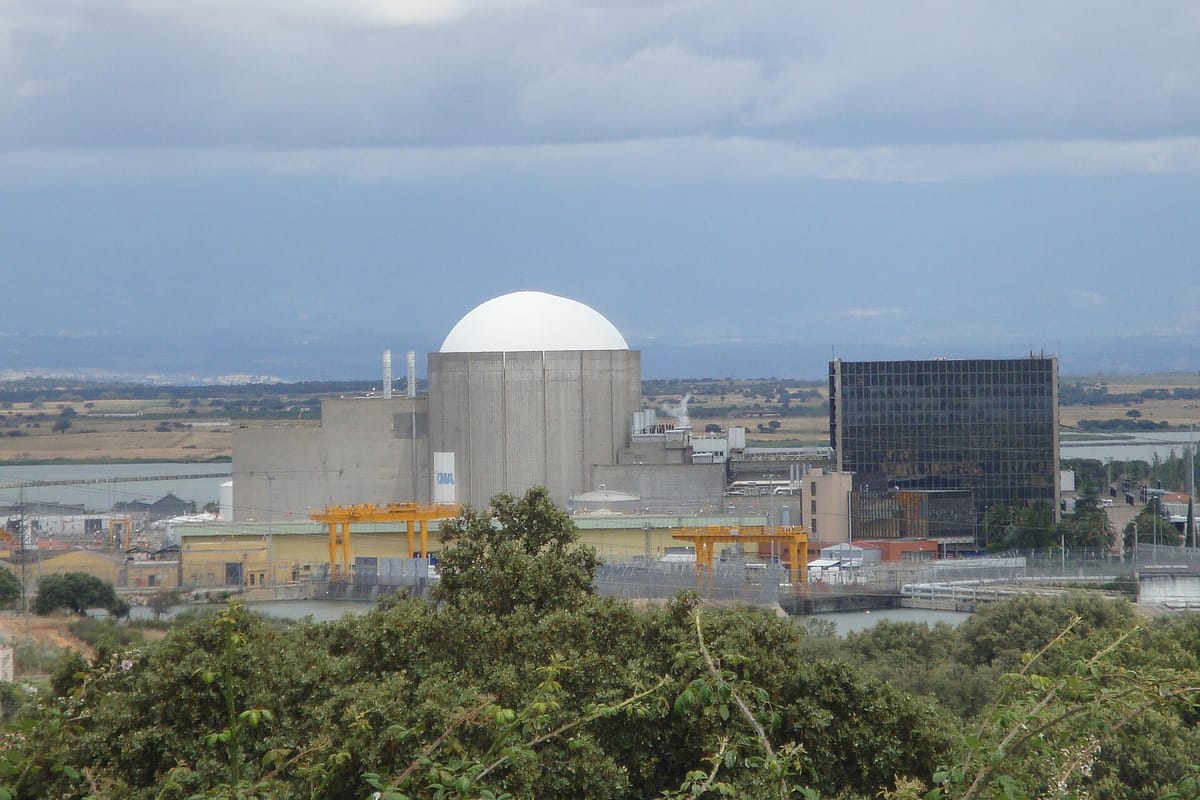
One of the two reactors at Spain's Almaraz nuclear power plant, on the Tagus (Tejo) river in the province of Cáceres near the Portuguese border, shut itself down automatically on Thursday 5 November. Spain's nuclear regulator rated the event at level 0, the lowest point on the international scale, and said it had no impact on the safety of the plant, people or the environment. Portugal's environment agency, the Agência Portuguesa do Ambiente (APA), said the shutdown has no consequences for Portugal that would justify any extra measures to protect the public.
What happened at Almaraz
According to the notice published by Spain's Nuclear Safety Council (Consejo de Seguridad Nuclear, CSN), Unit I was running steadily at full power when it tripped at 10:29. The main turbine stopped after a protection device on the generator acted, triggered in turn by an electrical protection on the main transformer. The cause of that transformer protection acting is under investigation.
The CSN said the safety systems worked as designed and the unit was brought to a safe, controlled shutdown, with the reactor subcritical (its chain reaction stopped) in "hot standby". The operator notified the regulator at 13:30, as an event that must be reported within four hours, and is checking the equipment involved. The CSN classified the event as INES level 0 on the International Nuclear and Radiological Event Scale, a rating the APA's own guide to the scale describes as "below scale", meaning an occurrence with no safety significance.
The operator said Unit I has "all parameters stable" and that its technical team is carrying out checks before restarting it, while Unit II kept running normally at full power, Lusa reported via RTP, citing the Spanish news agency Efe.
Unplanned stops at Almaraz are not new. The CSN's list of notified events for the plant shows four earlier notices this year, in March and May, each rated level 0.
What Portugal is doing
The APA said it is following the case through its Department of Emergencies and Radiological Protection, including the results of the investigation and any further information from the Spanish regulator, and will publish more if there are relevant developments. It also pointed to its national radiation alert network, the Rede Nacional de Alerta de Radioatividade no Ambiente (RADNET), which measures gamma radiation in the air and in the main international rivers, the Tagus, Douro and Guadiana, around the clock. Its stations are placed to cover the Spanish border area and the main population centres.
What it means for you
- No action is needed. Neither the Spanish regulator nor the APA has advised any protective measure for people in Portugal.
- Check the readings yourself. RADNET data is public at radnet.apambiente.pt. Residents of the Tagus valley, Beira Baixa and the Alentejo border areas can follow the stations nearest to them there.
- Follow official channels. Updates will come from the APA at apambiente.pt and from the CSN at csn.es.
The licence question
The stop comes three months after Spain's ecological transition ministry renewed the operating licences of both Almaraz units until June 2030. Under the earlier closure plan, Unit I was due to shut on 1 November 2027 and Unit II on 31 October 2028. That decision, as we reported in August, drew objections from Portuguese environmental campaigners and from councils in Beira Baixa, the region directly downstream on the Tagus.