Almada's Water Will Come From a Seixal Borehole First, While Pipes From Lisbon and the Castelo do Bode Dam Are Still Being Studied
After a summer of cut-offs on the Caparica coast, Almada and Seixal will sign a borehole licence in October, and an agreement with EPAL opens a study of a supply link from Lisbon. The Environment Minister says the new airport makes a resilient peninsula supply urgent.
Three weeks after Almada lifted the water alert that ran through its summer, the government has set out how the municipality is supposed to avoid another one. There are three pieces: a borehole in the neighbouring municipality of Seixal for the short term, and two larger supply links still on paper. One would run from Lisbon, the other from the Castelo do Bode reservoir on the Zêzere.
The Environment Minister, Maria da Graça Carvalho, set out the plan on Wednesday at the signing of an agreement between Almada and EPAL, the state-owned company that supplies Lisbon, according to Lusa.
Step one: a single borehole in Seixal
The immediate fix is a borehole known as CBR2. It sits in Seixal, like most of the boreholes that already feed Almada, and the two municipalities are due to sign an agreement to license it at the start of October. The minister called it "the famous borehole that will solve things, for now, in the short term".
That dependence is the core of the problem. "Almada, it has to be said, was never self-sufficient in water supply, never," the mayor, Inês de Medeiros, said on Wednesday. The municipality relies largely on wells in Seixal, drawing on the same aquifer as the rest of this part of the Península de Setúbal (Setúbal Peninsula). Drilling more wells into that aquifer, she argued, cannot be the long-term answer.
Steps two and three: bringing water in from outside
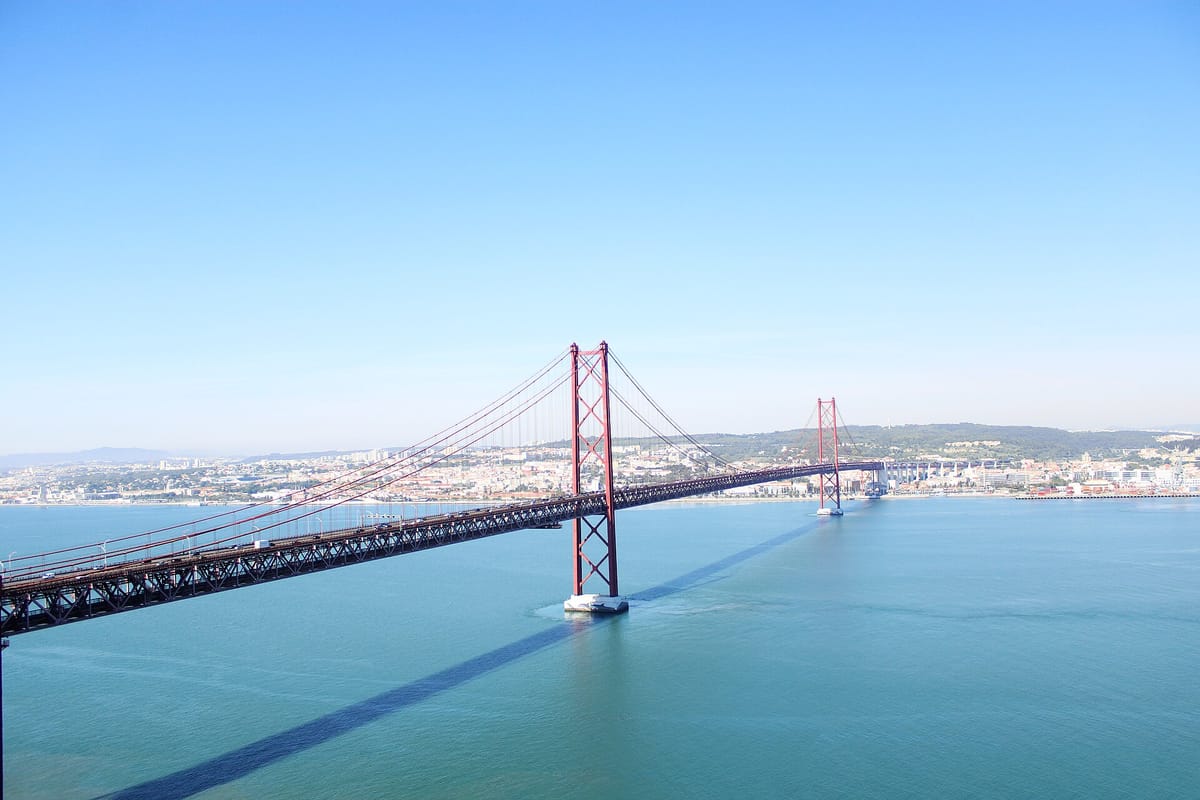
The agreement signed with EPAL on Wednesday commits the two sides to study a surface connection between Lisbon and Almada. Water would travel through pipes starting from an area next to the Ponte 25 de Abril (25 de Abril Bridge). Medeiros said the agreement also lets the council start a first stage of the work now, rather than wait for the study to finish. "We signed a commitment to a study today, it is true, but it is not to stay a study," she said.
A third option would take water from the Castelo do Bode dam. The Agência Portuguesa do Ambiente (Portuguese Environment Agency, APA) and the Águas de Portugal group have four months to present a project.
Why the airport changes the calculation
The minister framed the plan as a first step towards a water strategy for the whole peninsula. The region has more than a million residents, depends on a single aquifer, and is where the new Lisbon airport will be built.
"We cannot have an airport and then be at the mercy of one borehole in an aquifer," Carvalho said. A resilient supply will be a condition set by the APA for the airport's environmental impact study, she added, "so we really have to have a solution here".
What residents went through
Almada declared a situação de alerta (state of alert) on 8 July after repeated supply failures, concentrated on the Costa da Caparica. It was extended to 31 August and brought fifty-four days of overnight cut-offs in designated zones and a ban on garden watering, along with repeated street protests.
For households on the Caparica coast, nothing changes this autumn: the CBR2 licence is weeks away and the pipeline options are studies with no construction date. The Castelo do Bode project has a four-month deadline, and no one has yet said when either of the two supply links could carry water, or whether one will be ready before the next summer peak.