Alentejo Is the Only Portuguese Region With a Smaller Economy Than in 2019, Eurostat Data Show, While Madeira Grows 15.7 Percent
Eurostat puts EU growth since 2019 at 5.6 percent. Every Portuguese region beat that except Alentejo, whose real GDP was 0.7 percent below its pre-pandemic level in 2024. Madeira led with 15.7 percent.
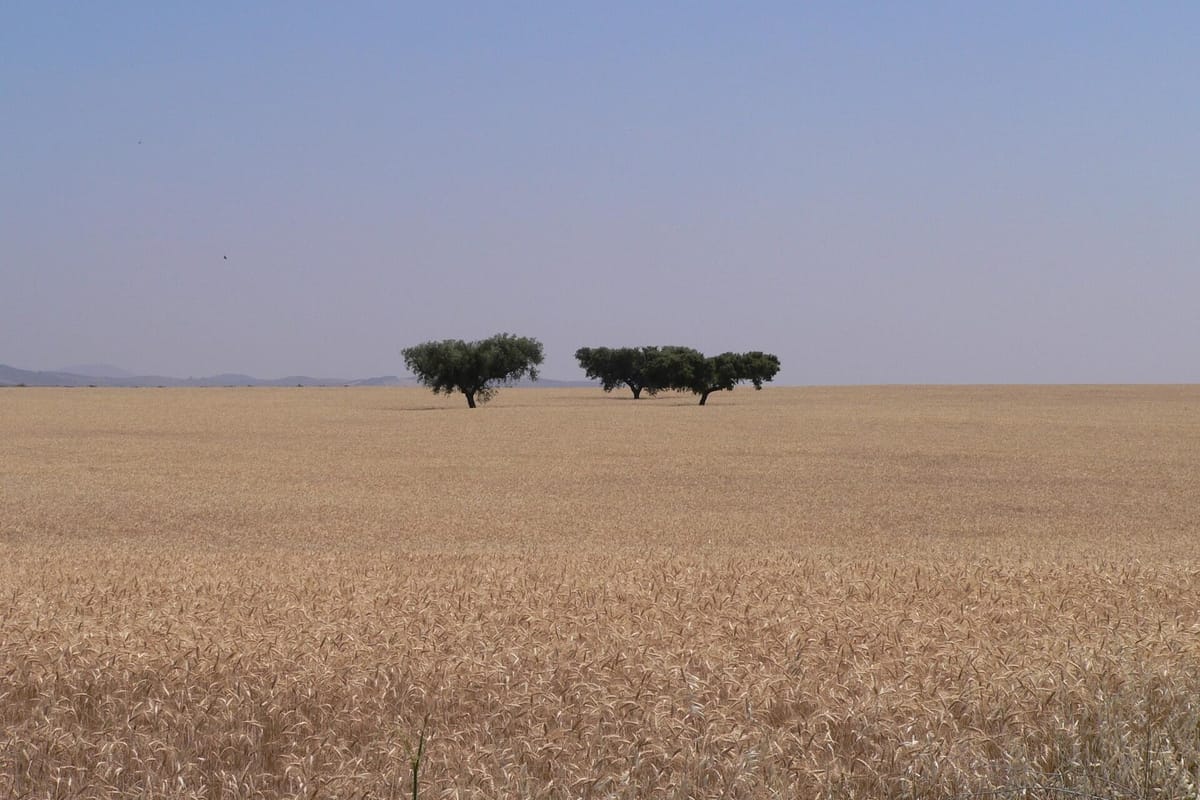
Alentejo is the only one of Portugal's nine regions whose economy was smaller in 2024 than in 2019, the last year before the Covid-19 pandemic. Figures highlighted by Eurostat on 22 October put the European Union's real GDP growth over those five years at 5.6 percent. Alentejo's economy shrank by 0.7 percent over the same period, while every other Portuguese region grew faster than the EU as a whole.
Eurostat compared 244 regions at the NUTS 2 level across the EU. It found that 197 had grown since 2019, 46 had shrunk and one, the Spanish enclave of Ceuta, was unchanged. Jornal de Negócios reported the Portuguese side of the release on the same day.
How each Portuguese region did, 2019 to 2024
Real change in GDP, calculated from Eurostat's regional growth dataset (nama_10r_2gvagr):
- Madeira: up 15.7 percent
- Algarve: up 11.3 percent
- Norte: up 9.9 percent
- Grande Lisboa: up 9.9 percent
- Oeste e Vale do Tejo: up 9.1 percent
- Península de Setúbal: up 8.9 percent
- Açores: up 8.3 percent
- Centro: up 7.6 percent
- Alentejo: down 0.7 percent
Portugal as a whole grew 9.2 percent, against 5.6 percent for the EU. Grande Lisboa outpaced the capital regions of France and Italy, Île-de-France (4.8 percent) and Lazio, around Rome (4.7 percent), but trailed the Comunidad de Madrid (10.6 percent).
Across the EU the fastest growth came from Ireland's Eastern and Midland region (38.0 percent), followed by Bucureşti-Ilfov in Romania (33.0 percent), Malta (32.9 percent) and Mayotte (32.1 percent). The steepest fall was in Bulgaria's Yugoiztochen, where GDP dropped 20.5 percent.
Where Alentejo fell behind
The yearly series shows where the gap opened up. In 2020 Alentejo's output fell 11.8 percent, compared with 8.2 percent nationally. It recovered 8.9 percent in 2021, but growth then slowed to 1.7 percent in 2022, 0.5 percent in 2023 and 1.1 percent in 2024. The region was not growing before the pandemic either: its 2019 output was slightly below its 2017 and 2018 levels. The Algarve's 2020 fall was deeper, at 18.4 percent, but its later recovery took it well past its 2019 level. Eurostat's release does not explain why the regions diverged, and we have not found an official analysis that does.
The labour market in the region is also being watched closely: our report this week on job-centre figures found registered unemployment edging up in the Alentejo and the Algarve after the summer, even as the national total fell.
Living standards: a different ranking
Growth rates measure change, not wealth. On Eurostat's measure of GDP per inhabitant adjusted for price levels (nama_10r_2gdp, EU average set at 100), Portugal stood at 82 in 2024. Grande Lisboa was the only Portuguese region above the EU average, at 129. It was followed by the Algarve (89), Madeira (88), Alentejo (77), Açores (73), Norte and Centro (71 each), Oeste e Vale do Tejo (65) and Península de Setúbal (55). So Alentejo has the weakest growth since 2019 but still sits mid-table on output per person.
What to bear in mind
- All 2024 figures for Portugal and its regions are flagged by Eurostat as provisional, so they may be revised.
- The growth figures are in real terms, which means inflation has been stripped out. They measure total output, not household income, so they do not show how well-off people in a region are. For that picture, see the latest data on persistent poverty in Portugal.
- The Eurostat news item draws on its regional yearbook 2026; the underlying growth dataset was last updated in March 2026.