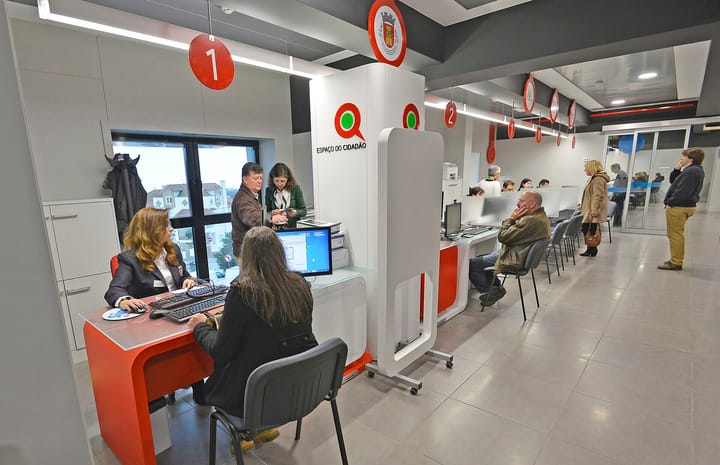
AIMA Explained: Portugal's New Immigration Agency and What It Means for Expats in 2026
SEF is gone. AIMA is here. What changed, what stayed the same, and how to navigate Portugal's new immigration system as an expat in 2026.

If you've applied for a visa, residency permit, or NIF in Portugal over the past couple of years, you may have noticed a familiar logo disappearing: SEF — the Serviço de Estrangeiros e Fronteiras — is no more. In its place is AIMA, the Agência para a Integração, Migrações e Asilo. For anyone navigating Portugal's immigration system in 2026, understanding this change is essential.
What Was SEF?
SEF operated for decades as Portugal's combined immigration police and administrative agency. It handled border control, residency permits, deportations, and asylum processing under one roof. Critics long argued this created a structural conflict of interest — the same agency responsible for enforcing removal was also the one approving permits and integrating new residents.
The political pressure to reform intensified after the 2020 death of Ihor Homeniuk, a Ukrainian national who died in SEF custody at Lisbon airport. An official investigation found SEF inspectors had used excessive force. The subsequent scandal accelerated calls for fundamental restructuring.
The 2023 Restructuring: What Changed
The Portuguese government officially replaced SEF with three separate entities in October 2023:
- AIMA (Agência para a Integração, Migrações e Asilo) — handles immigration administration, residency permits, integration policy, and asylum. This is who most expats interact with.
- SEF Border Police — a new unit within the PSP (national police) handling border control, document verification, and enforcement.
- ACIDI / ACM restructuring — the Alto Comissariado para as Migrações focuses on integration, language, and support services.
The goal: separate the administrative (approving permits) from the enforcement (deportation, detention) to improve fairness and reduce conflicts of interest.
What AIMA Does — And Who It Affects
AIMA is now the primary agency for:
- Residency permit applications (initial and renewals)
- D7, D8 (Digital Nomad), D2 (Entrepreneur), and other visa processing after entry
- Golden Visa processing (now limited to investment funds and cultural heritage)
- Nationality applications (working alongside the IRN)
- Family reunification permits
- Asylum and refugee status
- NHR/IFICI tax regime registration (coordinated with AT — Tax Authority)
If you're a non-EU expat in Portugal — whether on a D7 passive income visa, a digital nomad D8 visa, or working under a work permit — AIMA is your agency.
The Backlogs: The Honest Reality
The transition created significant administrative disruption. As of early 2026, AIMA is still working through substantial backlogs inherited from the SEF era plus new applications that piled up during the transition period.
Key statistics to understand:
- AIMA reported over 400,000 pending cases at its peak in 2024
- Wait times for initial residency appointments ranged from 3–18 months in high-demand areas (Lisbon, Porto, Algarve)
- Interior regions (Alentejo, interior Algarve, Beiras) consistently had faster processing — sometimes 2–3 months
- The government deployed additional staff and extended AIMA's operating hours in 2025 to reduce the queue
By late 2025, the government reported a 30% reduction in the backlog, but processing times remain longer than pre-2023 SEF averages for many permit types.
How to Book an AIMA Appointment in 2026
The booking system is entirely online at aima.gov.pt. Here's the practical process:
- Create an account at aima.gov.pt using your email and NIF (or passport if NIF not yet obtained)
- Select the service type (initial residency, renewal, family reunification, etc.)
- Select your preferred AIMA office — Lisbon offices have the longest waits; consider Porto or Braga if flexible
- Upload pre-documents where required (passport scan, proof of address, health insurance, income evidence)
- Receive confirmation and appointment date via email
Pro tip: Check the booking system at off-peak hours (early morning, late evening) and on Tuesdays and Wednesdays — cancellations appear more frequently then. Many expats report success refreshing the page at midnight when system capacity resets.
AIMA vs SEF: What Actually Improved
Despite the teething problems, some genuine improvements have emerged:
- Digital document submission: AIMA processes more documentation online versus requiring physical appearance for every step
- Clearer information: The aima.gov.pt website (available in Portuguese, English, and several other languages) provides better structured guidance than the old SEF site
- Separation of enforcement: Applicants dealing with administrative matters are no longer interacting with the same agency that handles detentions and removals
- Integration services: AIMA's mandate explicitly includes integration support — language courses, employment orientation, and community resources
Documents You'll Need for Most Residency Applications
Requirements vary by permit type, but most initial residency applications will require:
- Valid passport (minimum 6 months remaining beyond intended stay)
- Proof of legal entry into Portugal (visa, ETIAS authorization, or entry stamp)
- Proof of accommodation (rental contract, property deed, or letter from host)
- Proof of income or financial means (bank statements, pension confirmation, employment contract)
- Private health insurance or proof of SNS registration eligibility
- Criminal record check from country of origin (apostilled and translated if required)
- NIF (Portuguese tax number — obtainable separately through AT offices)
- Completed AIMA application form (generated through the online portal)
Getting Your NIF — Still Separate
One common confusion: AIMA does not issue NIFs. Your NIF (Número de Identificação Fiscal) comes from the AT (Autoridade Tributária), available at local Finanças offices or, for EU citizens, at municipal citizen centres (Lojas do Cidadão). Non-EU nationals can obtain a NIF with a fiscal representative before they have residency — a common first step when purchasing property or opening a bank account.
What to Do If You're Stuck
If your AIMA appointment is months away and you need to prove legal status in the interim (for employment, banking, or property purchase), Portugal provides a declaration of pending application (declaração de pendência) that acknowledges your application is in process. This is not the same as a residency permit but demonstrates you're in the system legally.
Several resources exist for expat support:
- AIMA helpline: +351 21 358 5500 (long waits but useful for status checks)
- CNAI (National Support Centre for Immigrant Integration): free legal and administrative advice at centres in Lisbon and Porto
- Immigration lawyers: particularly useful for complex cases, business visas, or nationality applications. Fees range €150–€500/hour; many firms offer flat-rate packages for D7/D8 applications
The Bottom Line for Expats
AIMA replaced SEF in name and structure, but the underlying process of obtaining a Portuguese residency permit remains largely the same in terms of documentation and requirements. The main change is administrative separation and — eventually — a more service-oriented approach to immigration. The transition backlogs are real but reducing.
If you're planning a move to Portugal in 2026, factor 3–6 months minimum for residency processing into your timeline, gather your documents before arrival, and book your AIMA appointment as early as possible — ideally before you land. On the immigration-policy track, our read on the 7 May migration bills transposing the EU Pact on Migration and Asylum and the external-borders control framework sets the latest reference. For foreign residents bringing family to Portugal, our 2026 guide to family reunification (reagrupamento familiar) in Portugal — the AIMA process, the Lei 23/2007 spouse, children and parent tracks, and the documentary chain to the cartão de residência sets the latest reference. On the driving-licence side, our 2026 guide to exchanging a foreign driving licence in Portugal (the IMT process, the EU vs Vienna-Convention vs third-country tracks, the 90-day window and the two-year practical-exam exemption) sets the latest reference. On the SNS-onboarding side, our 2026 guide to getting an SNS Número de Utente (the Registo Nacional de Utentes, the Médico de Família assignment, the centro-de-saúde walk and the foreign-resident documentary chain) sets the latest reference. On the foreign-resident documentary-chain side, our 2026 guide to getting an Atestado de Residência at the Junta de Freguesia (Lei n.º 7/2001 framework, two-witness rule, ePortugal route, the AT/banking/AIMA/SS/school documentary chain) sets the latest reference. For foreign residents on the Portuguese driving-licence rail, our 2026 guide to exchanging a foreign driving licence for a Portuguese Carta de Condução — the 90-day rule, the 2-year administrative cliff, the OCDE-and-CPLP reciprocity, the Convenção de Viena route, the IMT médico electronic attestation and the 'A Minha Carta' portal sets the latest reference. For foreign-resident families on the birth-registration rail, our 2026 practical guide to registering a birth in Portugal — the hospital notificação under Lei n.º 14/2017, the 20-working-day Conservatória do Registo Civil window, nationality at birth under the post-3-May Lei n.º 37/81, the Cartão de Cidadão for the newborn and the apostille requirements for foreign-resident parents sets the latest reference. On the EU-citizen residence-registration side, our practical guide to registering as an EU citizen resident in Portugal (CRUE) under Lei n.º 37/2006 — the three-month threshold, the Câmara Municipal procedure, the documents the Council asks for, the €7-€15 fee, and the five-year permanent-residence step