A Timorese Minister Came to Lisbon, and Left With a Three-Year Social Security Programme
The 2026 to 2028 bilateral programme covers anti-poverty work and the training of technical staff. It sits inside a 75 million euro strategic cooperation programme that runs to 2028.
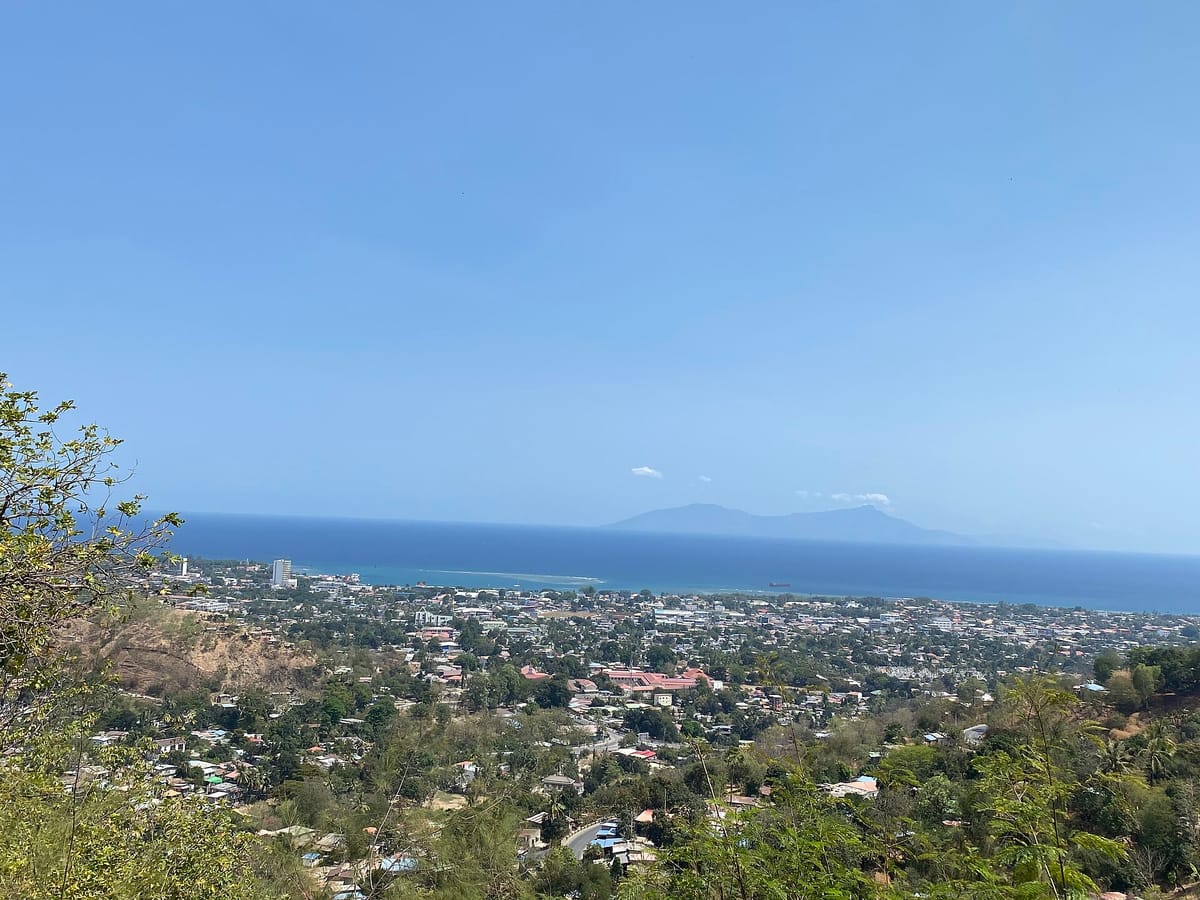
Portugal's social security system has signed a three-year programme to help build Timor-Leste's, and the Timorese government announced the agreement this morning. The Bilateral Cooperation Programme covering 2026 to 2028 was signed in Lisbon last week during a visit by Maria Verónica das Dores, Timor-Leste's Minister for Labour, Solidarity and Social Security.
The document sits inside a larger frame. The Strategic Cooperation Programme between the two countries, signed in October 2024 during Prime Minister Xanana Gusmão's official visit to Portugal, runs from 2024 to 2028 and is worth 75 million euros. It has five priority areas: human development; the rule of law and good governance; public administration, public finances and the economy; youth and employment; and oceans, sustainability and infrastructure. The new programme is the social protection slice of the first of those.
What the money is for
The programme has two strands. The first is anti-poverty work: support for programmes and social facilities aimed at people and families in situations of vulnerability, channelled through Timorese social solidarity institutions acting as partners rather than through the state directly. The second is institutional capacity building, delivered as specialised training for technical staff.
That second strand is the one that tells you what kind of cooperation this is. Timor-Leste is not being handed a social security system; it is being helped to staff and run one. "Portuguese Social Security, involving its various bodies, is helping to build and consolidate a stronger, more solid and more sustainable social security system, while fully respecting Timor-Leste's autonomy and political decisions," das Dores said, in remarks carried by her own government.
Why Portugal is the partner
The relationship is not sentimental. Timor-Leste was a Portuguese territory until 1975 and restored its independence in 2002 after 24 years of Indonesian occupation; Portuguese is one of its two official languages, alongside Tetum. The country joined ASEAN as its eleventh member in 2025 and remains a member of the CPLP, the community of Portuguese-speaking countries, whose mobility and residence arrangements reach directly into Portuguese immigration law.
Building a social security administration is one of the harder pieces of state-building, because it requires contributory records, identity data, payment infrastructure and an inspectorate all at once, and it has to work for a largely rural population. Portugal has run a universal system for decades and has an institutional apparatus, from the Instituto da Segurança Social to the Instituto de Informática, that can be lent out.
The practical reach
For residents of Portugal this is not an immediate change to anything. Its significance is longer-term and lies in the social security agreements that follow this kind of institutional work. Portugal maintains bilateral social security conventions with several CPLP states, which determine whether contribution periods in one country count towards a pension in the other. A counterpart administration capable of certifying careers is the precondition for any such arrangement.
Cooperation between the two countries has been running in other directions as well. In August, Timor-Leste's own 10 million dollar contribution to Portugal was turned into 23 forest fire engines for 17 northern councils, a reminder that the traffic in this relationship does not run in only one direction.