A Portuguese Fintech Is Putting Spain's Bizum on Local Tills, With 31.5 Million Spanish Users on the Other Side
Eupago says Portuguese merchants can now be paid through Spain's default mobile payment scheme, and is targeting 5,000 shops and 180 million euros a year within three years. You still cannot get a Bizum account if you bank in Portugal.
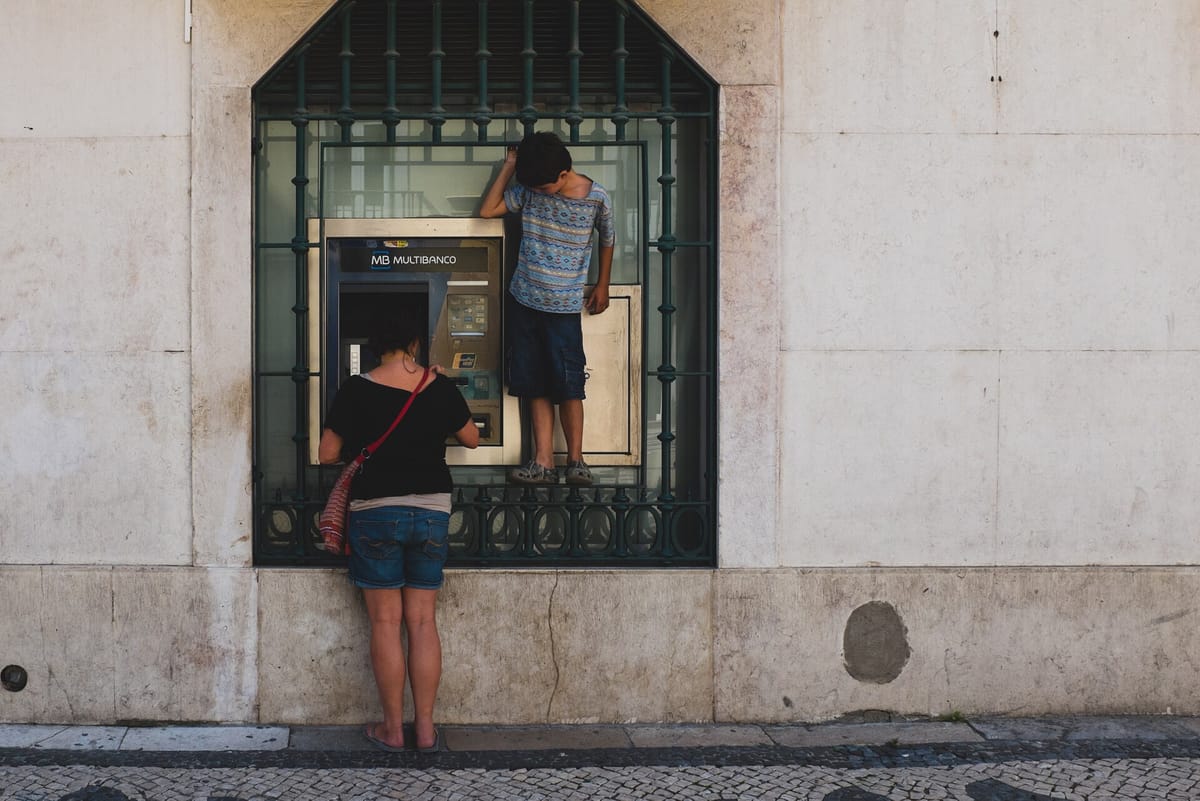
Eupago, a payment institution registered with the Banco de Portugal under number 8709, with offices in Porto, Lisbon and Madrid, said on Tuesday it is bringing Bizum to Portuguese shops. It also owns Pagaqui. Jornal de Negócios, which reported the launch, carries the company's three-year targets: 5,000 active merchants, 3 million transactions and 180 million euros of annual processed volume. Those are projections by a company announcing a product, not results, and they should be read as such.
What is not a projection is the size of the thing on the other side of the border. Bizum's own site puts it at 31.5 million active users, about 5,500 million transactions performed, some 120,000 online merchants and 15,000 organisations set up to receive donations through it. In Spain it is not one payment option among several; it is the default, used casually enough that the brand name works as a verb.
What is actually changing
The distinction worth being clear about: this is acceptance on the merchant side. A Portuguese business can now be paid through Bizum. It does not mean a resident of Portugal gets a Bizum account, because Bizum is tied to an account at a Spanish bank and is run by the Spanish banks themselves. The people it serves are the ones already carrying it, and the businesses here that want their money.
That is a larger group than it sounds. Spain is the only country Portugal shares a land border with, its visitors overwhelmingly arrive by road, and the company already keeps a Madrid office. The traffic runs both ways: Portuguese who work across the border, and small cross-border trade that settles in amounts too modest to justify a bank transfer.
The domestic picture it lands in
Portugal already has its own answer to the same problem, and it is well established. MB WAY, run through the Multibanco network, says on its own site that more than 6.5 million Portuguese use it. Nobody is proposing to displace that. What is being bought here, piece by piece, is interoperability: the ability of a shop in Elvas or Valença to take a payment from a scheme it does not belong to. MB WAY has been walking the same road outwards, towards cross-border transfers and in-store payments abroad.
Jornal de Negócios frames the launch as the sequel to Brazil's Pix arriving in Portugal, and the framing is right. Both are domestic instant-payment schemes with enormous home user bases and, until recently, no way to reach a Portuguese till. In both cases the bridge is being built by a payment institution rather than by the banks, and in both cases the immediate beneficiary is a visitor or a resident whose financial life did not start in Portugal.
The part to watch
Two things will decide whether the targets are met, and neither was announced on Tuesday. The first is cost: what a merchant pays per Bizum transaction against what the same merchant pays on a card or on MB WAY. The second is where the option appears. A payment method that a shop has to explain is a payment method that does not get used; one that shows up in the terminal's own menu, or at online checkout beside the card fields, is a different proposition.
For anyone living here, nothing needs doing. Your MB WAY still works, your card still works, and if you bank in Portugal you cannot sign up for Bizum anyway. The change is on the other side of the counter, and it is the sort of plumbing that either becomes invisible within a year or quietly disappears.