Portugal Rewrites Its Level Crossing Rulebook After 27 Years, and Gives Drivers Ten Seconds to Get Across
A decree-law published in Wednesday's gazette bans new level crossings outright, sets measured thresholds for closing the ones that remain, and writes a civil liability chapter that defines when the infrastructure manager is at fault. It starts on 1 March 2027.
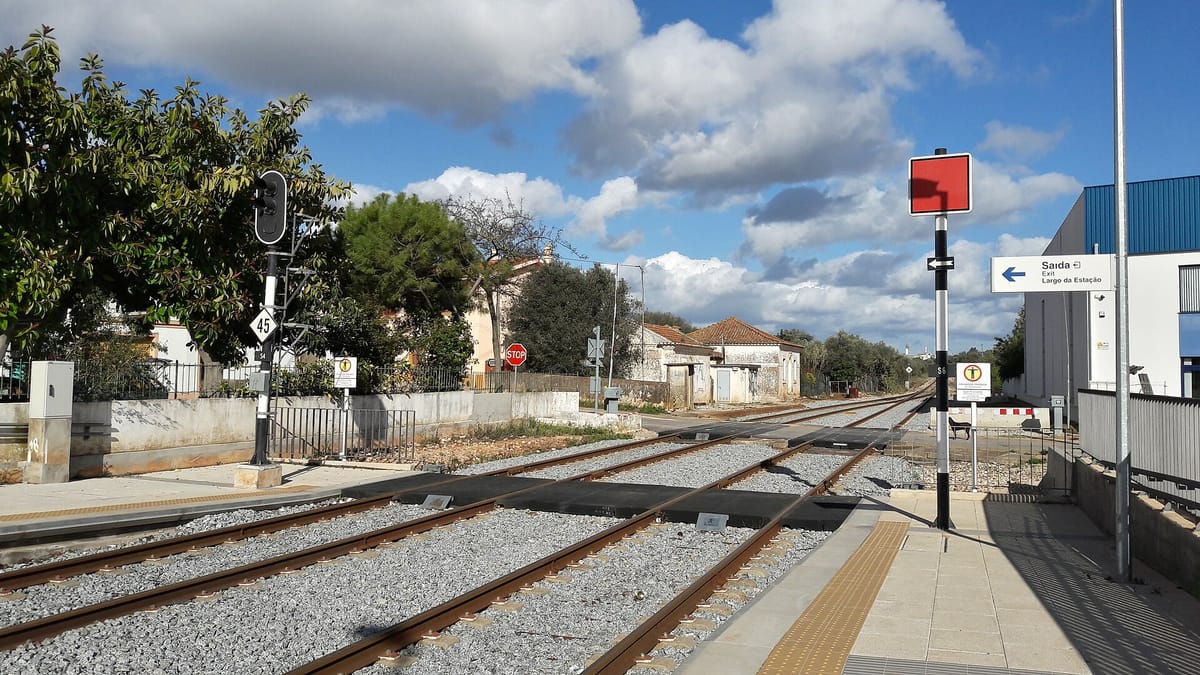
From 1 March 2027, a driver in Portugal will have ten seconds to get across a level crossing. Take longer, without a reason outside your control, and you are committing an administrative offence. That is one line in a new 30-page rulebook published in Wednesday's official gazette, and it is the first full rewrite of the regime in 27 years.
Decreto-Lei n.º 183/2026 (Decree-Law 183/2026), in Diário da República (the official gazette) Série I of 16 September, approves a new Regulamento de Passagens de Nível (Level Crossing Regulation) and repeals Decreto-Lei n.º 568/99 of 23 December 1999 along with the regulation attached to it. The Council of Ministers approved the text on 21 May, the President signed it on 3 August, and it enters into force on the first day of the sixth month after publication.
What changes for the person at the wheel
Most of the new duties fall on institutions rather than drivers, but Article 25 of the regulation sets out a list of things road users may not do at a crossing, and several are new in writing. You may not enter a crossing unless the exit is clear and you are sure traffic will not force you to stop on the rails. You may not overtake immediately before a crossing or inside it, or change lane where there is more than one lane in your direction. You may not turn round, reverse, stop or park immediately before, inside or immediately after the crossing zone, nor park in the access zone, defined as the 50 metres either side of the track, reduced to 25 metres where approach speed is 50 km/h or less.
Pedestrians get their own clause: you may not use electronic equipment that could interfere with your perception and concentration while crossing on foot. And the ten-second rule sits in the same list, with an exception for an abnormal situation that is not your fault.
If your vehicle or animal is stuck on the crossing, the regulation requires immediate removal and expressly allows you to break the barriers that carry that instruction on the back. If removal is impossible, you must warn approaching trains, including by using the emergency number posted at the crossing. Every crossing must now display a public telephone contact, visible from five metres, for reporting long waits and faults.
No new crossings, and fewer old ones
The headline principle is that new roads must cross railways on a different level. New level crossings are prohibited outright. The infrastructure manager may licence a temporary at-grade crossing only in exceptional and absolutely justified cases, for a maximum of three years, non-renewable, with a risk assessment, a security deposit and favourable opinions from both the rail and road safety authorities. Crossings are also banned outright anywhere trains are allowed to run above 140 km/h.
Existing crossings face removal on measured criteria. Public road crossings within 700 metres of another crossing or a grade-separated passage, where an alternative route of up to 3,000 metres exists, must be closed to road traffic and reclassified as pedestrian crossings. Pedestrian crossings within 350 metres, with an alternative of up to 850 metres, must go altogether. Crossings that demonstrably go unused must be suppressed, and so must those left serving a single property. The road manager gets 30 days' notice and the work must be done within a year.
Who pays when it goes wrong
A new civil liability chapter may be the most consequential part. It makes the rail infrastructure manager liable for accidents attributable to abnormal functioning of the service, and then defines that term with examples: barriers improperly open, signals giving no stop indication when a train is coming, a passive crossing without the minimum sightlines the regulation requires, or risk-mitigation measures identified in an assessment that were never implemented. The road infrastructure manager carries a parallel list, including poor maintenance of signs and markings, and road geometry that makes the ten-second crossing time impossible to achieve.
Fines run from 165 to 3,500 euros for individuals and 5,000 to 40,000 euros for companies, with attempts and negligence both punishable. Road offences are processed by the Autoridade Nacional de Segurança Rodoviária (National Road Safety Authority) under the Highway Code; the rest go to the Instituto da Mobilidade e dos Transportes (Institute for Mobility and Transport, or IMT) and the Autoridade Nacional de Segurança Ferroviária (National Rail Safety Authority). Of the money collected, 60 percent goes to the State, 10 percent to the Fundo Ambiental (Environmental Fund) and 15 percent each to the body that reports the offence and the body that imposes the fine.
Why now
The preamble is unusually candid. Two decades of closing and automating crossings has cut Portugal's crossings per kilometre below the European reference average and made actively protected crossings the majority, it says, yet accidents at automated crossings show that safety does not depend on equipment alone. It also notes that rail accident investigators have been asking for crossing-specific risk analysis since 2016.
The regulation answers with a formula. Each crossing gets a "circulation moment", the average daily train count multiplied by the average daily road or pedestrian count, with heavy goods vehicles weighted at three or four passenger-car equivalents. Above a daily road figure of 2,000 or a circulation moment of 24,000, any rebuild of the road must include grade separation. The infrastructure manager must refresh every crossing's risk data at least every five years, and after any accident. Rail safety oversight is itself moving this autumn, with the government unpicking the merger that built the IMT from 1 October. The crossing rules land five months after that.