A New Decree Puts February's Storm-Kristin Toll-Waiver Bill Directly on the State Budget
A decree-law published on Tuesday routes the state's 70% share of February's Storm-Kristin toll waiver through the general budget, settling how four motorway operators will be repaid.
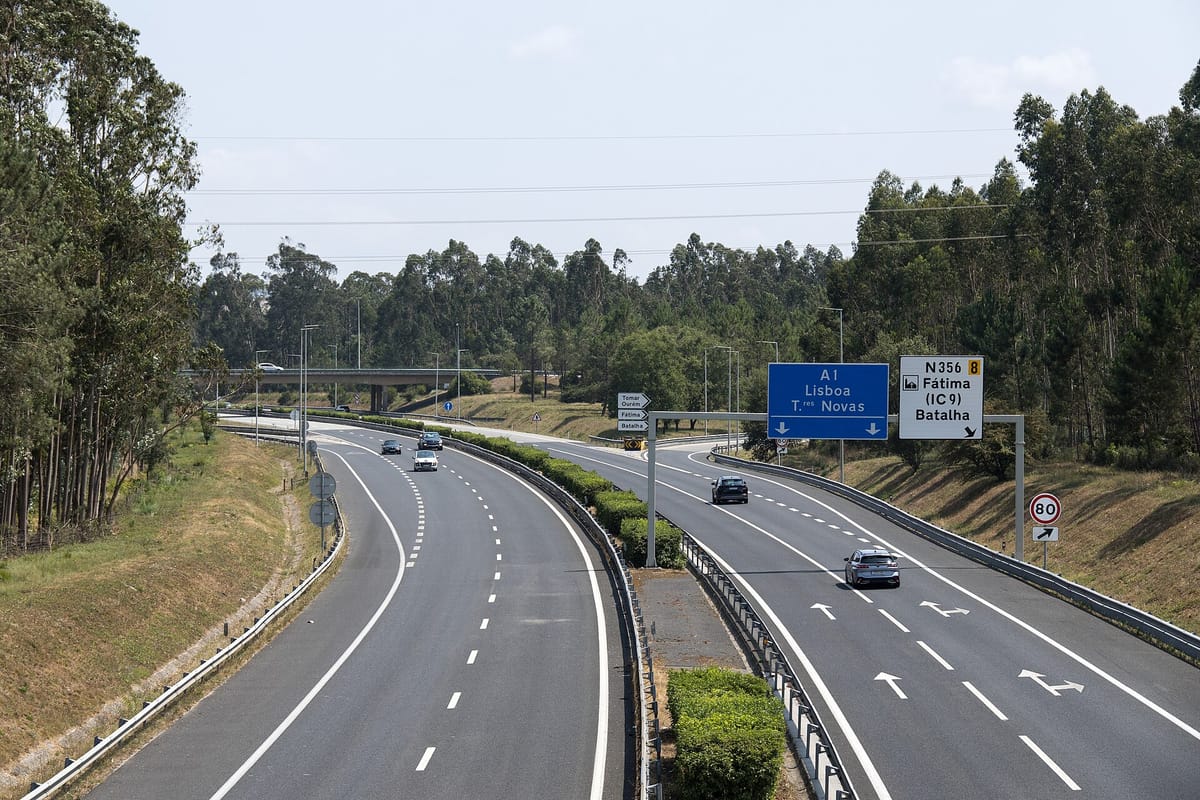
The state will pick up the bill for February's storm-driven toll holiday out of the general budget, under a decree-law published on Tuesday in the Diário da República (the official gazette). The diploma settles a loose end left over from the winter: how, exactly, motorway operators would be reimbursed for the fares waived when Portugal suspended tolls on roads battered by Storm Kristin.
When Kristin tore through the country early this year — hitting the Centro (Central) region hardest — the government lifted tolls on several affected motorways between 4 and 15 February to keep traffic moving and ease the burden on stranded communities. At the time it was agreed that the private concessionaires would absorb 30% of the lost toll revenue, with the state covering the remaining 70%. What the original February decree did not spell out was the mechanism for actually paying that 70% — the gap this week's text closes.
How the money will flow
Under the new rules, the state's share will be "borne directly by the State Budget (Orçamento do Estado)," processed through the Entidade do Tesouro e Finanças (Treasury and Finance Entity, or ETF). The government justifies the direct-budget route by pointing to the "exceptional circumstances" of the waiver and the fact that it lasted only a short, clearly bounded period.
The paperwork runs through the state road manager. Each concessionaire must calculate what it is owed, gather supporting documents, and send the file to Infraestruturas de Portugal (Infrastructure of Portugal, or IP). IP will then make the payments once it receives the funds from the ETF. Four operators are in line for compensation on the stretches that were temporarily toll-free: Autoestradas do Atlântico, BCR – Brisa Concessão Rodoviária, Brisal – Autoestradas do Litoral, and Infraestruturas de Portugal itself.
Closing the books on Kristin
The decree is a small, technical coda to a disaster whose costs are still being tallied. Six months on, the state has paid out heavily in storm aid even as a handful of families remain unable to return to their homes. The toll reimbursement is a comparatively modest line item, but it reflects a recurring feature of Portugal's tolled-motorway model: when the state intervenes in a network it has franchised out to private concessionaires, someone has to be made whole, and that someone is ultimately the taxpayer.
What This Means for Expats
- No action needed: This is a state-to-operator settlement. Drivers who used the roads during the February waiver owe nothing and need do nothing.
- How Portuguese tolls work: Most motorways are run by private concessionaires under long contracts. When the government waives tolls, it typically compensates them — a useful thing to understand if you drive the A-roads.
- Budget footprint: The cost lands on the general budget rather than a special fund, so it competes with every other public spending priority — a small reminder of how emergency relief keeps rippling through the accounts.
- Emergency precedent: The 30/70 split between operators and the state is a template likely to be reused the next time extreme weather forces another toll suspension.
With the payment machinery now in place, the February toll waiver moves from headline relief to accounting reality — one more file quietly closed as Portugal keeps working through the long tail of a storm that reshaped its winter.