Portugal Opens a Six-Month Rewrite of Its Private Security Law, From Airport Screening to Cash Vans and Nightclub Doors
A working group led by the PSP's private security department starts in early October and must deliver a proposal to replace the rules of Lei n.º 34/2013 by early April 2027, covering training, supervision, new technology and critical infrastructure.
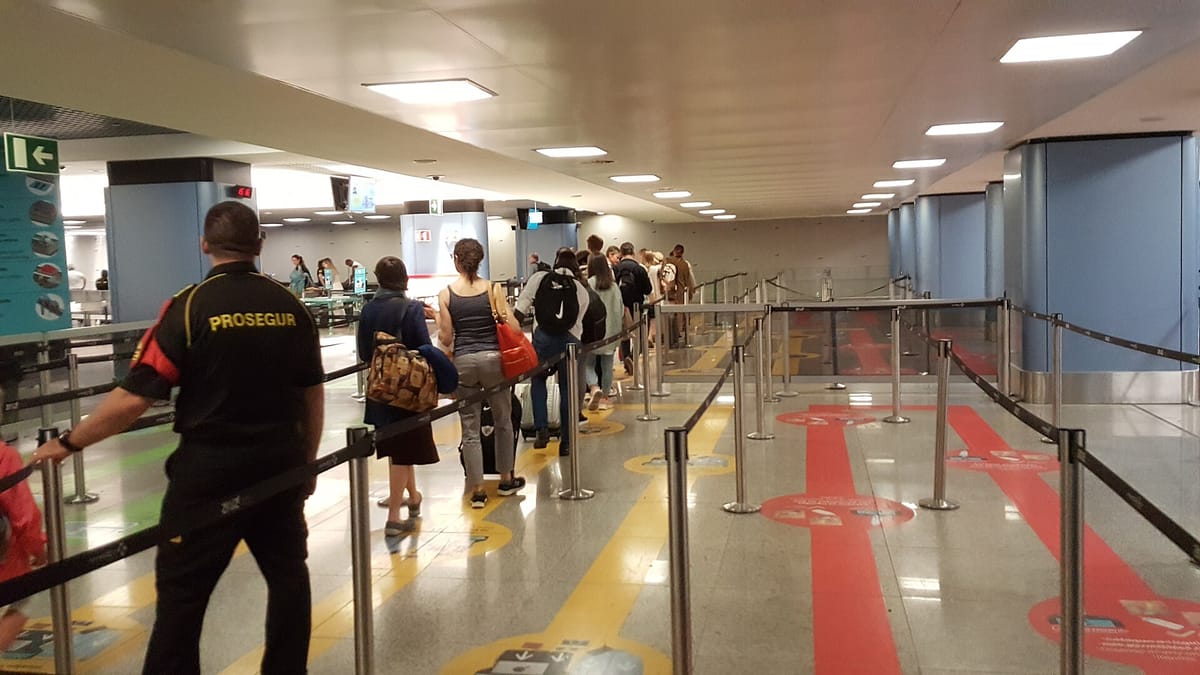
The government has given a working group six months to draft a rewrite of Portugal's private security law. That law governs everyone from the guard at a shopping centre door to the staff who screen bags at Lisbon airport and the crews who move cash and valuables. The order setting up the group, Despacho n.º 11672/2026, was published in the Diário da República (Official Gazette) on Wednesday and takes effect on Thursday.
It was signed on 15 September by Telmo Correia, the Secretário de Estado da Administração Interna (Secretary of State for Internal Administration).
Why now
The law in question is Lei n.º 34/2013, which regulates private security companies, in-house security services and the people who work for them. It was last amended in 2019. According to the order, the Conselho de Segurança Privada (Private Security Council), the advisory body that brings the police, other public bodies and the industry together, met on 15 July. It agreed "consensually" that the law and its regulations needed revising.
The order gives three reasons: the changing operational demands on the sector, the need to simplify and refine several of the law's rules, and technological change that current legislation "does not yet answer sufficiently".
The consolidated text shows how dated parts of it are. Its list of council members still includes the national director of the SEF, the border service that was abolished in October 2023.
What the group has to deliver
The group is to produce a proposal for new legislation with eight aims:
- modernising and simplifying the rules for the sector;
- improving the standing, qualifications and protection of security workers, including a reinforced training model;
- strengthening the role of private security as a complement to the police;
- strengthening regulation, supervision and inspection;
- developing SIGESP, the integrated information system through which the sector is licensed and supervised;
- promoting the sustainability, competitiveness and quality of the business;
- adapting the sector to new technology and new security threats;
- considering how private security rules should fit with the critical infrastructure regime set by Decreto-Lei n.º 22/2025 of 19 March.
Who sits on it, and the timetable
There are four permanent members, one each from the Secretary of State's office, the Ministry of Internal Affairs' general secretariat, the GNR and the Departamento de Segurança Privada (Private Security Department) of the PSP, the public security police. The PSP representative coordinates. The group must consult the other bodies on the council, which include employers' associations and associations representing security staff. It reports to the council every quarter and may invite outside experts.
Members are to be named within 10 days of publication, and the group starts work 10 days after publication, which falls in early October. It must meet at least monthly. It then has six months to deliver its proposal to the Secretary of State, so the deadline falls in early April 2027. Members receive no pay for the work.
The order sets no date for the new law itself. The group drafts a proposal; any change would still have to go through the government and, depending on its content, parliament.
Who the current law covers
Under Article 3 of Lei n.º 34/2013, private security includes guarding buildings and controlling who enters them, personal protection, monitoring and responding to alarms, transporting cash and valuables, and screening passengers and baggage at ports and airports. Security companies may also check tickets on public transport under the supervision of the operator. Article 9 requires bars and restaurants with a dance floor to have a security system. Most concerts and sports events need a security coordinator and stewards.
What this means for residents
- Nothing changes yet. The 2013 law, as amended in 2019, stays in force while the group works.
- If you work in the sector, training, qualifications and worker protection are named aims of the review, and workers' associations sit on the council the group must consult.
- If you run a venue or business that uses private security, changes to licensing, supervision and the SIGESP system are on the table, so the rules on who you may hire could move in 2027.