A Heatwave Drives Almost the Entire Mainland to Maximum Fire Danger This Week
Every northern and central district plus Faro sits at maximum fire risk on Monday, with IPMA yellow warnings almost nationwide through Tuesday evening. Highs of 40°C are forecast for Santarém and Évora, and the elevated danger is expected to last all week.
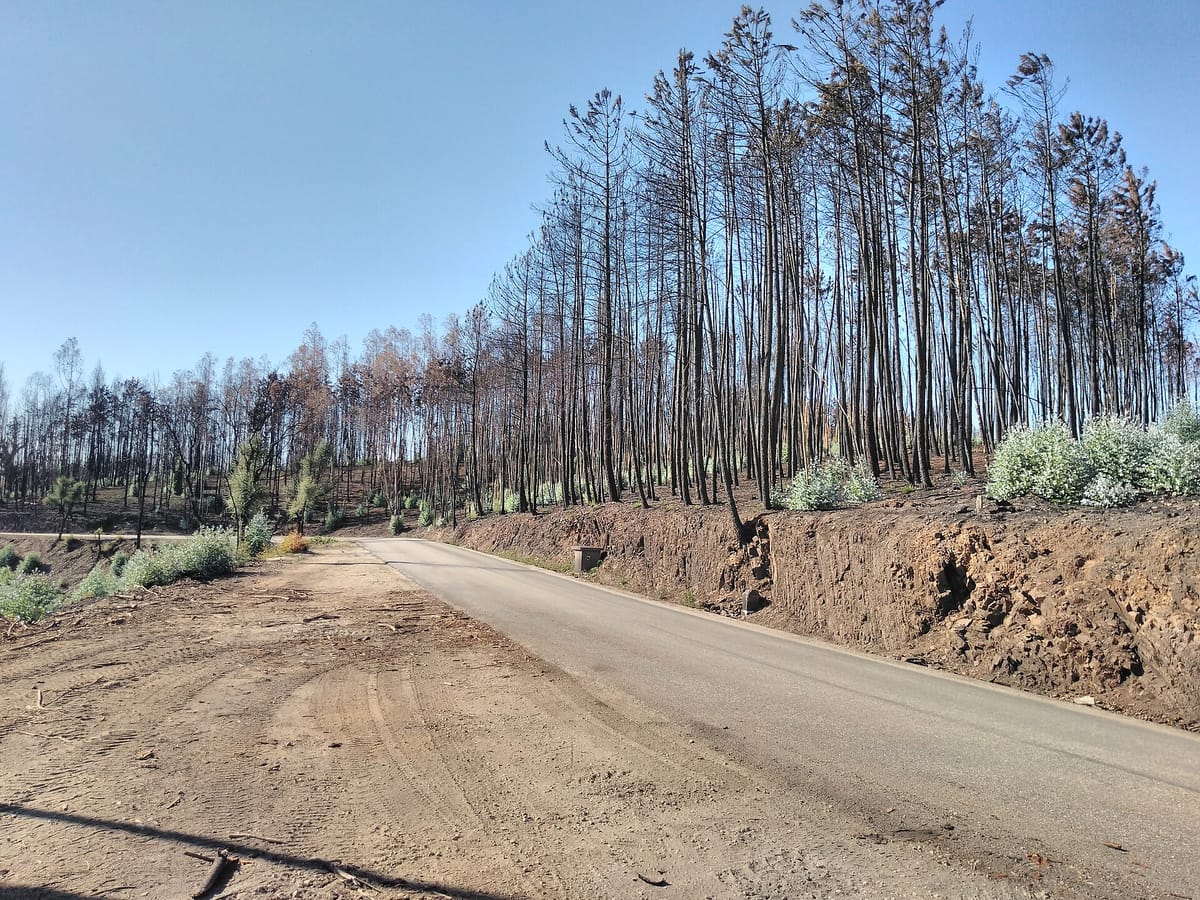
A wave of intense summer heat has pushed almost the whole of mainland Portugal into the highest categories of fire danger as the new week begins, with forecasters warning that the risk will linger for days rather than hours. On Monday, every district in the north and centre of the country, together with Faro in the far south, sits at maximum fire risk; the remaining districts are rated very high. It is the kind of nationwide red-lining that the authorities reserve for the most combustible stretches of the Portuguese summer.
The heat is being driven home by a blanket of official warnings. The Instituto Português do Mar e da Atmosfera (Portuguese Institute for Sea and Atmosphere, or IPMA) has placed every district except Faro under a yellow alert — its first level of caution — running from 09:00 on Monday until 18:00 on Tuesday. Yellow is the mildest of the warning tiers, but its near-universal reach underlines how widely the high temperatures and elevated fire danger are expected to bite.
The forecast numbers explain the concern. Santarém and Évora, in the interior, are expected to reach 40°C, the sort of reading that dries out vegetation and turns the countryside into ready fuel. Lisbon is set for around 37°C, uncomfortable even on the coast, while Porto, cooled by the Atlantic, should top out nearer 31°C. The gap between the baking interior and the milder littoral is a familiar summer pattern, but the sheer breadth of the heat this week is what has pushed so much of the map into the danger zone.
Fire danger in Portugal is a compound of heat, dryness and wind, and after weeks of summer sun the landscape is primed. The maximum ratings are a measure of how easily a fire would start and spread if one took hold, not a forecast that one will — but they are the trigger for a familiar set of restrictions and readiness measures, from bans on agricultural burning and the use of machinery that can throw sparks, to the pre-positioning of firefighting crews and aircraft in the most exposed regions.
The warnings come after a punishing fire season already this year, and the memory of large blazes in the interior is fresh. Civil-protection authorities routinely urge residents and visitors to avoid anything that could ignite dry vegetation during high-risk spells: no open flames or barbecues outside authorised areas, no burning of cleared brush, and extreme care with cigarettes, tools and vehicles on parched ground. In the worst-rated districts, even a small careless act can escalate quickly.
Forecasters expect the elevated fire danger to persist through much of the week rather than easing after a day or two, keeping the country on alert well beyond the current warning window. For residents, the practical advice is the same whether at home or on holiday: heed the local guidance, stay hydrated and out of the midday sun, watch for updates from IPMA and the civil-protection service, and treat the countryside as the tinderbox it currently is. In a Portuguese summer, the difference between a quiet week and a destructive one often comes down to how carefully people behave during exactly these conditions.