A Centre on the Estado Novo Dictatorship and Its Resistance Opens on 23 October in Salazar's Home Village, Inside the School That Bears His Name
The council of Santa Comba Dão says the centre in Vimieiro will study the regime and those who fought it, not honour the dictator. Its first exhibition, curated with the Ephemera archive, is about censorship.
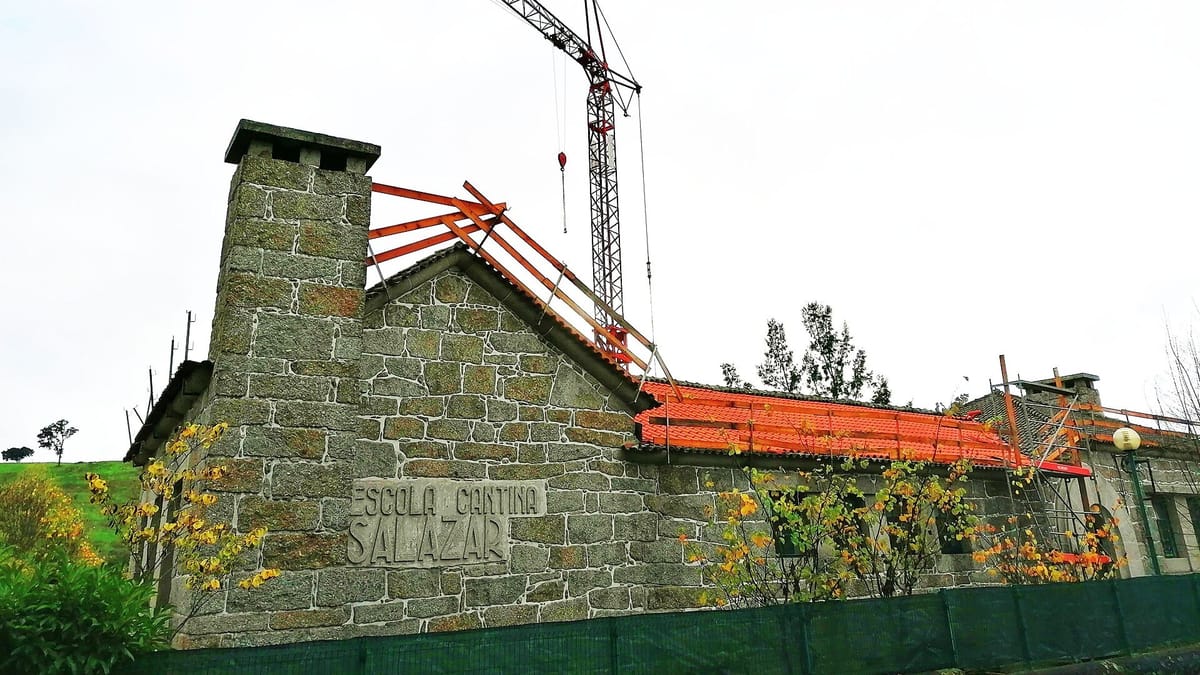
A centre devoted to the study of Portugal's Estado Novo (New State) dictatorship, and of the resistance to it, will open on 23 October in Vimieiro, the village in the municipality of Santa Comba Dão, in the district of Viseu, where António de Oliveira Salazar was born. It will occupy the Escola Cantina Salazar, a model primary school built under the regime in the 1940s and named after him.
The Centro Interpretativo do Estado Novo: Regime e Resistência (Interpretation Centre of the Estado Novo: Regime and Resistance, CIEN-RR) opens after years of false starts, the Lusa news agency reported. It is a municipal facility, and the council restored the school building some years ago.
"Not a museum to the dictator"
The council has been careful about how the project is framed. "We do not want to turn this interpretation centre into a museum to the dictator; we want to create an interpretation centre that studies not only the regime but also the resistance to the regime," the deputy mayor of Santa Comba Dão, Luís Nunes, told Lusa. "It is not about a cult of memory, but about cultivating memory to avoid the mistakes in future."
Scientific coordination is in the hands of the Associação Ephemera (Ephemera Association), the documentary archive directed by the historian and political commentator José Pacheco Pereira, which will lend parts of its collection. A scientific committee, whose members are still to be announced by Ephemera and the council, will oversee the programme.
Salazar himself will not be hidden. One room will reproduce a classroom of the period, with his portrait on the wall. "There is a whole context that cannot be hidden or camouflaged," Nunes said.
Censorship first
The first exhibition, titled "Só Existe o que se Sabe que Existe" ("Only What Is Known to Exist Exists"), is about censorship of the press, literature and music under the regime. The musical strand links to the municipality's own traditions, its philharmonic bands and the Conservatório de Música e Artes do Dão (Dão Conservatory of Music and Arts). The building will also hold a specialist library for researchers, and will host exhibitions, debates, conferences and academic meetings.
The opening programme runs over three days and includes round tables, concerts, a film season and a guided tour of the historic centre of Santa Comba Dão.
A village that already draws the curious
The Estado Novo ruled Portugal from 1933 until the Carnation Revolution of 25 April 1974, with Salazar at its head until 1968. Nunes said that visitors already come to Vimieiro "even though there is nothing there to see", curious about the village where the dictator was born and spent time. The council hopes the centre will give that flow a structure, drawing school groups and tourists from across the country and bringing some economic return to the area.
The opening comes in a year in which the regime's legacy has surfaced elsewhere: in August, a Brazilian university revoked the honorary doctorate it gave Salazar in 1941, citing the academics his government expelled from Portugal's universities.