A Bumper Harvest Looms Over a Douro Wine Region Facing Its Worst Crisis in Decades
The IVV expects Portugal's 2026 wine output to rise about 12%, with the Douro up 25%, yet the region faces its deepest crisis in decades: a glut of unsold wine, grapes picked below cost, and a stalled plan to grub up vines that growers are resisting.
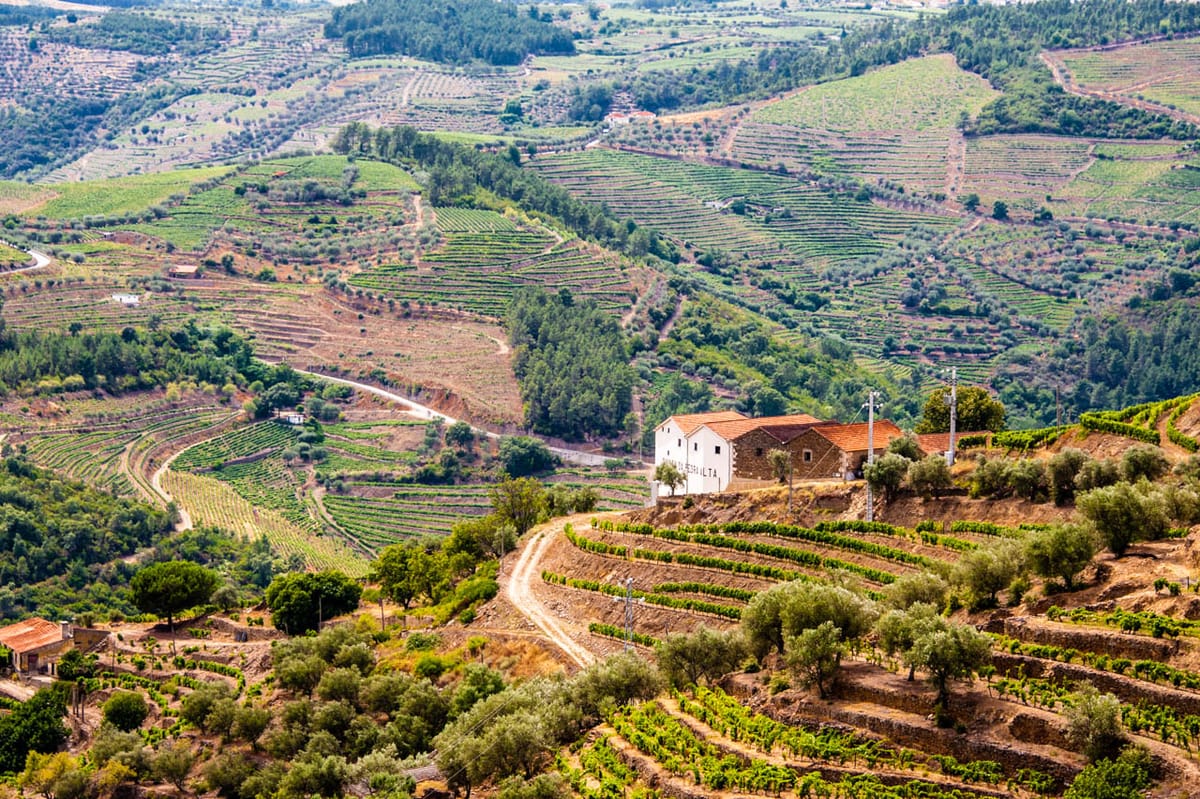
Portugal is heading into one of its most generous grape harvests in years — and, in the Douro, one of its most anxious. The Instituto da Vinha e do Vinho (Institute of Vine and Wine, IVV) forecasts national wine production rising about 12% in 2026 to roughly 7.3 million hectolitres, with the Douro up around 25%. If the projection holds, the Douro would overtake the Lisboa region as the country's largest producer. Yet the numbers that should cheer growers are landing in the middle of what Público has described as the region's deepest crisis in decades.
The problem is not too little wine but too much. After successive large harvests, the Douro is carrying a glut of unsold stock, and many smallholders are approaching this year's vindima (grape harvest) with no buyer lined up, no agreed price and no certainty about when — or whether — they will be paid. On 7 August, winegrowers protested to demand immediate measures to guarantee fair escoamento de uvas (grape offloading, or the ability to sell what they pick), warning that grapes are being harvested at prices below the cost of producing them.
Producers, exporters and the government are reported to be edging toward a common plan, but agreement keeps snagging on one painful idea: the arranque de vinha (grubbing-up of vines), the deliberate pulling out of vineyards to shrink chronic overproduction. It is a hard sell in a region where families have farmed the same terraced slopes for generations, and where a vine removed is income and heritage lost. Growers are resisting a "fix" that asks them to destroy the very thing that defines the landscape.
The forecasts themselves carry caveats. The IVV's early estimates are built from pollen counts taken at flowering across the Douro's three sub-regions — the Baixo Corgo, the Cima Corgo and the Douro Superior — and deliberately exclude later factors such as summer heat, drought or disease. The real figure will only be known once the grapes are in; harvest and production declarations run from 1 August to 10 September through the Sistema de Informação da Vinha e do Vinho (Vine and Wine Information System, SIvv).
The human scale of the squeeze is easy to find. Público cited Maria Teresa Barbosa, who farms a 30-hectare vineyard in Celeirós, in the municipality of Sabrosa, and who says she cannot be sure she will sell this year's crop at all — nor at what price, nor on what terms. Her uncertainty is the region's in miniature: a bumper year on paper that could still leave growers worse off.
The stakes reach well beyond the vineyards. The Douro is a UNESCO-listed cultural landscape and the home of port wine, a mainstay of Portuguese exports and of tourism across the north. A structural crisis there touches thousands of grower families, the port trade and the many residents whose local economy depends on the vine. A record harvest was supposed to be good news; in the Douro this August, it reads instead as a warning that the region's business model may no longer add up. On the support now on offer to growers, the rewritten Douro non-harvest payment formula explains how Portaria 436/2026/1 reverses the calculation, caps the payment at 1,125 euros a hectare and resets the IVDP's deadline to open applications.