A Bacteria Colony in the Technical Plant Has Kept Portugal's 1485 Thermal Hospital Shut Since 20 August
Caldas da Rainha disclosed on Thursday that pseudomonas was found in the water plant of the Hospital Termal Rainha D. Leonor, billed as the oldest working thermal hospital in the world. Treatments have been suspended for a week, with no reopening date.

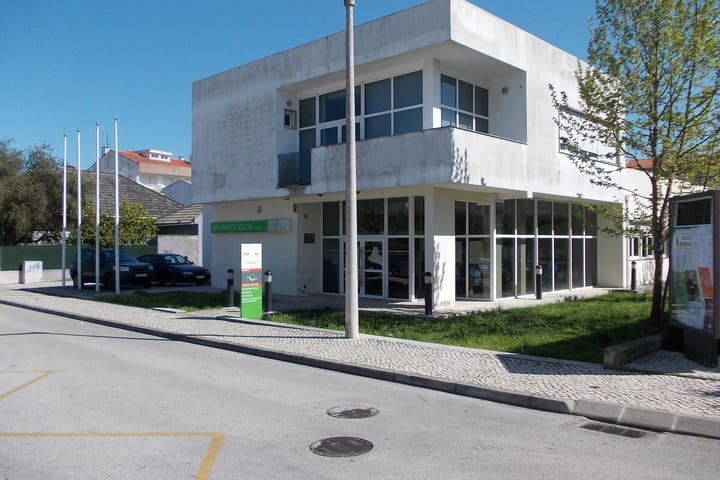
The Hospital Termal Rainha D. Leonor in Caldas da Rainha, the thermal hospital that gave the town its name and is billed as the oldest still working anywhere in the world, has been closed to patients since 20 August after a routine test found a colony of pseudomonas bacteria in its water plant. The Câmara Municipal (municipal council), which holds the state concession over the town's thermal assets, disclosed the closure on Thursday.
"The routine analysis carried out on the thermal water circuits by the Unidade de Saúde Pública (Public Health Unit) revealed the existence of a colony of the pseudomonas bacteria in the Technical Plant of the Hospital Termal das Caldas da Rainha, downstream of the abstraction points," the council said in its statement.
Where the bacteria was and was not found
The council is careful about the boundary of the problem. The colony was detected only in the Central Técnica, the building's technical plant, and not in the abstraction boreholes themselves, which sit in the Mata Rainha D. Leonor woodland. On that basis it says "the health of people who use the Termas das Caldas da Rainha is not at issue."
The council also offers a probable cause: technical works that began on 5 August to replace the submersible pump in borehole AC2, which was malfunctioning. Disturbing a water system is a classic route for bacteria that were previously confined to biofilm to spread into circulating water.
Technical teams and public health authorities are monitoring the site, and the council says the thermal hospital will reopen only after every laboratory analysis has been repeated. Patients holding appointments have already been told to rebook. No reopening date has been given.
A recurring problem with a long history
Queen Leonor founded the hospital in 1485 after stopping to bathe in the sulphurous springs, and the institution has anchored the town's economy ever since. It has also been shut repeatedly by the same class of contamination. Before the concession passed to the council in 2015, the longest closure came in 1997, when treatments stopped for three and a half years because of pseudomonas in the pipework. Treatments were suspended again for varying periods in 2004, 2005, 2009 and 2012.
In 2016, under municipal management, a completely independent thermal water distribution network was built to replace the old pipes precisely to prevent further contamination. This month's detection is the first significant test of that investment, and it is notable that the colony turned up in the technical plant rather than in the new distribution network or at the source.
What this means for foreign residents
- If you have a booking: Sessions are cancelled until further notice and the council says affected patients have already been contacted. If you booked through a health insurer or an SNS referral, confirm directly with the hospital before travelling.
- Thermal cures are a prescribed treatment here, not just a spa visit: Portuguese doctors refer patients with respiratory and rheumatological conditions to thermal establishments, and courses run over consecutive days. A closure of unknown length disrupts a course of treatment, not an afternoon. Our guide to how the SNS works explains the referral route.
- Risk in perspective: Pseudomonas aeruginosa is widespread in water and soil and rarely causes serious illness in healthy adults, though it is a genuine concern for people who are immunocompromised or have chronic lung conditions. It is a different organism from the legionella that has closed Portuguese buildings elsewhere, including the immigration agency's headquarters in March.
- Local economy: Caldas da Rainha is a wellness destination first and a ceramics town second. Portugal's wellness sector was valued at 21 billion dollars in its first dedicated report, and the town's hotels and guesthouses feel a thermal closure in their bookings within weeks.
The council has committed to nothing beyond repeating the analyses, which is the honest position: the reopening date depends on how quickly disinfection clears the plant and how the follow-up samples read. History in Caldas suggests that can take weeks. It has occasionally taken years, and this closure will be measured against a national tourism strategy that has been pivoting from volume to value, a shift in which a functioning five-century-old thermal hospital is precisely the sort of asset the country says it wants to sell.