A 26-Second Total Eclipse Will Darken a Corner of Bragança on 12 August, Portugal's First Since 1912
On 12 August, totality will be visible in Portugal only from a sliver of the Montesinho Natural Park near Bragança, for about 26 seconds — the country's first total solar eclipse since 1912. Hotels across the district have already sold out as astro-tourists descend.
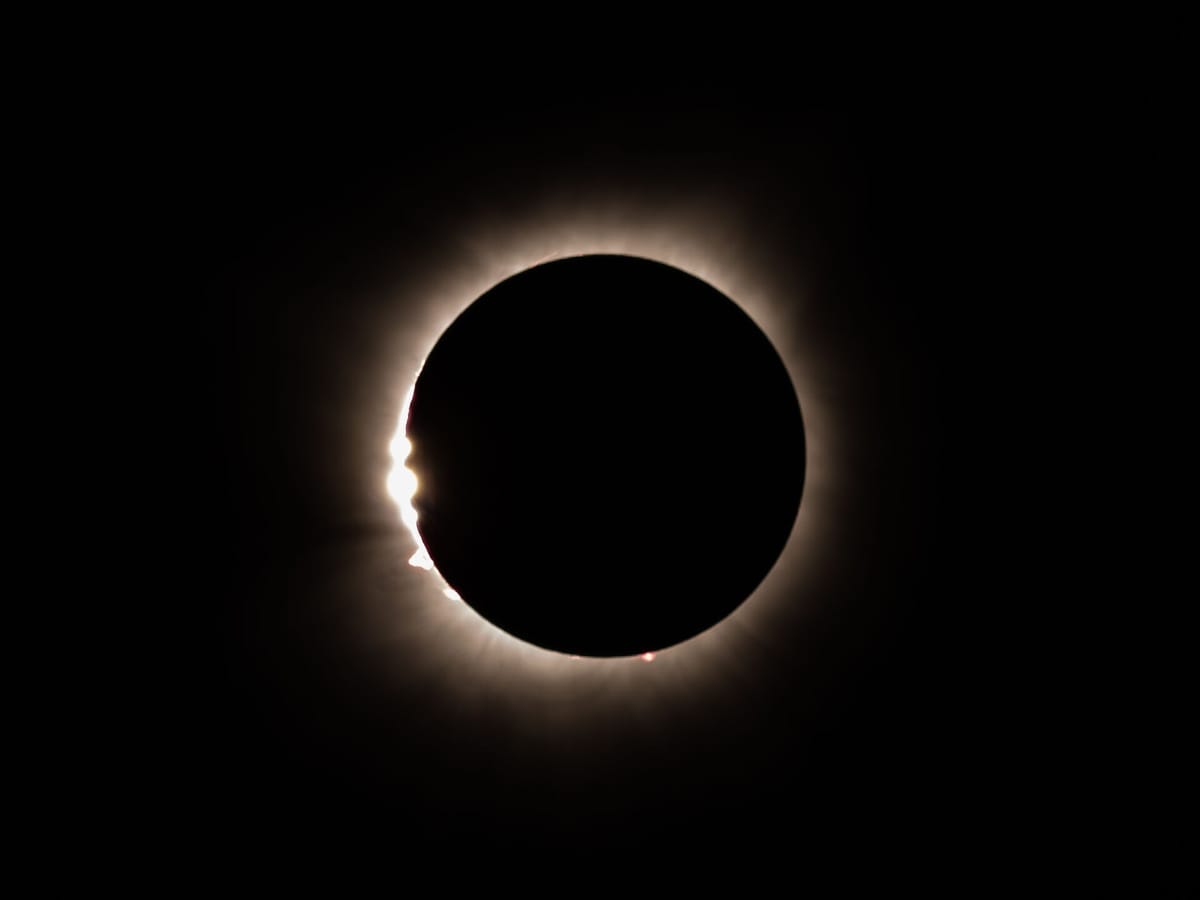
For 26 seconds on the morning of 12 August, day will turn to night over a single sliver of north-eastern Portugal — the first total solar eclipse the country has seen since 1912, and the last it will see until 2144. The path of totality, where the Moon blots out the Sun entirely, sweeps mainly across northern Spain, but it clips one small corner of Portuguese soil: the village of Guadramil, in the parish of Rio de Onor, high in the Parque Natural de Montesinho (Montesinho Natural Park) above Bragança.
Everywhere else in the country the eclipse will be partial, a deep bite taken out of the setting-summer Sun. Only in that pocket of the Trás-os-Montes uplands will observers catch the full spectacle: the corona, the Sun's ghostly outer atmosphere, flaring around a black disc, and the fleeting "diamond ring" as the last bead of sunlight slips away. Totality there lasts barely half a minute — a reminder that this is a grazing pass, not the long midday darkness that some eclipses bring.
That brevity has done nothing to cool demand. Hotels, guesthouses and campsites across the Bragança district are already fully booked, with several operators reporting that rooms sold out within days of opening their calendars. One rural-lodging owner said reservations filled up inside eight days; hoteliers have been turning away callers who found every online platform exhausted. Many of those who did secure a bed have booked three or four nights, planning to fold the eclipse into a longer tour of the region's cured meats, chestnut country and mountain trails.
The rush mirrors what is unfolding across the border. In Galicia and northern Spain, where totality lasts longer and the path is wider, the authorities are bracing for a wave of "astro-tourism" that some estimates put at up to ten million visitors — an economic windfall, but also a logistical headache for small towns unused to crowds of that scale.
Bragança's own preparations are being run on a far more modest footing, and with an eye on the fragility of the site. Guadramil and neighbouring Rio de Onor sit in protected countryside with narrow roads and little parking, so the Centro de Ciência Viva de Bragança (Bragança Living Science Centre) is organising shuttle buses from the city's aerodrome rather than let cars pour into the villages. Places are capped for safety and to spare the landscape, and everyone who signs up is issued certified eclipse glasses — the only safe way to watch the partial phases before and after totality.
Astronomers are urging everyone tempted to look up, wherever they are in the country, to use proper filters and never to stare at the partially covered Sun with the naked eye or through ordinary sunglasses, cameras or binoculars. For the vast majority of residents the event will be a partial eclipse worth pausing for; for a lucky few thousand on a hillside near the Spanish frontier, it will be one of the rarest sights Portugal has to offer, and one no living Portuguese has witnessed on home ground before.