232 Hectares of Viseu Commonland Leave the Forest Regime for Two Solar Plants. The Replacement Land Covers 232.24.
A decree published on Monday releases a stretch of the serra de Leomil that has been under forest protection since 1954. Two commoner assemblies voted unanimously to put other land in its place, and the developer has five years to build.
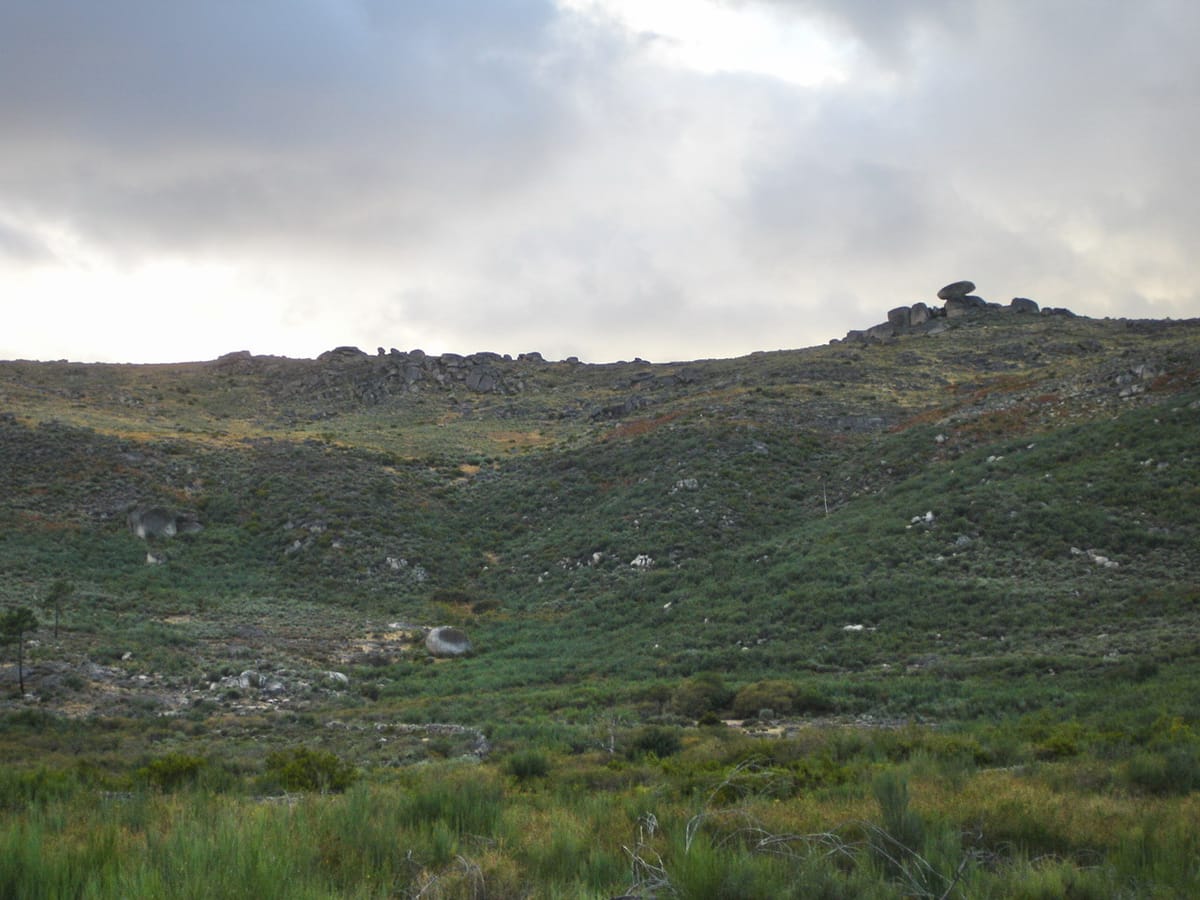
A decree published on Monday releases 232.22 hectares of commonland in the Viseu district from the forest protection regime it has carried since 1954, so that two photovoltaic plants can be built on it. To compensate, two commoner assemblies have volunteered 232.24 hectares of other commonland to take its place. The state comes out of the transaction two hundred square metres ahead.
Decreto n.º 19/2026 appeared in the first series of the gazette on 21 September. It was approved in Council of Ministers on 20 August, signed by President António José Seguro on 11 September and countersigned by the Prime Minister on 14 September.
What the land is
The parcel belongs to the Comunidade Local dos Compartes dos Baldios de Touro, in the freguesia of Touro, concelho of Vila Nova de Paiva. Baldios are commonland: not municipal property and not private property, but land held and administered by the community of local users, the compartes, through an assembly that votes on what happens to it.
This particular stretch was placed under the partial forest regime by Decreto n.º 39964 of 13 December 1954 and folded into the forest perimeter of the serra de Leomil. That designation does not change who owns the land; it changes what may be done with it, and using it for anything other than forestry requires a decree undoing the 1954 one. The legal machinery involved is older still: the decree cites articles 25, 26, 28, 32 and 33 of a decree of 24 December 1901, and article 4 of its 1903 regulations.
The swap
The compartes of Touro asked the ICNF, the conservation and forests institute, to release the 232.22 hectares needed for the Adomingueiros and Salgueiral solar plants. As compensation they then voted unanimously to place 19.26 hectares of their own remaining commonland under the same regime. The neighbouring community, the compartes of Vila Cova à Coelheira, voted unanimously to add 212.98 hectares of theirs. Both parcels join the serra de Leomil perimeter.
The government's finding is that removing the first parcel harms neither the management of the perimeter nor the purposes of the forest regime, and that the replacement land satisfies the 1901 rules while increasing the protected area by 0.02 hectares. The ICNF, the câmara municipal of Vila Nova de Paiva and both commoner communities were consulted, and the CCDR do Centro was heard.
Two conditions attached
Article 2 puts fire management squarely on the plant owner, who is made responsible for every measure required under the integrated rural fire management system along the full extent of the infrastructure and its surroundings, and for the work that follows from them. Solar arrays on upland scrub in central Portugal sit in country that burns, and the decree does not leave the obligation to be argued about later.
Article 4 sets a clock. The plants must be installed within five years of the decree entering into force. If they are not, the parcel is automatically reintegrated into the serra de Leomil perimeter and back under the partial forest regime, with no new decree required. A developer cannot bank the exemption and sit on it.
The arrangement is becoming a familiar one in the interior, where commonland is often the only large, single-title landholding available and solar rent is one of the few reliable incomes a comparte assembly can vote itself. It also arrives while councils that host wind and solar are negotiating a formula for being paid to do so, and while the map of where such plants may go at all has been shrinking.